Before the Throughput Gains: A Safe, Repeatable Rollout for Erbend Folding Workflows
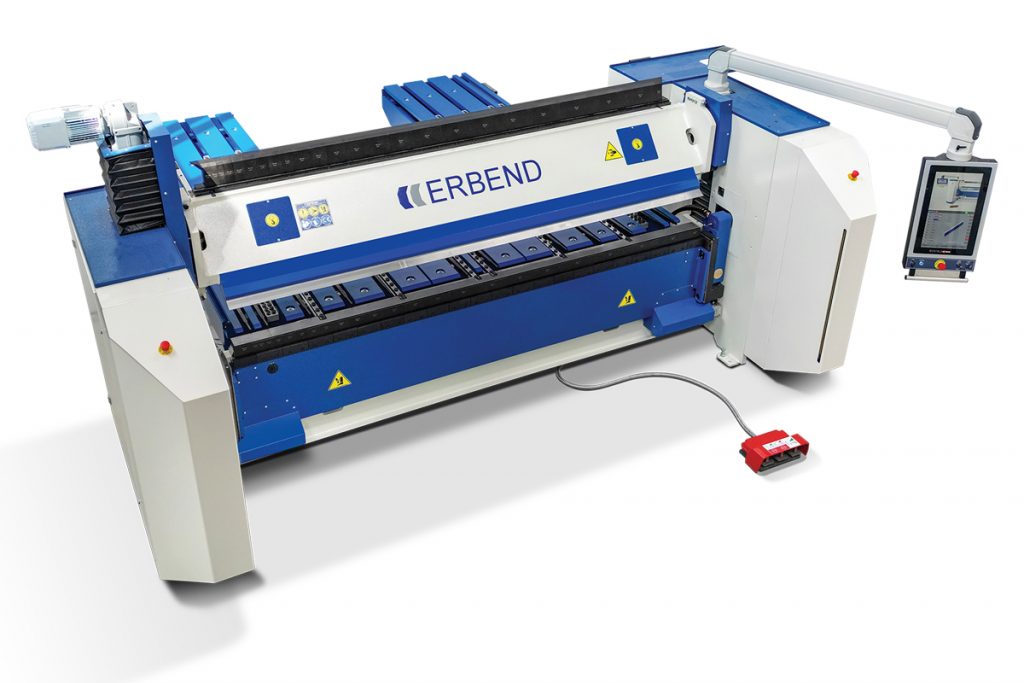
A recent Rollforming Magazine equipment update describes SWI Machinery’s FASST system moving slit blanks into a folding operation. It is a useful example of a production handoff to evaluate, not an Erbend installation or an evaluation of Erbend equipment. For any folder integration, the practical question is broader than machine cycle speed: can the shop stage, identify, transfer, fold and deliver parts consistently with the planned staffing and safeguards?
Commission the workflow in stages. Use representative jobs, verify program and material data, observe the full material route, train a pilot crew and set go/no-go criteria before adding shifts or part families. The pilot should produce shop-specific evidence; a folder or software feature alone does not guarantee faster or safer production.
Stage 1: Choose pilot jobs and verify the data
Select a small group of representative parts, including routine work and a job that tests the limits of the intended workflow. Confirm the material type and thickness, blank dimensions, tooling, bend sequence, drawing revision and downstream requirements. Resolve discrepancies before running trials, and identify who owns program edits and approval.
Erbend describes ERFOLD Advanced as supporting line-by-line programming and, in the 3D version, part design or supported file import and simulation. Its documentation says simulation can help review the bending scenario for potential collisions and consider changes to part dimensions, tooling or bend sequence. Confirm the functions and file workflow available on the specific machine and software configuration; simulation does not replace a physical trial or safeguarding review.
Stage 2: Run and measure trial parts
Run planned trial parts under controlled conditions. Record first-piece results against drawing requirements, repeatability across runs, handling marks, cycle and changeover time, operator interventions, stoppages and any rework. Include the time and effort required to stage blanks and clear finished parts, not only the folder’s programmed cycle.
Agree on measurement points and acceptance limits before the trial. If a part misses requirements, pause and investigate material, tooling, program data, setup or handling before releasing the job. The purpose is to establish a reliable baseline for the actual application, not to infer production performance from a feature list.
Stage 3: Walk the material route and review safety
Map the route from blank staging through transfer, loading, support during folding, unloading and delivery to the next operation. Observe the work with the actual parts and handling method. Check for pinch points, blocked access, repeated lifting or turning, awkward reaches, unstable support and recovery tasks that might draw hands or tools into a hazard area.
Review machine safeguarding against the installed equipment, integration and real access paths. OSHA 29 CFR 1910.212 addresses machine hazards including points of operation and ingoing nip points; the appropriate safeguards depend on the hazards and workplace conditions. Do not assume that a folder, optional feature or automation arrangement is automatically OSHA-compliant. Have qualified safety personnel assess the configuration and operator tasks.
Separately, review hazardous-energy control for servicing and maintenance covered by 29 CFR 1910.147, including tasks that could expose employees to unexpected startup or stored energy. Do not bypass guards or safety devices to keep production moving. OSHA’s manufacturing Amputations National Emphasis Program took effect June 27, 2025; it is an enforcement program, not a new machine-design standard or guarding rule.
Stage 4: Train a small pilot crew
Train a limited group before adding shifts or part families. Include operators and the people responsible for programming, quality, maintenance and supervision. Use the pilot jobs to teach standard setup, program and revision checks, safe material handling, first-piece inspection and how to stop and escalate when conditions or results do not match the plan.
Document who may edit or release programs, who approves first pieces and who responds to repeated defects or stoppages. Keep standard work accessible at the machine and specific enough to guide the actual setup and material handoff.
Stage 5: Set the go/no-go gate before scaling
Agree on acceptance criteria before the pilot begins. Expand only when results show repeatable quality, stable execution, safe work practices and a workable handoff to the next operation across the intended operators or shifts.
- Quality: Critical features meet drawing requirements, with first-piece checks recorded.
- Repeatability: Approved jobs run consistently across repeat trials and trained operators.
- Safe execution: Safeguards remain in place, handling follows the reviewed method and the process does not depend on unsafe workarounds.
- Performance: Cycle time, changeovers, interventions and stoppages are measured against a shop-defined baseline or target.
- Downstream readiness: The next operation can receive, identify and handle output without creating a new queue or mix-up risk.
If the pilot misses a criterion, pause expansion and investigate the cause. The constraint may be program data, blank staging, support, staffing or downstream flow—not a need for more folder speed. A measured rollout lets the shop test the real workflow before committing more production to it.
Related Video
Erbend CNC Folder & Shear Testimonial