Compact Cut-to-Length Lines Put In-House Blanking Within Reach for Smaller Fabricators
COE announced its SpaceMaster compact cut-to-length line on August 27, 2026, positioning it as an option for smaller contract fabricators and product OEMs considering in-house blank production. COE says the line combines coil payoff, straightening, feeding, shearing and stacking. The company planned to feature it at FABTECH 2026, scheduled for October 21–23 in Las Vegas.
For a shop evaluating blank supply, the decision is broader than choosing a machine category. The practical routes are to buy blanks, shear purchased flat sheet, or process coil through an integrated cut-to-length (CTL) line. Each shifts different work, handling and planning responsibilities to the shop.
Three routes to blank supply
- Buy pre-cut blanks: The supplier provides material cut to the required size. Your team still manages incoming inspection, storage, delivery timing and blank feeding to the next operation.
- Shear purchased flat sheet: A standalone shear cuts sheets already delivered to the shop. This keeps coil payoff and straightening out of the process, but sheet staging, movement, cutting and finished-blank handling remain part of the workflow.
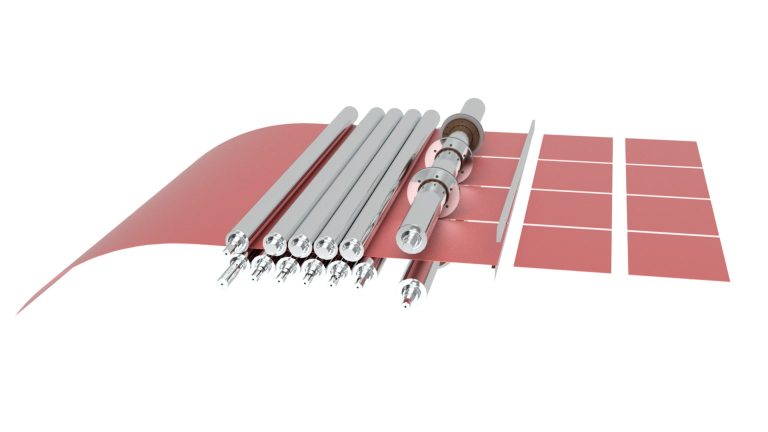
- Process coil in-house: A CTL line typically pays off coil, straightens and feeds the strip, shears it to length, then stacks the blanks. The exact equipment and configuration vary with material width, thickness and incoming coil weight.
A CTL line can bring several process steps together, but it also makes coil staging, loading, blank stacking and outfeed part of the installation and operating plan. Compare the full material path, not just the cutting operation.
What COE says the SpaceMaster does
COE describes SpaceMaster as an integrated system: a motorized paddle-loop coil reel feeds a servo-driven feeder/straightener; the material is advanced to programmed blank length, cut by a servo shear, and delivered to an adjustable stacking system. These are manufacturer descriptions and specifications, not independently verified production results.
COE says the system is designed primarily for mild steel and non-cosmetic applications, including work where minor surface marking is acceptable. That announcement does not establish suitability for prefinished roofing, architectural stock or other surface-sensitive materials. Before specifying a line, ask the supplier to review the exact material, finish, protective film if used, and handling method.
Where a standalone Mac-Shear fits
Mac-Shear is a flat-sheet shearing option, distinct from a coil-processing line. Mac-Tech’s MRGM 3060-04 product page identifies “3060” as 10 ft overall length and “04” as capacity for 4 mm or 9-gauge steel. These published model descriptors do not establish suitability for a particular application. Confirm material grade, thickness, cut length, finish and operating requirements with the supplier.
A standalone shear is worth evaluating when your input is purchased flat sheet and you want to cut it in-house. An integrated CTL line is a different route to assess when recurring demand and coil supply justify examining the entire coil-to-stack process. Consider the added coil-handling needs, footprint and downstream material flow; neither machine label alone determines fit or cost.
Screen the application before comparing machines
- Demand: List recurring blank types, quantities and schedule patterns. Separate repeat work from occasional jobs.
- Stock form: Confirm whether you routinely receive coil, flat sheet or both, and how that affects procurement and storage.
- Material and finish: Specify grade, thickness range, width, surface sensitivity and any film or handling requirements.
- Dimensions and stacks: Document coil limits, blank width and length, stack weight and height, and how stacks will be removed.
- Layout and handling: Include coil staging, loading access, floor footprint, traffic paths, guarding, and room for infeed and outfeed.
- Downstream flow: Check whether roll forming, bending, assembly or shipping can consume blanks at the planned rate. A faster upstream process can simply move the queue if the next step is constrained.
Start with repeatable demand and surface requirements, then validate material, thickness, width, blank dimensions, handling and layout with suppliers. If you are attending FABTECH 2026, COE lists SpaceMaster for display; the event is scheduled for October 21–23 in Las Vegas.
Related Video
Mac-Tech Features LCAS Slitting Line Cut-To-Length