
What ISO 11553-2:2026 Means for Handheld Laser Equipment
The 2026 ISO revision expands safety guidance for handheld laser processing. Learn what U.S. fabricators can ask suppliers and assess at their facilities.
The 2026 ISO revision expands safety guidance for handheld laser processing. Learn what U.S. fabricators can ask suppliers and assess at their facilities.
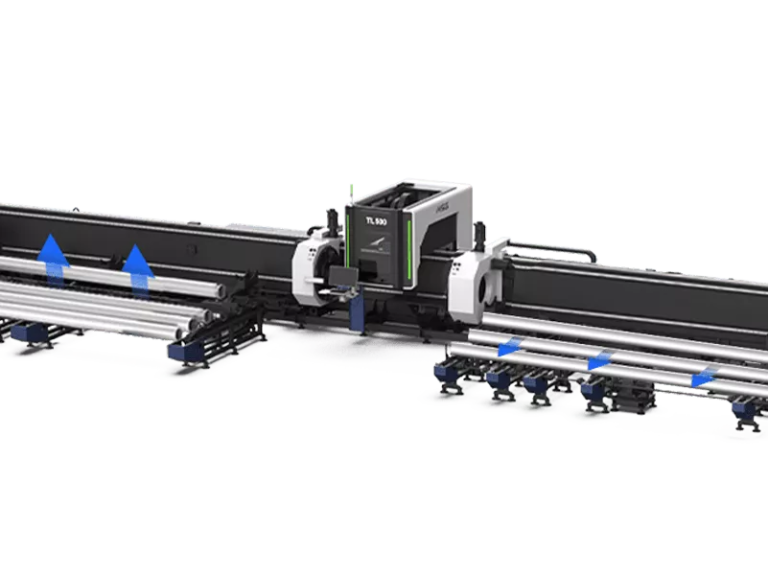
HSG lists broad tube capacity and parallel handling for the TL3 PRO. A plant-level trial can test whether it improves utilization across the full workflow.
HSG’s GFA Series is reported with configurations up to 60 kW. Use this capital-planning framework to test workload, facility readiness, material flow and utilization.

CMD’s Appleton fiber laser installation offers Wisconsin shops a case prompt for assessing part mix, handoffs, downstream capacity, training, safety, and support.
Recent trade coverage of HSG’s GFA Series up to 60 kW highlights a new ceiling in fiber laser power. For Illinois and Iowa structural and heavy equipment fabricators, the question is not just capability, but infrastructure, gas strategy, floor space, and capital risk compared to 12–20 kW systems.
Fabrication shops across Wisconsin, Minnesota, and North Dakota are pairing fiber lasers with modular automation to stabilize throughput and offset second-shift labor gaps. Here is a practical, phased roadmap from manual shuttle tables to integrated laser cells with realistic ROI and winter-ready planning.
An evidence-based look at how 12 kW to 20 kW fiber lasers are changing thick plate processing economics in Wisconsin, Minnesota, and North Dakota, with a focus on measurable cycle time gains, edge quality, infrastructure realities, and ROI discipline.
A practical guide for Wisconsin, Minnesota, and North Dakota fabrication managers upgrading to LightWELD handheld laser systems, with clear steps for OSHA and ANSI-aligned implementation that protects uptime and ROI.
Fabricators across Wisconsin, Minnesota, and North Dakota are upgrading aging CO2 and plasma systems to Rytech fiber lasers in 2026. Here is a practical look at the architectural, cost, and winter reliability factors driving the shift.
An executive framework for evaluating 12kW–20kW+ HSG fiber laser investments in U.S. fabrication environments, with a focus on utilization risk, infrastructure readiness, automation alignment, and cost-per-part discipline.
End of content
End of content