HSG GFA Series Up to 60 kW Signals Shift in High-Power Laser Buying for Heavy Plate Fabricators
Trade Coverage Highlights a New Power Tier
Recent coverage in Fabricating & Metalworking spotlighted the HSG GFA Series with configurations reaching up to 60 kW, positioning the platform squarely in the heavy plate and large-format fabrication segment. For Midwest structural steel contractors, bridge fabricators, and heavy equipment OEMs, that coverage signals more than incremental improvement. It signals a shift in how high-power fiber lasers are being evaluated for primary plate processing roles.
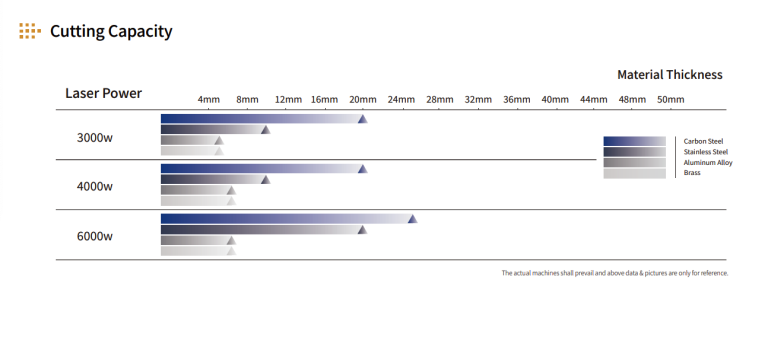
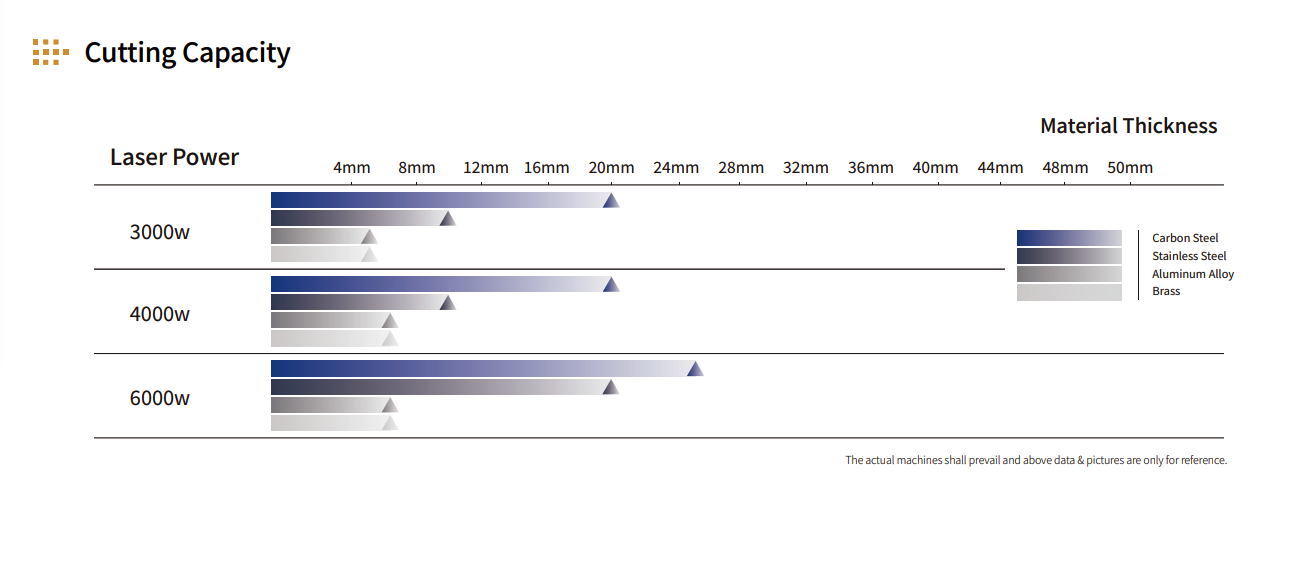
Across Illinois and Iowa, many job shops and OEM suppliers currently operate in the 12 to 20 kW range. Those platforms dominate because they balance speed, cost, and facility readiness. The introduction of 30 kW and 60 kW systems expands the ceiling and forces a new capital equipment conversation.
Technical Positioning of the HSG GFA Series
According to HSG Laser technical materials, the GFA Series is engineered for high-power plate applications with scalable configurations that extend into ultra-high-power territory. OEM documentation confirms that the platform is designed for heavy plate intent, supported by modular bed configurations suited for large-format sheets common in structural and equipment fabrication.
Large bed options and modular layouts matter in the Midwest, where fabricators routinely process wide and long plate for structural frames, agricultural components, and heavy assemblies. Rather than retrofitting a mid-power flatbed for occasional thick plate runs, the GFA concept aligns the mechanical platform, beam delivery, and motion system around sustained high-power output.
At the source level, high-power continuous-wave fiber technology such as that described by IPG Photonics demonstrates how beam quality, electrical efficiency, and power scaling enable stable operation at significantly higher wattages. That technical foundation supports the feasibility of 30 to 60 kW cutting systems in production environments.
Operational Differences Between 12 to 20 kW and 30 to 60 kW
For most Midwest shops, the real question is operational impact. A 12 to 20 kW laser already delivers strong performance on mixed thickness work. Ultra-high-power platforms change the equation primarily in thick plate throughput, piercing efficiency, and process consolidation.
Higher available wattage can reduce pierce times in heavy material and maintain cutting momentum through dense plate sections. Over long production runs, that compounds into meaningful throughput gains. In operations that still rely on oxyfuel or high-amperage plasma for the thickest jobs, a 30 to 60 kW laser may allow consolidation of those processes onto a single platform, reducing handling steps and work in queue.
However, that advantage is workload dependent. Shops whose revenue is heavily weighted toward thinner gauge material may see limited benefit from moving far beyond 20 kW. Ultra-high-power systems are most defensible where thick plate represents a consistent and profitable share of production.
Infrastructure Reality Check in Illinois and Iowa
Electrical service is often the first constraint. Moving from 15 or 20 kW to 40 or 60 kW is not just a machine upgrade. It can require evaluation of incoming service capacity, transformer sizing, and potential demand charges from local utilities. Facility readiness must include cooling systems sized for sustained high-power operation and robust fume extraction for heavy plate processing.
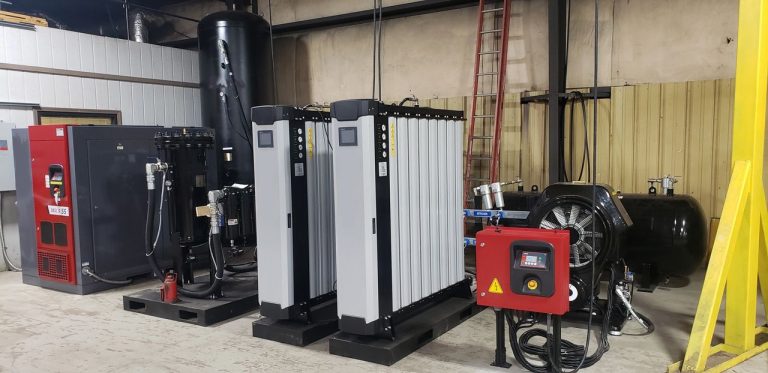
Assist gas strategy also changes. At ultra-high power, nitrogen consumption for high-quality cutting can increase substantially depending on part mix and thickness. That may justify bulk storage, higher-flow piping, or on-site nitrogen generation. In some heavy plate cases, oxygen remains part of the strategy for cost control and process stability. The correct mix depends on quality requirements and operating economics rather than wattage alone.
Floor space becomes another factor. Large-bed structural systems require clear material flow, staging zones for plate, and safe crane or forklift access. Material handling must keep pace with higher output or the productivity gains at the laser will shift bottlenecks downstream to forming, welding, or painting.
Economic Framing for Midwest Heavy Fabricators
For fabricators in Illinois and Iowa, ROI depends on throughput gains versus capital exposure. Ultra-high-power lasers represent a significant investment not only in equipment but also in infrastructure and training. The upside lies in faster heavy plate processing, potential elimination of legacy cutting methods, and increased capacity for structural and equipment contracts.
Yet a 20 kW platform may still be the smarter move for many shops. If most jobs fall within a range that does not fully leverage 40 or 60 kW capability, the incremental revenue may not offset higher capital and operating costs. In those cases, optimizing nesting, automation, and material flow around a 15 to 20 kW system can deliver stronger overall returns.
There is also a middle path. Some Midwest fabricators consider phased upgrades, starting with a high-performance 20 kW system and preparing infrastructure for future scaling. Others explore used-equipment acquisitions in the 12 to 20 kW range to expand capacity with lower capital risk while evaluating long-term demand for heavy plate.
Decision Matrix for 2026 Buyers
When evaluating 60 kW versus 20 kW versus used systems, Midwest buyers should weigh five factors.
First, workload mix. What percentage of revenue depends on sustained heavy plate processing.
Second, facility readiness. Can the building support higher electrical loads, cooling, and gas demand without major reconstruction.
Third, process consolidation goals. Is there a strategic intent to retire oxyfuel or plasma and centralize cutting.
Fourth, staffing and material handling. Can the organization manage higher output without creating new bottlenecks.
Fifth, capital risk tolerance. Does the balance sheet support a large step change, or is incremental expansion more aligned with current market conditions.
The introduction of the HSG GFA Series up to 60 kW reflects a broader industry shift toward ultra-high-power fiber capability. For structural steel fabricators, bridge contractors, and heavy equipment manufacturers across Illinois and Iowa, the opportunity is real but application dependent. Strategic evaluation grounded in workload data, infrastructure readiness, and long-term market positioning will determine whether 60 kW is a competitive advantage or an oversized asset.
For regional fabricators, the goal is not maximum wattage. The goal is the right wattage aligned with profitable work, reliable infrastructure, and sustainable growth.
Related Video
GX High Power Bus Sheet Fiber Laser Cutting Machine by Mac Tech