Achieving Aviation-Grade Bending Precision with Ermaksan Heavy Duty Press Brakes for Metal Fabrication Operations
In today’s metal fabrication environment, where meeting strict tolerances is paramount, operations leaders know that delivering precision is not just about reputation—it’s about safety, profitability, and future business. Nowhere is this more important than in the aerospace industry. Whether building structural supports or intricate subassemblies, every bend must conform to aviation-grade accuracy. Implementing cutting-edge machinery that consistently delivers superior results with minimal waste can distinguish your operation from the rest. Ermaksan Heavy Duty Press Brakes offer a real-world solution, giving your shop the capability to exceed customer expectations in both quantity and quality, while remaining competitive in evolving markets.
Implementing Advanced Bending Solutions for Aerospace Standards
Aviation and aerospace applications demand the utmost in precision and reliability. Each metal component must perform flawlessly when lives and multi-million-dollar equipment are on the line. For production and operations managers, the challenge is clear: how to translate specifications from the drawing board to the shop floor, making sure each fabrication step honors the intended dimensions without errors.
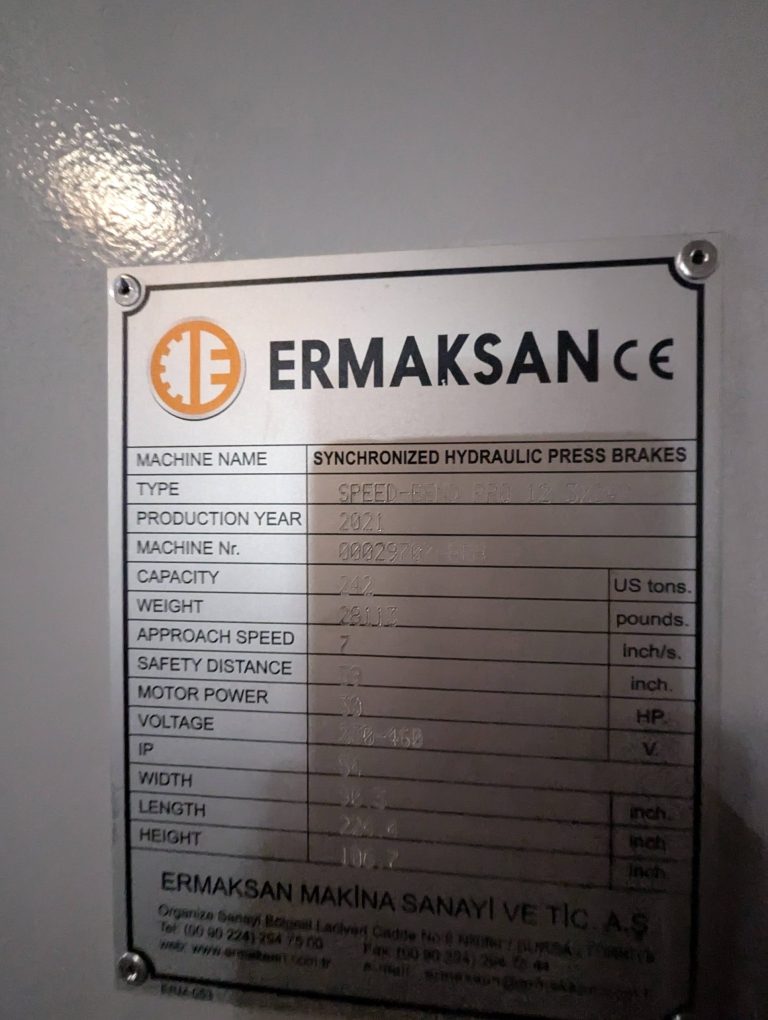
Ermaksan’s heavy-duty press brakes are engineered to match these stringent standards. They offer advanced backgauge systems, robust frames, and hydraulic precision that virtually eliminate variability from the bending process. Sales professionals can provide customized solutions based on the materials you commonly handle, from lightweight aircraft alloys to high-strength steel. Models like the Ermaksan Power-Bend Pro or the Evolution series can be configured with tooling and die arrangements tailored for your specific aerospace projects.
With technologies like angle measurement systems, dynamic crowning, and servo-driven components, Ermaksan press brakes can consistently achieve the fine tolerances required for critical flight components. Investing in these systems not only ensures compliance with international aerospace standards but also streamlines the audit process for third-party certifications.
Leveraging Ermaksan Heavy Duty Press Brake Technologies in Metal Fabrication
Choosing the right machinery is a crucial part of creating a resilient production line. Ermaksan’s portfolio offers solutions for small components as well as massive structural elements, making them adaptable to mixed production. These press brakes integrate high-tonnage bending capabilities with energy-efficient systems, resulting in more bending power without excessive operational costs.
Machine recommendations often start with the Power-Bend Falcon series for general aviation parts, while the Evolution and Speed-Bend Pro lines handle thicker gauges and longer parts efficiently. Sales engineers can advise which models best fit your shop’s footprint and workload, reducing the need for unnecessary material handling by combining high-powered bending with wide-open throat depths for easier component insertion and retrieval.
Technical features like precision linear encoders, quick-change tooling, and programmable bending sequences all work to minimize manual labor and speed up set-up times. This progressive assembly process greatly reduces handling errors, enabling operators to shift their focus from repetitive tasks to quality checks and process improvements.
Optimizing Accuracy and Repeatability for Critical Aerospace Components
In aerospace, a single inconsistent bend can render an entire batch of parts unusable. That’s why accuracy is not just a feature—it’s a necessity. Ermaksan’s real-time measuring systems, automatic crowning, and hydromechanical synchronization between pistons maintain uniform bending pressure across the entire length of the machine.
For shops tackling high-mix, low-volume runs, which are common in aerospace, the integration of CNC controls allows for storing and recalling complex bending programs for different components. This means less downtime between jobs and almost perfect repeatability, even as materials and batch sizes change. Sales consultants can provide guidance on integrating dedicated software options, allowing your operators to manage bends digitally and with automatic error correction.
Such solutions dramatically reduce rework, scrap, and costly delays. They also allow for traceability—an essential requirement for aerospace manufacturing—because every bend and adjustment can be logged and retrieved for inspection.
Maximizing Production Efficiency While Ensuring Material Integrity
Efficient operations depend on smart layouts, quick throughput, and minimizing damage to costly aerospace materials. Ermaksan press brakes are built with operator safety and part protection in mind. Features such as soft-clamping systems, collision avoidance sensors, and touch-screen interfaces streamline workflow and reduce the learning curve for new operators.
From a logistics standpoint, minimizing the number of times a part is handled between processes is critical. Ermaksan machines can be located near cutting or welding stations, and their large, open designs make it easy to handle big or awkwardly shaped airframe pieces. Machine models that offer automatic sheet followers and material supports keep thin alloys stable through every bend, preserving material quality and reducing dents or scratches that could lead to costly rejects.
By analyzing your shop’s specific assembly process, sales teams can recommend process sequences that consolidate steps and reduce handling, while technical specialists help set up programmable maintenance alerts to minimize unplanned downtime.
Integrating Ermaksan Press Brakes with Digital Control Systems for Process Enhancement
The push toward Industry 4.0 affects every corner of manufacturing—especially in industries as demanding as aerospace. Ermaksan press brakes support advanced digital integration, allowing your machines to “talk” with ERP and MES systems for real-time status updates, scheduling, and machine diagnostics.
With intelligent CNC controls and remote support capabilities, your team can fine-tune bending programs, monitor energy consumption, and even diagnose issues before they affect output. Machine recommendations for high-volume or multi-location operations often include networked units, letting you standardize bending parameters across your facilities while tracking productivity in real time.
Sales and support can assist with setting up digital interfaces that capture bending data for every part produced, supporting compliance efforts and offering valuable feedback for continuous process improvement. Over time, this insight also helps justify machine upgrades or replacements, as you can demonstrate the tangible ROI from increased throughput and part quality.
Frequently Asked Questions
What are the main benefits of using Ermaksan heavy-duty press brakes in aerospace metal fabrication?
You gain superior accuracy, repeatability, and traceability, reducing part rework and scrap.
Can these machines help us handle different alloys and materials found in aviation with minimal setup?
Yes. Ermaksan press brakes use quick-change tooling and programmable sequences to switch between materials efficiently.
How does Ermaksan address the need for rapid part throughput without compromising safety?
Their advanced controls, automated features, and safety devices streamline workflow while protecting both operator and material.
Are the machines compatible with our current digital tracking and reporting systems?
Yes. Ermaksan press brakes offer integration with most ERP and MES platforms, ensuring process transparency.
Is operator training required for these advanced systems?
Some initial training is recommended, but intuitive controls and automated features shorten the learning curve.
What kind of support and maintenance plans are available?
Vendors provide setup, training, maintenance alerts, and remote diagnostics to minimize downtime.
Whether you’re expanding an existing fabrication line or launching new production for critical aerospace projects, Ermaksan heavy-duty press brakes offer the technical edge, efficiency, and flexibility needed to succeed. By partnering with a knowledgeable sales and support team, you can configure your shop for higher standards with less waste and more productivity. For more information or to arrange a demonstration, connect with your local Ermaksan distributor and see how the right equipment will lift your operation to new heights.
Ermaksan heavy duty press brakes aimed at aviation-grade bending are large CNC forming machines designed to deliver highly repeatable, tight-tolerance bends on critical metal components while supporting high throughput for demanding fabrication operations.
Quick Look
- Application focus: precision bending of metal parts where tight tolerances and repeatability are critical (e.g., aviation-grade work)
- Machine type: heavy duty hydraulic or hybrid CNC press brakes sized for large tonnage and long bend lengths
- Control: CNC control systems typically used to program bend sequences, angles, and backgauge positions for consistent results
- Precision goal: aviation-grade bending implies very small angular deviation and consistent flange dimensions across runs
- Throughput: intended for high-mix or medium-to-high volume fabrication where setup repeatability reduces downtime
- Integration: commonly paired with offline programming, tooling libraries, and possibly automation to improve efficiency
Typical Cost Ranges
Pricing estimate (USD): $250,000 – $900,000 USD, depending mainly on tonnage, bed length, CNC capability, and level of automation.
- Lower end of range: smaller heavy duty models with more basic CNC and limited automation
- Mid-range: machines with longer beds, higher tonnage, and more advanced CNC features for complex bend programs
- Upper end: very high tonnage, long-bed systems and/or lines prepared for automation such as robotic part handling
- Total budget planning: consider additional costs for tooling, training, electrical work, and any material handling systems
- Operating costs: energy consumption, maintenance, and periodic calibration to maintain aviation-grade accuracy
Key Selection Factors
- Tonnage capacity vs. material: match press capacity to maximum material thickness, grade, and bend length expected in production
- Bending length: ensure the bed and ram length cover your largest part size, including any flanges or diagonal bending requirements
- CNC control sophistication: look for controls that support precise angle programming, springback compensation, and repeatable backgauge positioning
- Accuracy and repeatability: evaluate stated positioning accuracy for ram and backgauge, as these directly affect aviation-grade bending quality
- Tooling interface: confirm compatibility with the punch and die styles you plan to use, and the ease of tool changeover for high-mix jobs
- Backgauge configuration: multiple-axis backgauges improve part location accuracy and reduce manual intervention on complex bends
- Frame and drive concept: a rigid frame and suitable drive system help maintain parallelism and angle consistency on long parts
Pre-Purchase Checklist
- Verify required tonnage and bending length against your thickest, hardest material and largest part dimensions.
- Check the CNC control’s ability to store programs, manage bend sequences, and handle angle corrections for tight-tolerance work.
- Inspect specified ram and backgauge accuracy/repeatability figures and compare them to your aviation-grade tolerance targets.
- Confirm tooling compatibility, including clamping style, maximum tool height, and options for quick-change tooling if needed.
- Review available backgauge axes and travel ranges to ensure they match your part geometries and flange lengths.
- Assess frame rigidity and overall machine construction quality to support consistent bending across the full bed length.
- Evaluate safety features such as light curtains or guarding and how they affect setup and cycle times.
- Plan for installation requirements: floor space, foundation needs, power supply, and access for delivery and maintenance.
- Consider training and support availability to get operators up to speed on programming, setup, and best practices.
- Estimate ongoing maintenance and calibration needs to sustain aviation-grade precision over the machine’s life.
Common Questions
What defines “aviation-grade” bending precision on a press brake? In this context it refers to very tight and repeatable bend angle and flange dimension tolerances suitable for critical aerospace or aviation-related components, supported by accurate ram and backgauge positioning plus stable machine construction.
How does tonnage affect my choice of heavy duty press brake? Tonnage must be sufficient for your thickest, hardest material and longest bends; under-sizing can cause poor angles, deflection, or damage, while over-sizing adds cost without benefit if capacity is never used.
Why is CNC control capability so important for aviation-grade work? Advanced CNC controls allow precise programming of bend angles, sequences, and backgauge positions, and make it easier to apply consistent corrections for springback, which is essential when tolerances are tight.
What role does the backgauge play in bending precision? The backgauge locates the part for each bend; multi-axis, accurate backgauges reduce human error and ensure consistent flange lengths and bend locations across multiple parts.
Can a heavy duty press brake handle both thick plate and lighter sheet for aviation parts? Yes, provided the tooling and programming are appropriate; the key is matching tonnage, tooling selection, and control settings to each material and thickness.
How does machine frame rigidity influence bend quality? A rigid frame resists deflection under load, helping maintain parallelism between ram and bed so bend angles remain consistent across the full length of the part.
What should I consider about tooling for aviation-grade bending? Tooling must be compatible with the press brake’s clamping system, suited to your materials and thicknesses, and kept in good condition, since worn or mismatched tools can degrade bend accuracy.
Is automation required to achieve aviation-grade precision? Automation is not strictly required for precision but can improve consistency and throughput by reducing manual handling and positioning variability.
How often should a precision press brake be calibrated? The interval depends on usage and internal quality requirements; high-precision operations typically schedule regular checks to verify ram and backgauge positioning against reference standards.
What hidden costs should I plan for beyond the machine price? Budget for tooling, installation, electrical work, operator training, periodic maintenance, and any necessary material handling or safety systems to fully utilize the press brake’s capabilities.
Achieving Aviation-Grade Bending Precision with Ermaksan Heavy Duty Press Brakes for Metal Fabrication Operations