Master Metal Fabrication: 5 Essential QC Practices
Master Metal Fabrication: 5 Essential QC Practices
In the world of metal fabrication, precision and quality are not just desired—they are essential. As industries demand increasingly complex and intricate designs, the role of quality control (QC) in ensuring product excellence cannot be overstated. This article delves into the art of mastering metal fabrication through five essential QC practices that can elevate your operations to new heights. Whether you’re a seasoned fabricator or just starting out, these practices will guide you toward achieving unparalleled quality and reliability in your work.
Discover the Art of Metal Fabrication Mastery
Metal fabrication is a craft that combines creativity with engineering precision. It involves the transformation of raw metal into structures and products that are both functional and aesthetically pleasing. Mastering this art requires not only technical skill but also a deep understanding of materials, processes, and design principles. The journey to mastery starts with a commitment to quality, where every cut, bend, and weld is executed with precision and care. By focusing on quality control, fabricators can ensure that their creations meet the highest standards of excellence.
The art of metal fabrication is constantly evolving, driven by technological advancements and changing industry demands. Fabricators must stay abreast of the latest techniques and tools to maintain their competitive edge. Embracing innovation while adhering to time-tested practices is key to achieving mastery. By integrating essential QC practices into their workflow, fabricators can enhance their craftsmanship and produce superior products that stand the test of time. It is this dedication to quality and continuous improvement that distinguishes master fabricators from the rest.
Elevate Quality with These Essential Practices
Quality control in metal fabrication is not a one-size-fits-all approach. It requires a tailored strategy that addresses the unique challenges and requirements of each project. Implementing essential QC practices ensures that every aspect of the fabrication process is scrutinized and optimized for quality. From material selection to final inspection, these practices provide a framework for achieving consistency and reliability in every project. By adopting a systematic approach to QC, fabricators can minimize defects, reduce waste, and enhance overall productivity.
Incorporating essential QC practices into your fabrication process is not just about meeting industry standards; it’s about exceeding them. These practices empower fabricators to deliver products that not only meet but surpass customer expectations. By fostering a culture of quality and accountability, fabricators can build a reputation for excellence that sets them apart in a competitive market. Elevating quality through these practices is a strategic investment that yields long-term benefits, including increased customer satisfaction, repeat business, and enhanced brand reputation.
Why QC is Crucial in Metal Fabrication
Quality control is the backbone of successful metal fabrication. It ensures that every product is manufactured to the highest standards, minimizing the risk of defects and failures. In an industry where precision is paramount, even the smallest oversight can lead to significant consequences. QC practices act as a safeguard, identifying and addressing potential issues before they escalate. This proactive approach not only enhances product quality but also reduces costs associated with rework and recalls, ultimately boosting profitability.
Moreover, QC is crucial in maintaining compliance with industry regulations and standards. As metal fabrication often involves critical applications in sectors such as aerospace, automotive, and construction, adherence to stringent quality requirements is non-negotiable. Implementing robust QC practices helps fabricators meet these demands, ensuring that their products are safe, reliable, and fit for purpose. By prioritizing QC, fabricators can mitigate risks, protect their reputation, and foster trust with clients and stakeholders.
Practice One: Precision in Every Cut and Bend
Precision is the cornerstone of quality metal fabrication. Every cut and bend must be executed with meticulous accuracy to ensure that components fit together seamlessly. This level of precision requires skilled craftsmanship, advanced machinery, and stringent QC measures. By implementing precise cutting and bending techniques, fabricators can achieve superior dimensional accuracy and consistency across all parts. This not only enhances the structural integrity of the final product but also reduces the need for costly adjustments and rework.
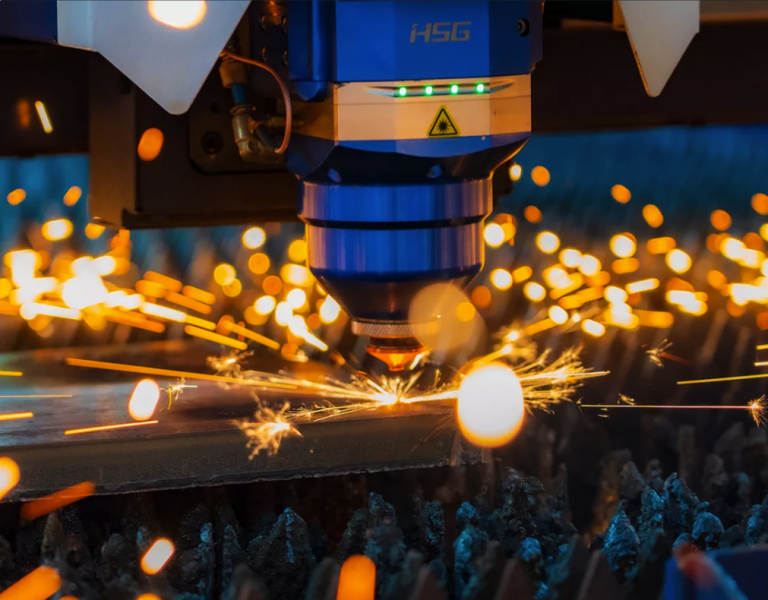
To achieve precision in every cut and bend, fabricators must invest in state-of-the-art equipment and training. CNC machines, laser cutters, and press brakes are essential tools that enable precise and repeatable operations. Additionally, regular calibration and maintenance of equipment are vital to maintaining accuracy and reliability. By combining advanced technology with skilled operators and rigorous QC checks, fabricators can ensure that every component meets exact specifications, resulting in high-quality products that exceed customer expectations.
Practice Two: Rigorous Weld Inspection Techniques
Welding is a critical process in metal fabrication, and its quality directly impacts the strength and durability of the final product. Rigorous weld inspection techniques are essential to ensure that welds are free from defects and meet industry standards. Visual inspections, non-destructive testing (NDT), and destructive testing are some of the methods employed to evaluate weld quality. By implementing these techniques, fabricators can identify issues such as cracks, porosity, and incomplete fusion, allowing for corrective actions to be taken promptly.
The importance of rigorous weld inspection cannot be overstated, especially in applications where safety is paramount. Defective welds can lead to catastrophic failures, resulting in costly repairs and potential harm to end-users. By prioritizing weld quality through comprehensive inspection practices, fabricators can mitigate these risks and ensure that their products are safe and reliable. This commitment to quality not only enhances customer confidence but also strengthens the fabricator’s reputation as a trusted provider of high-quality metal products.
Practice Three: Surface Finish Excellence Guaranteed
The surface finish of a metal product is not only an aesthetic consideration but also a functional one. A high-quality surface finish enhances the appearance, corrosion resistance, and wear resistance of the product. Achieving surface finish excellence requires careful attention to detail and the implementation of effective QC practices. Techniques such as grinding, polishing, and coating are used to achieve the desired finish, and each step must be meticulously monitored to ensure consistency and quality.
Guaranteeing surface finish excellence involves more than just achieving a visually appealing result. It requires a deep understanding of the materials and processes involved, as well as the ability to identify and address potential issues. By implementing rigorous QC checks at every stage of the finishing process, fabricators can ensure that their products meet the highest standards of quality and performance. This commitment to surface finish excellence not only enhances the product’s value but also reinforces the fabricator’s reputation for delivering superior craftsmanship.
Mastering metal fabrication is a journey that requires dedication, skill, and a relentless commitment to quality. By embracing these five essential QC practices, fabricators can elevate their work to new levels of excellence. Precision in every cut and bend, rigorous weld inspection techniques, and guaranteed surface finish excellence are just the beginning. With a focus on continuous improvement and a passion for quality, fabricators can achieve mastery in their craft, delivering products that not only meet but exceed expectations. In a competitive industry, this dedication to quality is the key to long-term success and growth.
Quality control (QC) in metal fabrication is less about a single machine and more about a disciplined system: the right inspection tools, documented procedures, trained people, and feedback loops that keep defects from reaching the customer while improving each job run after run.
1) Quick Look
- Focus: Establishing five core QC practices in metal fabrication (from raw material verification to final inspection and documentation).
- Applies to: Cutting, forming, welding, machining, and assembly operations in metal fabrication shops.
- Goal: Improve dimensional accuracy, weld integrity, surface finish, and fit-up while reducing rework and scrap.
- Key tools: Measuring instruments (calipers, micrometers, gauges), weld inspection tools, surface finish comparators, and documented checklists.
- Outcome: More consistent parts, easier problem-tracing, and higher confidence in meeting customer tolerances and specifications.
2) What It Typically Costs
Pricing estimate (USD): Varies by configuration.
- Basic QC setup (hand tools, gauges, simple fixtures) can be scaled from very low investment to more comprehensive tooling, depending on part complexity and tolerances.
- Adding inspection stations at key process steps (e.g., post-cutting, post-forming, post-weld) primarily costs time and modest tooling, but can significantly reduce scrap.
- More advanced QC (e.g., detailed weld inspection, tighter dimensional checks) may require higher-precision instruments and more labor hours per batch.
- Training personnel in standard inspection methods is a recurring but controllable cost that directly affects QC effectiveness.
- Documentation systems (paper-based or digital) can be kept simple at first and scaled up as volume and complexity grow.
3) Specs That Matter
- Dimensional tolerances and geometric accuracy – Define acceptable limits for length, width, thickness, hole size and position, and flatness/straightness to guide inspection frequency and method.
- Material verification – Confirm grade, thickness, and finish of incoming material so that cutting, bending, and welding behave as expected and meet the drawing or contract.
- Cut quality and edge condition – Monitor kerf width, edge squareness, burr level, and heat-affected zones, as these directly affect fit-up and downstream forming or welding.
- Forming accuracy – Check bend angles, bend radius, flange lengths, and overall part geometry to ensure formed components assemble correctly without forcing.
- Weld quality – Inspect for undercut, porosity, cracks, incomplete fusion, and distortion; verify bead size and location against the weld symbols and procedure.
- Surface finish and coating readiness – Evaluate surface roughness, cleanliness, and preparation so that painting, powder coating, or plating adheres properly and looks consistent.
- Repeatability and process capability – Track how consistently your processes hold tolerance (e.g., first-off vs. last-off parts) to decide where to tighten controls or add in-process checks.
4) Pre-Purchase Checklist
- Clarify the tightest tolerances and quality requirements you must meet (dimensions, weld classes, finishes) so you know what level of QC tools and procedures are necessary.
- List which fabrication processes (cutting, forming, welding, machining, assembly) will need dedicated QC checkpoints and what will be measured at each.
- Evaluate your current measuring instruments (calipers, micrometers, gauges, angle finders) and identify any gaps for the parts and tolerances you handle.
- Determine how QC data will be recorded and stored (simple check sheets, logs, or digital forms) to ensure traceability without creating excessive paperwork.
- Assess staff skills and training needs for consistent inspection methods, including how to interpret drawings, weld symbols, and tolerance callouts.
- Plan the layout of inspection areas so parts can be checked without causing bottlenecks or excessive material handling.
- Decide which inspections must be 100% of parts and which can be done by sampling, based on risk, part criticality, and customer expectations.
- Check compatibility between your QC practices and any customer or industry standards you must satisfy (e.g., specific inspection reports or certificates).
- Estimate the time impact of added QC steps and how they will be integrated into job routing and scheduling.
- Define how QC findings will feed back into process adjustments (e.g., machine settings, fixtures, or work instructions) to prevent repeat issues.
5) Common Questions
What are the 5 essential QC practices in metal fabrication? They typically include verifying incoming material, performing in-process dimensional checks, controlling welding quality, conducting final inspection against drawings, and documenting results for traceability and continuous improvement.
How often should parts be inspected during fabrication? The frequency depends on part criticality and tolerance levels, but a common approach is to inspect first-off parts, perform periodic in-process checks, and complete a final inspection before shipment.
Do small fabrication shops really need formal QC procedures? Yes; even simple, well-documented checks can prevent costly rework and customer returns, and they can be scaled to fit the size and complexity of the shop.
Which measurements are most critical to control? Dimensions that affect fit and function—such as hole locations, mating surfaces, bend angles, and overall length or width—are usually prioritized because they most directly impact assembly and performance.
How does QC improve welding quality? QC provides consistent inspection of weld size, location, and appearance, helps detect defects like porosity or undercut early, and supports adjustments to procedures or parameters before many parts are affected.
What tools are essential for basic QC in metal fabrication? Common essentials include calipers, tape measures, angle gauges, thickness gauges, simple fixtures, and visual inspection aids such as weld gauges and surface comparators.
Can QC slow down production? QC adds steps, but when planned at logical checkpoints it typically reduces overall time by catching problems early and minimizing rework and scrap.
How should QC results be documented? Many shops use straightforward checklists or inspection forms that record key dimensions, pass/fail results, and inspector sign-off, which can later be reviewed if issues arise.
What role does operator self-inspection play? Operator self-inspection is often the first line of defense, allowing issues to be detected and corrected immediately at the machine or workstation.
When should more advanced QC methods be considered? Advanced methods, such as more precise measurement tools or more detailed weld inspection, are usually considered when tolerances tighten, part complexity increases, or customer requirements become more demanding.
Source: Master Metal Fabrication: 5 Essential QC Practices
Master Metal Fabrication: 5 Essential QC Practices