Marvel Bandsaws for Metal Fabrication Operations Managers: Reliable Solutions for Precision Cutting
There’s no room for guesswork in metal fabrication. Every minute on the shop floor counts—so does every cut. As an operations or production manager, you’re trusted to keep workflows rolling, meet tight tolerances, and deliver quality pieces time and again. That means choosing machines built for your daily reality. Marvel Bandsaws, renowned for reliability and precision, are trusted by top-tier fabrication shops for their robust designs and forward-thinking technology. If you’re shouldering responsibility for output and uptime, understanding why Marvel stands out could make a direct impact on your shop’s success.
Understanding the Role of Bandsaws in Metal Fabrication Operations
Bandsaws are workhorses in any metal fabrication environment. Their primary role is to cut raw metal stock—bar, tube, angle, or plate—into precise, usable lengths before further processing like welding, drilling, or forming. The right bandsaw improves throughput, reduces the risk of costly rework, and ensures downstream processes run smoothly.
Marvel Bandsaws are designed specifically for these high-stakes environments. Unlike light-duty saws, Marvel machines consistently handle heavy loads, automate repetitive cuts, and are engineered for both repeatability and accuracy. This results in less manual intervention, reduced scrap, and uninterrupted flow from raw stock to assembly, boosting your overall shop efficiency.
Key Features of Marvel Bandsaws for Precision Metal Cutting
Precision and reliability are where Marvel shines. Key features such as automatic indexing, programmable cut sequences, and hydraulic controls allow for fast, repeatable cuts—ideal for high-volume runs. The “Marvel Touch” operator interface puts advanced control at your fingertips, eliminating common errors and streamlining set-ups.
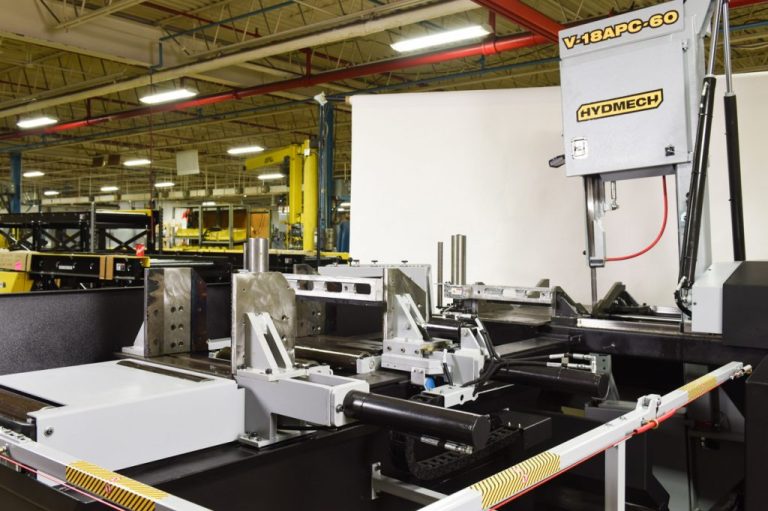
Marvel’s vertical bandsaws, like the Series 800A-PC, offer exceptional mitering ability, which is crucial for structural fabrication and complex frameworks. Hydraulic clamping systems reduce material movement, helping maintain ultra-tight tolerances. Many Marvel saws also feature variable speed drives, allowing you to optimize blade speed for different materials—critical for both tool life and cut quality.
For shops looking to minimize handling, Marvel offers roller infeed and outfeed tables. These additions allow operators to load long stock, process sequential pieces, and transport cut parts directly to the next cell with little effort, aiding progressive assembly lines and reducing bottlenecks.
Evaluating Marvel Bandsaw Models for Operational Demands
Choosing the right Marvel saw comes down to understanding your production profile: part sizes, run quantities, material types, and operator skill level. For high-throughput, multi-shift environments, the Marvel Series 2150A-PC is a standout. Its automatic programmable features, heavy-duty frame, and consistent accuracy make it a popular choice for fabricators pushing for maximum efficiency.
If versatility is required—cutting varied profiles on a single machine—the Series 8 Mark III’s mitering and manual control might be preferable. For shops handling large structural beams or plates, models like the Marvel 2125APC offer extra cutting capacity and power.
Consult your production needs: volume, tolerances, automation, and available floor space. Discuss these with your Marvel dealer or integrator to map a solution tailored to your exact workflow, ensuring you invest in capabilities you’ll actually use.
Best Practices for Integrating Marvel Bandsaws into Your Workflow
Smooth integration starts with layout planning. Position your Marvel saw—ideally with infeed/outfeed tables—near raw material staging and close to the next processing step, minimizing material handling and transport. Ensure ample access for forklifts or overhead cranes if you’re working with heavy stock.
Train key operators on programming and maintenance. Marvel machines are user-friendly, but their advanced features deliver best results in practiced hands. Use the Marvel Touch system to preload standard jobs and make repeat orders as straightforward as possible.
Set up routine checks for blade condition, tension, and guide settings. Smart shops monitor coolant supplies and chip removal to prevent downtime. For maximum performance, tie your Marvel saw into your ERP system for production tracking and material inventory control.
Maximizing Productivity and Cutting Accuracy with Marvel Bandsaws
Leverage Marvel’s automatic features for consistent, error-free cutting, especially on high-volume jobs. Segregate jobs by material and size so operators can run large batches with minimal blade changes. Use variable speed controls and recommended blade types for each material—Marvel provides optimal specs to reduce wear and waste.
For progressive assembly, arrange saws in close proximity to welding or fabrication bays. This streamlines the “cut-to-weld” process, reduces staging, and eliminates unnecessary handling between operations. Consider installing conveyors or magnetic carriers for small parts, maintaining the flow without loading up operators.
Encourage feedback from operators and supervisors—Marvel machines are versatile, and small workflow tweaks can unlock new efficiencies or quality gains.
Maintenance Strategies to Ensure Long-Term Reliability
Routine maintenance is essential for maximizing the lifespan and ROI of any fabrication equipment. With Marvel bandsaws, follow a preventive plan: inspect blades daily, clean chip trays, and check all hydraulics for leaks or pressure loss. Lubricate moving parts and check for proper tension and tracking.
Marvel supports their machines with readily available parts and clear documentation. Schedule quarterly audits with your maintenance team to review alignment, hydraulic performance, and safety features. For high-throughput shops, consider a service contract with a certified Marvel technician for annual deep inspections.
When you invest in scheduled upkeep, Marvel saws often deliver decades of reliable service and precision cutting—making them a foundation for any serious fabrication operation.
Frequently Asked Questions
What makes a Marvel bandsaw better for busy fabrication shops than lower-cost alternatives?
Marvel bandsaws are engineered for heavy-duty use, long-term precision, and minimal downtime. Their automation features and robust construction quickly offset the initial investment through improved productivity and reduced maintenance headaches.
How do I know which Marvel model is right for my material sizes and volumes?
Consult your shop’s primary materials, maximum sizes, and typical batch runs. Marvel and reputable suppliers can recommend specific models and accessories to match your demands.
Is it easy to train operators on Marvel equipment?
Yes, most Marvel models feature intuitive controls and digital interfaces designed for quick operator adoption, minimizing learning curves and errors.
Can Marvel bandsaws help reduce material waste?
Absolutely. Their precise controls and automatic indexing lead to consistent, accurate cuts, minimizing offcuts and scrap.
What are typical costs to maintain a Marvel bandsaw compared to the competition?
While routine maintenance is needed, Marvel saws are designed for cost-effective upkeep. Parts are readily available, and robust engineering means fewer major breakdowns, resulting in lower lifetime costs.
Can these saws fit into automated workflows with conveyors or robot loading?
Yes, many Marvel models can be integrated into semi- or fully automated material handling systems, making them highly suitable for progressive, high-volume fabrication lines.
As a shop leader, your choices drive everything from daily efficiency to reputation for quality. Marvel bandsaws offer the durability and technical capability to help your team meet production goals, stay competitive, and handle metal with confidence. Whether you’re gearing up for growth or upgrading an aging lineup, Marvel provides solutions you can depend on—backed by engineering and support tailored to the realities of metal fabrication. For in-depth recommendations or a workflow consultation, reach out to your Marvel supplier. Productivity, precision, and a safer, smoother operation are all within your reach.
For more information on Marvel Bandsaws and support for your shop’s specific needs, visit Marvel at Mac-Tech or connect with a regional representative for a tailored solution review. Your next dependable cut starts here.
Marvel-style metal-cutting bandsaws are widely used in fabrication shops for accurate, repeatable cuts on structural shapes, bar, and plate, offering a balance of reliability, throughput, and cut quality when properly sized and maintained for the operation.
In Brief
- Purpose-built for metal fabrication, suited to cutting structural steel, bar stock, and other common shop materials.
- Available in manual, semi-automatic, and fully automatic configurations to match production volume and labor strategies.
- Known for accurate, square cuts when properly set up and maintained, supporting downstream processes like welding and machining.
- Commonly used for straight and miter cutting, with models that handle a wide range of cross-sections and profiles.
- Support both one-off job-shop work and higher-volume, repeat cutting when paired with material handling and length stops.
What It Typically Costs
Pricing estimate (USD): $8,000 – $80,000 USD, depending on size, automation level, and options.
- Entry-level or smaller-capacity metal-cutting bandsaws for basic fabrication work tend to fall toward the lower end of this range.
- Mid-range saws with larger cutting envelopes, hydraulic clamping, and semi-automatic operation typically occupy the middle of the range.
- High-capacity or fully automatic production saws with advanced controls, material indexing, and integrated conveyors are usually at the upper end.
- Additional costs can include material handling (infeed/outfeed tables, conveyors), coolant systems, and safety guarding or enclosures.
- Blade costs, guides, and wear parts should be considered in the total cost of ownership, especially in high-throughput environments.
Performance / Spec Considerations
- Cutting capacity (height/width) – Verify the maximum rectangular and round capacity against your largest profiles and bundles; ensure it covers both current and planned work.
- Cutting envelope and miter capability – Consider whether you need straight cuts only, or frequent miters on structural shapes; check available miter angles and how they are set/locked.
- Feed and cutting speed control – Look for adjustable blade speed and feed rate to handle different metals and cross-sections while maintaining blade life and surface finish.
- Automation level – Decide between manual, semi-automatic (powered bow and clamping), or fully automatic (material indexing and repeat cut cycles) based on throughput and staffing.
- Clamping and workholding – Hydraulic or mechanically robust vises are important for holding structural shapes securely to maintain squareness and reduce vibration.
- Coolant and chip evacuation – Flood coolant or mist systems and effective chip removal help with blade life, cut quality, and reduced operator intervention in production cutting.
- Controls and programmability – For operations managers, user-friendly controls with clear status indication and diagnostics can reduce training time and help maintain uptime.
What to Inspect Before You Buy
- Confirm cutting capacity and miter range against your heaviest and largest structural and bar jobs.
- Check frame, bow, and base construction for rigidity, weld quality, and signs of distortion or fatigue.
- Inspect blade guides, wheels, and tensioning mechanism for wear, smooth operation, and ease of adjustment.
- Evaluate clamping system (vises, fixtures) for holding power, adjustability to different profiles, and accessibility for operators.
- Review control layout and safety features (emergency stop, guards, interlocks) for compliance with your plant’s standards.
- Assess coolant delivery and chip management provisions, including access for cleaning and maintenance.
- Verify electrical requirements, footprint, and material handling interfaces versus your shop layout and utilities.
- Ask about availability and lead time for common wear parts such as blades, guides, seals, and hydraulic components.
- Request sample cuts or cutting demonstrations on material similar to your typical jobs to judge cut accuracy and cycle time.
- Review documentation and training support so operators and maintenance staff can bring the saw into production quickly.
Common Questions
How much should I budget for a Marvel-style metal-cutting bandsaw? Typical installed prices fall in the $8,000 – $80,000 USD range, with smaller, simpler saws on the low end and larger or more automated production machines on the high end.
What drives the price difference within that range? Key drivers are cutting capacity, degree of automation, robustness of the frame and clamping, sophistication of the controls, and any integrated material handling or coolant systems.
Is a fully automatic bandsaw necessary for my fabrication shop? Fully automatic models are most justified where you have repeat, high-volume cutting; for mixed, lower-volume work, a semi-automatic saw often offers a better balance of cost and flexibility.
What specifications matter most for structural steel cutting? Focus on cutting envelope for wide beams and channels, miter capability, robust clamping for irregular shapes, and adjustable blade speed and feed to handle varying wall thicknesses.
How do I match bandsaw capacity to my workload? List your largest and most common profiles and bundle sizes, then select a saw whose rated capacity comfortably exceeds those dimensions to avoid bottlenecks and special handling.
How important is coolant on a metal fabrication bandsaw? Coolant is important for blade life and cut quality, especially in production cutting or on tougher alloys; for lighter use, a simpler system may suffice but still offers benefits.
Can one bandsaw handle both one-off jobs and production runs? Many operations use a mid-range, semi-automatic saw that can do quick setup for one-offs yet still run small production batches efficiently when paired with stops or basic material handling.
What should I look for to ensure accurate, square cuts? Check the rigidity of the frame, condition and alignment of blade guides, quality of the vise clamping, and the ability to maintain consistent blade tension and feed rates.
How do I factor operating costs into my purchase decision? Consider blade consumption, coolant use, maintenance time, and operator labor; higher initial investment in a more capable saw can reduce these ongoing costs in busy shops.
When is it worth upgrading from a smaller saw? Upgrade becomes compelling when current capacity limits force multiple setups, slow cutting, or outsourcing, or when you need higher throughput and better repeatability for growing production demand.
Source: Marvel Bandsaws for Metal Fabrication Operations Managers: Reliable Solutions for Precision Cutting
Marvel Bandsaws for Metal Fabrication Operations Managers: Reliable Solutions for Precision Cutting