How Coil-to-Laser Systems Improve Fast Turnaround in Metal Fabrication
In the fast-paced world of metal fabrication, every minute on the shop floor counts. Job orders are shorter, customer expectations are higher, and the need for rapid turnaround is more important than ever. Shop managers and production supervisors understand all too well that real productivity is built on solid work ethic, thoughtful investment in technology, and a practical approach to overcoming day-to-day bottlenecks. Coil-to-laser cutting systems, a technology once reserved for high-volume operations, have increasingly become a game-changer for fabricators that need to deliver fast, precise, and efficient results—even in high-mix, low-volume production environments.
Introduction to Coil-to-Laser Systems in Metal Fabrication
Coil-to-laser systems integrate two key processes: uncoiling flat sheet metal directly from a coil and then cutting it with a high-speed laser. This workflow is different from the traditional setup, where metal arrives as precut sheets that are then moved, stacked, stored, and finally loaded onto a cutting machine. By feeding material straight from coil to the laser, shops eliminate much of the intermediate handling and storage, reducing both time and costs.
Sales teams highlight coil-to-laser lines as a comprehensive solution for shops handling frequent changeovers or needing to optimize their floor space. Machines like the DIMECO Fibercoil system or the BLM Group’s Lasertube can be tailored to various coil widths, thicknesses, and laser wattages, providing options to fit most metal fabrication environments. For many, this technology is not just a luxury for the biggest OEMs, but an investment to maximize automation and keep up with growing demands.
Streamlining Workflow by Integrating Coil Handling and Laser Cutting
Traditional sheet-fed operations require repeated steps: offloading, stacking, staging, and moving metal between workstations. With coil-to-laser systems, sheet metal arrives in a single, continuous feed and goes straight to the laser, slashing movement and handling by up to 60%. Less labor is needed for staging, there’s less risk of part damage, and the shop floor stays organized and safer.
The best coil-to-laser lines come with automated uncoilers, straighteners, and feeding equipment that sync with the laser cutter’s controls. Sales professionals often recommend solutions like the COILTECH Fiber line for shops aiming to combine multiple stations into one, freeing up operators for higher-value tasks or to manage more jobs at once. It’s a streamlined process: load the coil, program the laser, and let the automated line take it from there.
Boosting Throughput with Automated Material Processing
Throughput is critical for keeping the shop running profitably. Coil-to-laser systems are engineered to drive greater throughput by drastically reducing equipment idle time. With standard sheet-fed lasers, operators often wait for sheet loading, unloading of skeletons, and shuffling of finished parts.
Automated coil lines keep the laser supplied with material, while automatic part sorting and stacking remove finished cut parts in real time. For operations juggling different gauge requirements, options like Salico’s coil processing lasers can automatically adjust for varying material thickness and lengths, further speeding up production cycles. More time cutting and less time waiting means tighter project deadlines are easier to hit, and customers get their parts days sooner.
Enhancing Precision and Material Utilization with Continuous Feed Technology
Continuous material feed doesn’t just mean faster work. It enables the laser to nest parts more flexibly on long material strips, improving yield from every pound of steel or aluminum. The result is less scrap, cleaner work areas, and added environmental savings.
Some machine recommendations for exceptional nesting and material utilization include the ARKU FlatMaster Coil-to-Laser line and Han’s Laser Coil Feeding System. These systems boast real-time sheet flattening and digital nesting software that maximize layouts, allowing shops to get more finished pieces per coil. Over time, this extra efficiency leads to substantial material cost savings that have a direct impact on your bottom line.
Reducing Downtime and Changeover Delays in High-Mix Production
Frequent changeovers—switching materials, setups, and part programs—can eat up valuable production hours. Coil-to-laser technologies help reduce these delays. Modern systems use automated coil changers and quick laser program adjustments to transition from one job to the next in minutes, not hours.
Shops handling short runs and diverse order mixes can benefit from brands like Mazak Space Gear or Salvagnini’s coil-based laser lines, which are engineered for flexibility. Sales reps recommend specifying quick-change features and modular coil carriages when purchasing, to make transitions as painless as possible. This is a critical consideration for contract manufacturers, job shops, or those dealing with rapid-fire customer requests.
Driving Productivity Gains and Competitive Advantage in Fabrication Shops
Coil-to-laser systems offer more than just speed and efficiency—they create a foundation for serious productivity gains and competitive advantage. By combining fewer material touches, tighter nesting, reduced machine downtime, and safer shop floors, these systems enable fabrication shops to outperform traditional setups.
The ability to take on more orders with the same staff, reduce overtime, and satisfy fast-turnaround requests means more profitable jobs and happier customers. When matched to the right machine size and control options—such as TRUMPF’s programmable coil lasers or Bystronic’s coil-fed cutting lines—the investment typically pays for itself quickly through reduced waste, labor, and unplanned downtime.
Frequently Asked Questions
What is the main benefit of a coil-to-laser system for fabrication shops?
Coil-to-laser lines cut out steps between receiving material and cutting it, saving labor, time, and material handling.
Can coil-to-laser work for job shops with short-run orders?
Yes, modern systems offer automated coil changes and quick programming for flexible, high-mix production.
Are coil-to-laser machines expensive?
The initial investment is higher than standard lasers, but labor, material, and efficiency savings justify the cost over time.
How does continuous feed improve material usage?
Nesting parts along a continuous strip lets you get more finished parts per coil and reduces scrap compared to standard sheets.
Is operator skill a barrier for these systems?
The latest machines have intuitive controls and automated handling, making adoption practical for most current operators.
What technical requirements should I plan for?
Shops need enough floor space for coil feeds, reliable coil sources, and support for laser maintenance and material handling.
For production managers seeking to stay competitive and deliver top results under real-world deadlines, coil-to-laser systems offer a tangible route to real improvements. Take a practical look at your current bottlenecks and material flows, assess the right system for your production mix, and consider the long-term payback. Consult with trusted vendors about machines best suited to your volume, footprint, and future growth. The path to faster, smarter fabrication is here—and coil-to-laser cutting gives your shop the edge to lead.
Coil-to-laser systems combine coil-fed material handling with high-speed laser cutting to streamline metal fabrication, reducing handling steps, improving material utilization, and supporting fast, repeatable turnaround in smart manufacturing environments.
Quick Look
- Integrated coil feeding and laser cutting minimizes manual sheet loading and part handling.
- Well-suited for high-volume, repeatable parts where setup time and flow efficiency are critical.
- Supports continuous production from coil stock, helping reduce work-in-process and changeover delays.
- Can improve material yield versus sheet-based processing by optimizing nesting along the coil length.
- Typically integrated into broader smart manufacturing cells with automated stacking, sorting, and data collection.
- Most beneficial where coil widths, thickness ranges, and part families are well matched to the system’s capabilities.
What It Typically Costs
Typical investment for a coil-to-laser system ranges from about $900,000 to $2,000,000 USD, depending on configuration and automation level.
- Lower end of the range generally reflects more basic automation and narrower/thinner material capability.
- Higher end reflects wider coil widths, higher cutting power, more advanced automation, and integrated downstream handling.
- Total cost of ownership should consider installation, training, tooling/consumables, and software integration.
- Payback is usually tied to reductions in handling labor, changeover time, and material waste.
- Budgeting should include contingency for layout changes, foundations, and coil storage/handling infrastructure.
Key Selection Factors
- Material range from coil – Confirm supported coil width, thickness range, and material types (e.g., mild steel, stainless, aluminum) match your production mix.
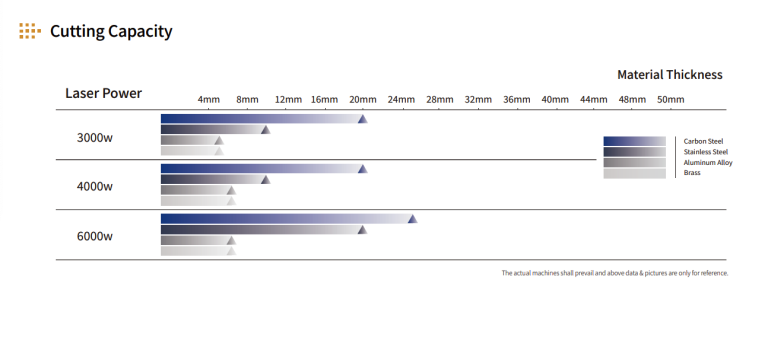
- Laser cutting capability – Match laser power and cutting speed to your typical thicknesses and quality requirements for edges and tolerances.
- Line speed and throughput – Evaluate maximum feed rate and real-world part-per-hour output for your part geometries, not just catalog speeds.
- Coil handling and straightening – Assess decoiling, straightening, and feeding performance to minimize camber, twist, and flatness issues that affect cut quality.
- Automation and part flow – Consider options for automatic stacking, sorting, scrap handling, and integration with upstream/downstream processes.
- Controls and software – Look for nesting, scheduling, and data-collection capabilities that support fast changeovers and smart manufacturing workflows.
- Floor space and layout – Verify that coil storage, decoiler, straightener, cutting area, and outfeed all fit within your plant constraints with safe access.
Buying Advice
- Define your top 10–20 part families and verify the system can run them efficiently from coil with minimal changeover.
- Inspect coil handling hardware (decoiler, straightener, feeder) for build quality, adjustment range, and safety features.
- Review sample cut parts from your own drawings and materials to confirm edge quality, tolerances, and flatness.
- Check how quickly the system can switch between different coil widths/thicknesses and how much operator input is required.
- Evaluate the user interface and programming workflow, including nesting software and connectivity to your existing CAD/CAM and ERP/MES systems.
- Confirm available automation for part sorting, stacking, and scrap removal aligns with your labor and throughput goals.
- Assess maintenance access, required service intervals, and availability of local technical support and spare parts.
- Review energy, assist gas, and other utility requirements, and ensure your facility can support them without major upgrades.
- Walk through a realistic installation and commissioning plan, including training and ramp-up support.
- Request clear lifecycle cost estimates, including consumables, software licenses, and expected upgrades.
Buyer Questions
How do coil-to-laser systems improve turnaround time? They reduce manual sheet loading, enable continuous cutting from coil, and support better nesting, which shortens setup and handling time for high-volume or repeatable parts.
What types of shops benefit most from coil-fed laser cutting? Operations with consistent part families, high volumes, and predictable material specifications see the greatest gains in throughput and material utilization.
Can one system handle multiple material thicknesses and grades? Most coil-to-laser lines are designed for a defined range of coil thicknesses and grades; you should match that range closely to your current and planned work mix.
How does material quality from coil affect cut results? Coil flatness, residual stress, and surface condition influence feeding, straightening, and final edge quality, so consistent coil supply and proper straightening are important.
Is changeover between different coils time-consuming? Changeover time depends on the decoiler design and automation level; when specified correctly, coil changes are infrequent compared to sheet loading and can be planned around production batches.
What should I look for in the control and software package? Focus on nesting efficiency, ease of importing part programs, scheduling flexibility, and data logging that supports smart manufacturing and OEE tracking.
How do these systems integrate into existing production lines? They are typically placed as a front-end cutting cell feeding downstream forming, welding, or assembly, and can be integrated via material handling and data interfaces.
Are coil-to-laser systems suitable for highly customized, low-volume work? They are best optimized for repeatable parts; for highly varied, low-volume work, benefits in handling and nesting may be smaller compared to traditional sheet-fed lasers.
What are the main operating costs to plan for? Key costs include energy, assist gases, routine maintenance, consumables, and software or support contracts, in addition to coil material itself.
How does a coil-to-laser system support smart manufacturing initiatives? By combining automated material flow with connected controls and data collection, it provides real-time visibility into throughput, quality, and utilization for continuous improvement.
Source: How Coil-to-Laser Systems Improve Fast Turnaround in Metal Fabrication
How Coil-to-Laser Systems Improve Fast Turnaround in Metal Fabrication