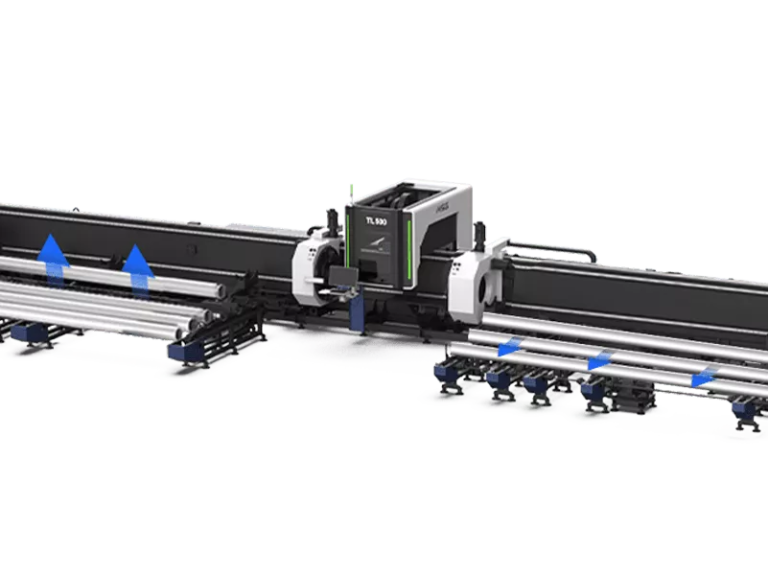
Ermaksan Solutions for Heavy Equipment Fabrication in Metalworking Operations
The heavy equipment fabrication shop lives and dies by its workflow, accuracy, and commitment to moving real metal with real results. Every day, production and operations managers are tasked with maximizing output, minimizing waste, and delivering components that will survive years of tough, real-world use. In an industry where a millimeter can make the difference between a perfect fit and a costly rework, leveraging advanced technology becomes essential. Ermaksan’s lineup of press brakes, fiber lasers, and automated punching systems bring reliable solutions with an unwavering work ethic built into each machine—addressing the kind of real production challenges fabrication professionals face.
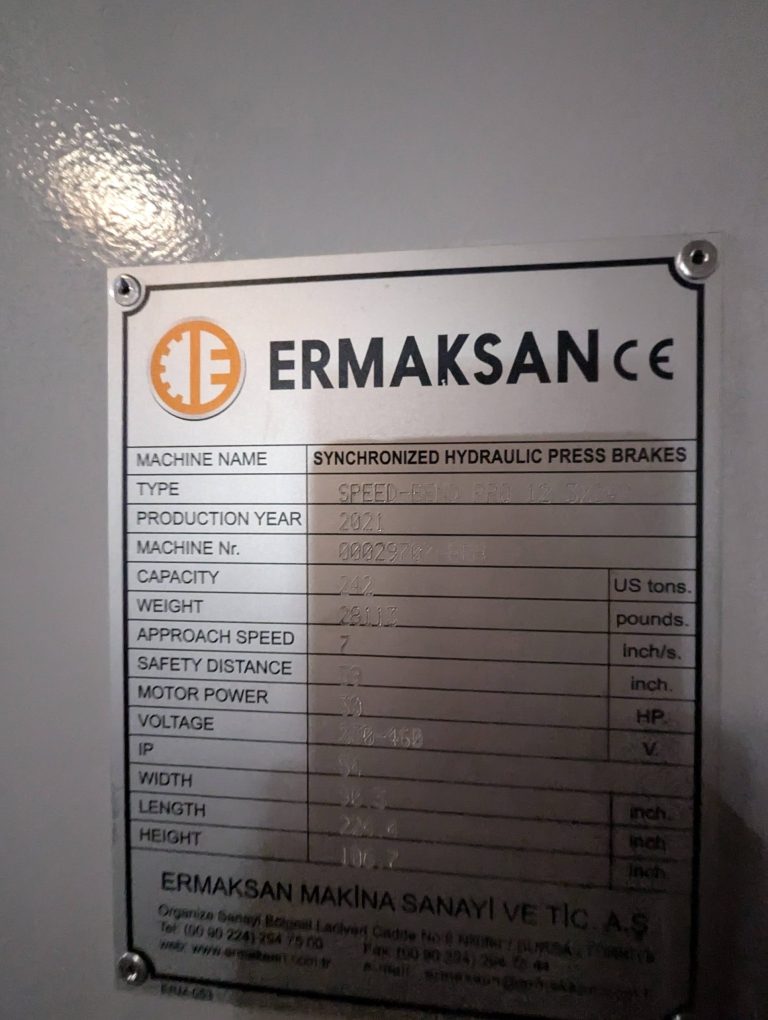
Leveraging Ermaksan Press Brakes to Improve Bending Precision in Heavy Equipment Components
Heavy equipment demands heavy-gauge steel, which brings its own set of bending challenges: springback, inconsistent materials, and absolute requirement for repeatability. Ermaksan’s press brakes are purpose-built to meet these criteria, giving shop managers the confidence to produce precisely bent components—beams, brackets, mounts, and massive plates—in a single setup.
Sales-based solutions begin with machine selection. Ermaksan’s POWER BEND PRO series, for example, offers high tonnage (300 tons and up) and deep throat clearance, perfect for the thick plate and large parts found in construction equipment, mining gear, or truck chassis. The available angle measurement systems ensure closed-loop feedback for every bend, regardless of operator skill level or variations in material thickness. Automated tooling changeovers and ergonomic front supports further reduce hands-on setup, allowing skilled operators to focus on throughput rather than wrestling with handling heavy stock.
From a technical knowledge perspective, Ermaksan press brakes feature CNC control that allows storage of custom bend programs and compensation for plate thickness variations, reducing part-to-part deviation. Backgauge and crowning systems create consistent, straight bends every time, even on tough, high-strength steels. Logistically, positioning these machines close to material input zones and integrating them with lifting aids minimizes material handling and the need for multiple cranes or excess floor space—streamlining assembly flow.
Achieving Consistency in Thick Plate Cutting with Ermaksan Fiber Lasers
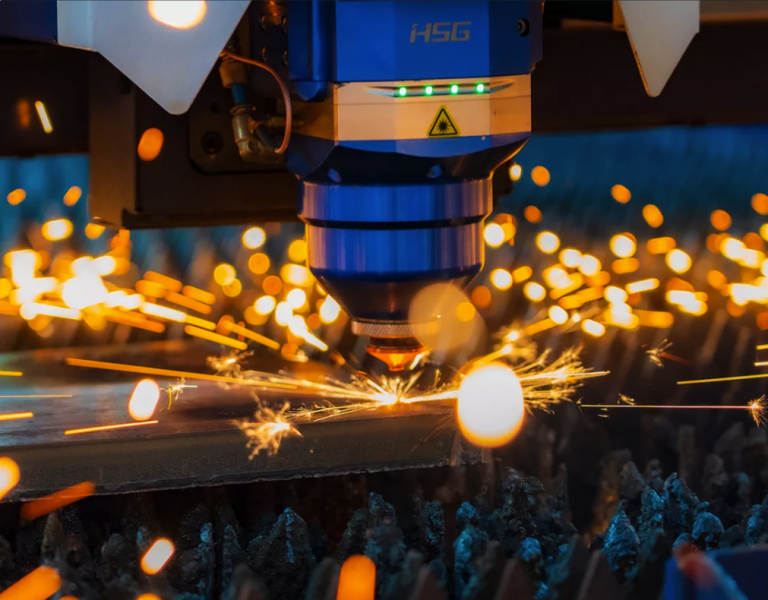
When it comes to cutting thick plate, consistency and edge quality are just as important as speed. Ermaksan’s ENAVISION and FIBERMAK Gen-5 fiber laser cutting systems offer real advantages for operations managers focused on reliable production with minimal rework.
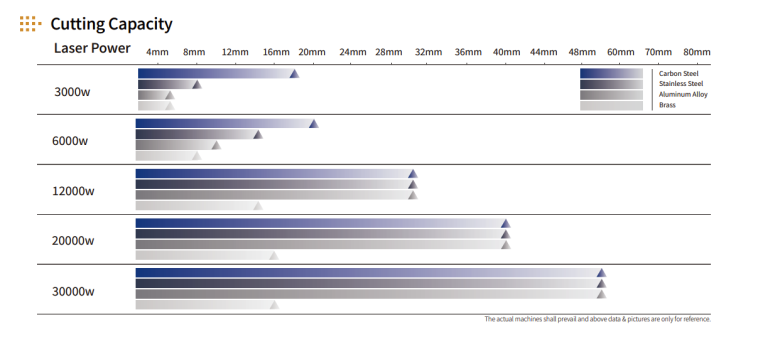
From a sales-based angle, replacing or supplementing oxyfuel and plasma with Ermaksan fiber lasers means faster start-to-finish part cycles, far cleaner kerf quality, and minimal post-cut cleanup. For applications like construction machinery gussets, loader arms, or frame reinforcements, the capacity to handle up to 30mm (1-1/4”) steel plate with ease provides significant flexibility in your production arsenal.
Ermaksan’s laser platforms are designed to handle heavy sheets with robust shuttle tables for nonstop production—one table is processed while the other is loaded or unloaded, significantly reducing downtime. High-precision servo drives paired with in-line real-time monitoring ensure every edge remains accurate and burr-free, eliminating the need for secondary grinding. Integrated nesting software reduces waste and maximizes plate yield, directly impacting your bottom line.
Efficient placement in your shop’s workflow is simplified by Ermaksan’s modular designs, which can be configured to suit your available floor space and material handling pathways. Integrate fiber lasers near your raw material storage for less back-and-forth, and automate loading with available sheet feeders to keep operators on value-added tasks.
Enhancing Production Throughput Using Ermaksan Automated Punching Systems
For components with multiple holes, slots, or cutouts—especially in high volume—manual punching can be a bottleneck. Ermaksan’s SPEED-BEND line of punching systems combines speed, reliability, and automation, transforming how production managers handle repetitive tasks.
From a solution-based sales perspective, an automated punching machine replaces several manual setups, reducing operator fatigue, error, and wait time between tool changes. The Ermaksan FPP series offers automatic tool changers and programmable sheet movement, making it ideal for equipment side panels, mounting brackets, or subassemblies requiring complex perforations.
Technical efficiency comes from servo-driven turrets, which provide high-speed indexing and zero lost time during operation. The software interface allows for easy programming of multi-hit, multi-diameter hole patterns—perfect for batch production as well as one-off prototyping. Production throughput doubles or triples as material is moved through the system seamlessly, reducing overall part travel in the shop.
Logistically, installing the punching system adjacent to laser or brake press stations allows finished parts to move directly to the next fabrication step, eliminating staging areas and unnecessary forklift traffic while maintaining lean assembly flow.
Integrating Ermaksan Solutions for Seamless Workflow and Digital Monitoring
Mixing old-school muscle with modern data, Ermaksan offers intelligent integration options for shop managers who need more than just raw power—they need insight. Whether you are managing one press brake or a quarter-million-square-foot manufacturing floor, digital monitoring makes all the difference.
On the sales solutions front, Ermaksan’s Industry 4.0-ready technologies allow production managers to track machine status, uptime, production rates, and maintenance schedules in real time. This means you know which job is on what machine, when it will be finished, and when your next maintenance window is—before there’s a bottleneck.
From a technical and logistical standpoint, Ermaksan machines are designed with open interfaces for seamless integration with most popular ERP or MES systems. This plugs your shop floor directly into your planning and scheduling, so material, labor, and FIFO assembly remain organized and ahead of the job queue. Enabling data-driven adjustments reduces costly mistakes, machine idle time, and helps balance workloads between cutting, forming, and punching cells.
Maximizing Material Utilization and Reducing Waste in Heavy Fabrication Operations
Few things eat up margin like wasted steel. The thicker the gauge, the costlier the drops and skeletons. Ermaksan’s intelligent software solutions, coupled with machine accuracy, attack this problem head-on for the savvy shop manager.
From a sales insight perspective, Ermaksan provides advanced nesting algorithms with its cutting systems, ensuring that even complex part layouts make best possible use of every plate. Scrap reduction of even 2–5 percent translates directly to real cost savings over time, particularly as steel prices fluctuate.
Technically, accurate cutting and forming minimize the need for secondary operations, meaning fewer parts are scrapped because of tolerance drift or operator error. Ermaksan’s user-friendly software makes it easy to adjust layouts for remnant re-use—a core reason why shops experience reduced material waste month after month.
Logistically, using machines that perform with high first-pass yield means fewer rejected parts waiting in queues, less handling, and more predictable material demand, allowing purchasing and inventory teams to optimize orders and minimize on-hand stock.
FAQ
What are the main benefits of switching to Ermaksan fiber lasers for thick plate cutting?
You’ll see faster cutting speeds, better edge quality, lower secondary processing, and less waste compared to traditional oxyfuel or plasma cutters.
How do Ermaksan press brakes help with repeatability and precision?
Their CNC controls and real-time feedback systems ensure consistent bends on every part, even across heavy, variable-thickness steel.
Can I integrate Ermaksan machines into my current workflow?
Yes, their machines are built for modular setup and can connect to most digital shop management systems.
Is automation worth the investment for punching operations?
Automated punching systems greatly reduce manual handling, speed up production, and minimize errors—paying off quickly for high-volume work.
How can Ermaksan solutions help reduce waste?
Their nesting software and accurate cutting/forming minimize scrap, allowing for more parts per plate and less unused material.
What if I need technical support or custom machine configurations?
Ermaksan’s team and dealers provide technical consultation and support to tailor machines to your production needs.
Outfitting your operation with Ermaksan solutions means you’re investing in reliability, precision, and a strategic edge in heavy equipment fabrication. Whether building earthmovers, transport frames, or rugged mining assemblies, Ermaksan helps you deliver consistency and strong margins with less waste, less downtime, and less guesswork. For more information, connect with your authorized dealer to request a shop analysis or discuss tailored solutions for your toughest metalworking challenges.
Ermaksan provides a range of metal fabrication solutions (such as bending, cutting, and forming systems) that can be configured for heavy equipment manufacturing, with costs and capabilities varying significantly by machine type, size, and options.
In Brief
- Ermaksan solutions are suited for heavy equipment fabrication where high precision and repeatability in metalworking are required.
- Systems can typically be configured for thick plate work, structural components, and large-format parts used in heavy machinery.
- Automation options (material handling, CNC controls, and process monitoring) are often key to improving throughput and consistency.
- Configuration flexibility allows alignment with specific production needs, from prototyping to high-volume runs.
- Overall investment depends heavily on working length, thickness capacity, automation level, and integration with existing workflows.
Typical Cost Ranges
Pricing estimate (USD): Varies by configuration.
- Base-level configurations for simpler metalworking tasks generally cost less but may limit thickness capacity and automation.
- Mid-range setups with enhanced CNC controls, better backgauges, or improved cutting/forming capacity are priced higher due to added productivity.
- High-capacity systems for heavy plate, large work envelopes, or multi-axis capability can represent a major capital investment.
- Automation options (load/unload systems, conveyors, part sorting) can significantly increase cost but reduce labor and handling time.
- Custom tooling, special fixturing, and integration with upstream/downstream equipment also add to total project cost.
- Service contracts, training, and software licenses should be factored into total cost of ownership, not just purchase price.
Performance / Spec Considerations
- Material thickness and size capacity: Confirm the maximum plate thickness and sheet/plate size that can be processed in line with heavy equipment components (frames, booms, brackets, and wear parts).
- Work envelope and bed length: Ensure the working length and overall work envelope can accommodate large, long, or bulky parts typical of heavy machinery fabrication.
- Power and rigidity: For forming or cutting thick materials, machine rigidity, structural design, and available power are critical for maintaining precision over time.
- Precision and repeatability: Evaluate positioning accuracy, repeatability, and control resolution to meet tight tolerances on mating parts and welded assemblies.
- Automation and material handling: Consider options like automatic loading, unloading, and stacking to reduce manual handling of heavy plates and improve safety.
- Control system and software: Check CNC and software capabilities for nesting, offline programming, and integration with your existing CAD/CAM and ERP systems.
- Throughput and cycle time: Match machine speed and changeover efficiency to your production volume and mix, especially where multiple part families are processed.
What to Inspect Before You Buy
- Verify the machine’s rated capacity (thickness, length, and material type) against your thickest and largest planned parts.
- Inspect the frame, guides, and structural components for rigidity, alignment, and evidence of design suitable for heavy-duty operation.
- Review the control interface and software workflow to ensure it is compatible with your programming methods and operator skill levels.
- Check available safety features and guarding, especially for handling large and heavy workpieces common in heavy equipment fabrication.
- Confirm available tooling, consumables, and spare parts, and how quickly they can be sourced or replaced.
- Ask for sample parts or test runs using your own drawings and materials to validate cut quality, forming accuracy, and cycle times.
- Assess accessibility for maintenance, including ease of reaching wear components and critical service points.
- Clarify installation requirements: floor space, foundation needs, power supply, and ventilation or extraction where applicable.
- Evaluate training and support options for operators, programmers, and maintenance staff.
- Request a clear breakdown of total cost of ownership, including expected consumable usage, service intervals, and software or license fees.
Buyer Questions
How does configuration affect the price of Ermaksan solutions? Price varies by configuration because factors like capacity, automation level, control options, and integration requirements significantly change both hardware and software content.
Are these machines suitable for very thick plate used in heavy equipment? Suitability depends on the specific model and configuration; you should match the rated thickness and size capacity to your heaviest and largest plate requirements.
What should I focus on for precision in heavy equipment components? Focus on machine rigidity, control accuracy, and repeatability specifications, as well as how the system handles large, heavy parts throughout the work envelope.
Can Ermaksan systems integrate with existing CAD/CAM workflows? Integration is configuration-dependent, so you should verify that the control and software options support your current file formats and nesting or programming methods.
How important is automation for heavy equipment fabrication? Automation can be very important where plate is large and heavy, improving safety and throughput, but it adds cost and should be justified by your production volume and labor structure.
What kind of maintenance access should I look for? Look for clear access to wear parts, lubrication points, filters, and major components so that routine maintenance and troubleshooting can be done quickly and safely.
How do I validate that a configuration meets my production needs? Request sample parts or demonstrations using your own drawings and materials, and compare achieved cycle times and tolerances with your production targets.
What role does software play in overall productivity? Software for nesting, programming, and job management can significantly reduce setup time and material waste, especially when running a mix of heavy equipment parts.
Should I consider future capacity growth when choosing a model? Yes, selecting a configuration with some headroom in thickness, size, or automation can reduce the need for early replacement as your workload grows.
How do I compare total cost of ownership between options? Include purchase price, tooling and consumables, energy usage, maintenance, training, and expected uptime to get a realistic comparison between different configurations.
Source: Ermaksan Solutions for Heavy Equipment Fabrication in Metalworking Operations
Ermaksan Solutions for Heavy Equipment Fabrication in Metalworking Operations