Fiber Laser Loading/Unloading

Fiber laser loading/unloading systems with bridge-type vacuum loading are automated solutions that transfer raw sheet material onto a fiber laser’s shuttle table and remove cut parts/skeletons, improving throughput, consistency, and labor efficiency in mass-production laser cutting operations.
Overview
- Bridge-type vacuum loading uses suction cups on a gantry to pick sheets from a stack and place them precisely on the fiber laser’s shuttle table.
- Designed to integrate with fiber laser cutting machines, especially for high-volume, repetitive sheet metal jobs.
- Enables automatic, smooth, and accurate sheet placement, reducing handling damage and positioning errors.
- Supports mass production by minimizing idle time between cutting cycles and reducing dependence on manual loading.
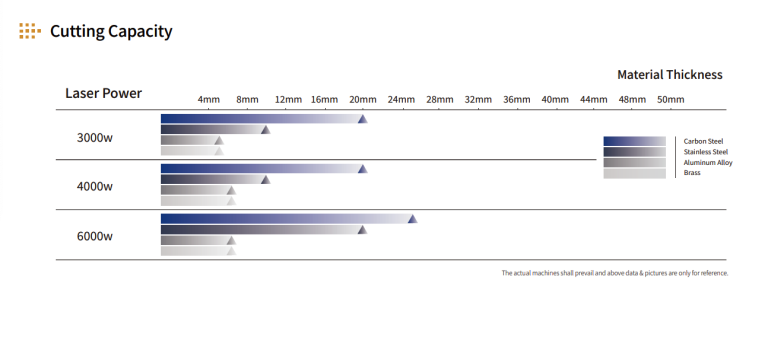
- Typically handles standard sheet formats (e.g., common plate sizes and thickness ranges) within the fiber laser’s capacity.
- Improves operator safety by reducing manual lifting and contact with sharp sheet edges and cut skeletons.
Budgeting & Pricing
Typical cost range: $1,050,000 – $2,500,000 USD, depending on configuration, level of automation, and integration scope with the fiber laser system.
- Price is influenced by sheet size capacity (e.g., small-format vs. large-format shuttle tables) and overall automation level (simple loading vs. full loading/unloading and stacking).
- Higher-end systems may include more advanced material handling (multiple pallet stations, buffering towers, or more complex part separation) which increases cost.
- Budget should include installation, commissioning, and training, not just the hardware.
- Consider total cost of ownership: reduced labor, fewer handling errors, and higher machine utilization can offset higher initial investment.
- Factor in potential future expansion (e.g., adding more shifts or more material types) when assessing return on investment.
Key Selection Factors
- Sheet size and thickness range – Ensure the vacuum bridge system matches the maximum sheet dimensions and thicknesses your fiber laser is designed to cut.
- Payload and vacuum capacity – Verify the vacuum cups and bridge structure can reliably lift the heaviest sheets you plan to process without slipping or deflection.
- Positioning accuracy and repeatability – Check that the system can place sheets on the shuttle table within the alignment tolerances required for precise laser cutting.
- Cycle time and throughput – Evaluate loading/unloading times relative to your cutting cycle time to avoid bottlenecks and keep the laser running continuously.
- Integration with fiber laser controls – Confirm compatibility with the laser’s automation interface for synchronized shuttle table movement, job sequencing, and safety interlocks.
- Material surface protection – Look for features that minimize scratching or marking of visible surfaces, especially for coated or decorative sheet materials.
- Footprint and layout – Assess how the bridge and stack locations fit within your shop, including clearance for material pallets and forklift access.
Buying Advice
- Confirm the system’s rated sheet size, thickness, and weight match or exceed your current and planned material range.
- Inspect the vacuum cup arrangement and adjustability to ensure good coverage for different sheet formats and to minimize risk of sheet sagging.
- Review the control interface and how it integrates with your fiber laser’s CNC and safety systems, including emergency stops and guarding.
- Ask for documented cycle times (load, unload, table change) for your typical sheet size and material thickness.
- Check available sensors and detection (e.g., sheet presence, double-sheet detection) to reduce misloads and collisions.
- Evaluate accessibility for maintenance: ease of reaching vacuum lines, filters, and moving components on the bridge.
- Discuss training and support provisions for operators and maintenance staff, including documentation and troubleshooting procedures.
- Plan your floor layout in advance, including raw material staging and finished-part removal, to fully benefit from the automation.
- Verify that the supplier can assist with commissioning, parameter optimization, and integration into your production workflow.
- Consider future scalability—whether the system can be upgraded with additional automation (e.g., more pallets or sorting options) as volumes grow.
Buyer Questions
What does a bridge-type vacuum loading system do on a fiber laser? It automatically lifts sheet material from a stack using vacuum cups on a gantry bridge and places it accurately onto the laser’s shuttle table, reducing manual handling and setup time.
Is this type of system suitable for mass production? Yes, it is specifically described as a practical and economical solution for mass production where continuous, repeatable loading is required.
What is the typical investment for a fiber laser with automated loading/unloading? The indicative pricing range is about $1,050,000 – $2,500,000 USD, depending on configuration and scope of automation.
Can it handle different sheet sizes and materials? It is designed for raw sheet materials within the capacity of the paired fiber laser; you should confirm supported sheet formats, thicknesses, and surface types with the supplier.
How does it improve productivity compared to manual loading? By automatically and quickly loading sheets onto the shuttle table and coordinating with cutting cycles, it reduces idle time, operator intervention, and handling delays.
Does a vacuum loading system help with safety? Yes, it reduces the need for operators to manually lift heavy sheets and handle sharp edges, lowering the risk of injuries.
What shop conditions are important for reliable operation? Adequate floor space, clear access for material stacks, stable power supply, and a relatively clean environment help ensure consistent mechanical and vacuum performance.
Can it be integrated with an existing fiber laser? Integration is often possible but depends on mechanical compatibility and control interfaces; this must be reviewed with the machine and automation supplier.
What maintenance does a vacuum loading bridge require? Typical tasks include checking vacuum cups and lines, inspecting moving components on the bridge, and maintaining sensors and safety devices according to the supplier’s schedule.
How should I evaluate if the investment is justified? Compare the system cost to expected gains in machine utilization, labor savings, reduced handling damage, and throughput increases over the planned service life.
Source: Fiber Laser Loading/Unloading
Fiber Laser Loading/Unloading