Mastering Sheet Metal Folding: A Fabricator’s Guide
Sheet metal folding is a fundamental process in metal fabrication, crucial for creating precise and durable components. Whether you’re a seasoned professional or new to the field, mastering this skill can significantly enhance your production capabilities. This guide delves into the essentials of sheet metal folding, from understanding the basics to selecting the right tools and applying expert techniques for flawless results.
Understanding the Basics of Sheet Metal Folding
Sheet metal folding involves bending metal sheets into desired shapes and angles, a process essential for creating everything from simple brackets to complex enclosures. Key concepts include:
- Bend Allowance and Bend Deduction: These are critical calculations that account for the material’s stretch and compression during bending. Understanding these helps in achieving accurate dimensions.
- Material Properties: Different metals have varying ductility and tensile strength, influencing how they fold. For instance, aluminum is more malleable than steel, affecting the force needed for bending.
- Bend Radius: This refers to the inside radius of the bend. A larger bend radius reduces the risk of cracking, especially in harder metals.
“Mastering these basics ensures a strong foundation for more advanced folding techniques.”
Essential Tools for Precision and Efficiency
Having the right tools is crucial for achieving precision and efficiency in sheet metal folding. Here are some must-have tools:
- Brake Press: A versatile machine that applies force to bend metal sheets. Available in manual, hydraulic, and CNC variants, each offering different levels of control and automation.
- Folding Machine: Ideal for creating complex folds and shapes, these machines offer precision and repeatability.
- Hand Tools: Essential for small-scale or detailed work, including hammers, mallets, and hand seamers.
- Measuring Tools: Accurate measurements are vital. Tools like calipers, protractors, and rulers ensure precise bends.
“Investing in quality tools can significantly improve your workflow and product quality.”
Tips and Tricks for Perfect Folds Every Time
Achieving perfect folds requires more than just the right tools; it involves technique and experience. Here are some tips and tricks:
- Plan Your Bends: Always plan the sequence of bends to avoid interference and ensure accessibility.
- Use Test Pieces: Before working on the final piece, use test pieces to fine-tune your settings and techniques.
- Mind the Grain: Metal sheets have a grain direction. Bending perpendicular to the grain can reduce the risk of cracking.
- Adjust for Springback: Metals tend to spring back slightly after bending. Adjust your angles to compensate for this effect.
“Practice makes perfect. Regularly experimenting with different techniques can lead to better results.”
Mastering sheet metal folding is a blend of science and art, requiring both technical knowledge and hands-on experience. By understanding the basics, investing in the right tools, and applying expert techniques, fabricators can achieve precision and efficiency in their work. For more insights and resources on mastering sheet metal folding, visit Mastering Sheet Metal Folding: A Fabricator’s Guide.
Sheet metal folding turns flat stock into precise channels, boxes, and complex profiles using controlled bending forces, and understanding cost, performance specs, and inspection points is essential whether you’re outfitting a small fab shop or scaling a high-throughput production line.
Overview
Sheet metal folding is the controlled bending of metal sheets along straight lines to create defined angles and profiles. It is central to ductwork, enclosures, brackets, panels, and architectural components. Selecting the right folding solution means matching material type, thickness, and part complexity to a machine’s capacity, tooling, and control system while keeping budget and throughput in balance.
- Used to form flanges, hems, channels, boxes, and simple or multi-bend profiles from flat sheet.
- Commonly applied to mild steel, stainless, and aluminum in gauges suited to the machine’s tonnage or clamping force.
- Accuracy depends on machine stiffness, backgauge quality, and control of bend sequence and angle.
- Automation level can range from manual stops and angle gauges to CNC-controlled backgauges and folding beams.
- Tooling selection (straight, gooseneck, radius tools) determines which geometries can be folded without collisions.
- Proper setup—material support, bend order, and springback compensation—is as important as raw machine power.
Typical Cost Ranges
Pricing estimate (USD): Varies by configuration.
- Entry-level manual or light-duty folding solutions are typically at the lowest end of the range, reflecting simpler mechanics and minimal automation.
- Mid-range machines with powered clamping, powered backgauges, and basic programmable controls occupy the middle of the cost spectrum.
- Large-format or higher-capacity machines for thicker material and longer bends sit toward the upper end due to heavier frames and drives.
- Advanced CNC folding systems with multi-axis backgauges and extensive automation features can significantly increase investment cost.
- Tooling packages, safety systems, and material handling options (supports, conveyors, stackers) can add materially to the base machine price.
- Installation, training, and electrical or foundation work should be considered as part of the total project budget, not just the sticker price.
Performance / Spec Considerations
- Maximum bend length – The longest continuous fold the machine can perform; this must at least match your largest part dimension along the bend line.
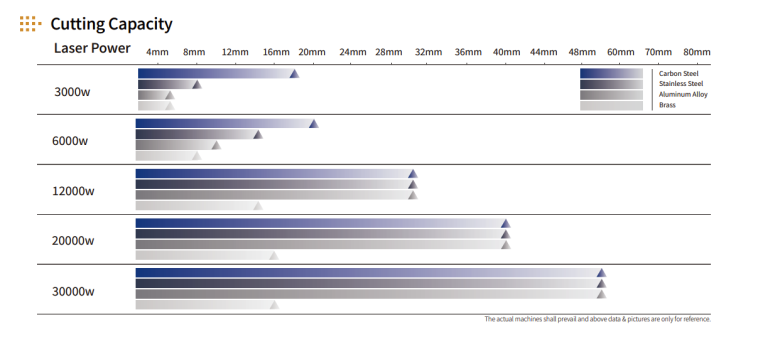
- Material thickness / capacity – Rated for specific thicknesses of mild steel, stainless, and aluminum; exceeding these limits risks poor bends or damage.
- Bend angle accuracy and repeatability – How consistently the machine can hit a target angle across multiple parts and over the full working length.
- Backgauge travel and axes – Range and number of controlled axes determine how quickly and accurately you can position parts for successive bends.
- Clamping and folding beam force – Adequate force is needed to hold the sheet securely and overcome material strength and springback.
- Tooling style and flexibility – Compatibility with different punch and die or folding beam tools affects the range of profiles you can produce.
- Control system / CNC capability – From simple angle presets to full program storage with bend sequences, offline programming, and diagnostics.
- Throughput and setup time – Rapid adjustment of backgauges, tools, and support systems reduces downtime between jobs and boosts productivity.
What to Inspect Before You Buy
- Confirm the machine’s rated bend length and material thickness capacity against your current and projected job mix.
- Inspect the frame, beams, and hinges for rigidity, visible wear, cracks, or distortion that could affect straightness and accuracy.
- Check the backgauge system for smooth motion, minimal backlash, and reliable positioning across the full travel range.
- Evaluate the control interface: clarity of displays, ease of programming bend sequences, and availability of language/support options.
- Review the tooling package for wear, straightness, and suitability for your typical profiles, including clearance for box and channel work.
- Verify safety features such as guards, interlocks, emergency stops, and labeling are present and functional.
- Ask for sample bends in your own materials to assess angle consistency, straightness, and surface finish.
- Confirm power requirements, footprint, and access needs (loading/unloading space, crane or forklift access) for your facility.
- Request documentation on maintenance intervals, lubrication points, and availability of spare parts and technical support.
- Assess ergonomics: work height, sheet support, and handling aids to reduce operator fatigue and improve part quality.
FAQ
What is sheet metal folding? Sheet metal folding is the process of bending flat metal sheets along straight lines to create angles and profiles such as flanges, channels, and boxes.
How is folding different from other bending methods? Folding typically clamps the sheet and rotates a beam to create the bend, whereas other methods may press the sheet into a die; the result is similar, but tooling, forces, and part handling differ.
What materials can be folded? Most machines are designed for mild steel, stainless steel, and aluminum within specified thickness limits; always check the rated capacity for each material type.
How do I choose the right bend length capacity? Select a machine with a bend length at least as long as your largest part’s bend dimension, with additional allowance if you expect larger work in the future.
Why is backgauge quality important? A precise and repeatable backgauge ensures consistent flange lengths and faster setup, directly affecting part accuracy and throughput.
What role does the control system play? The control system governs angle settings, bend sequences, and sometimes springback compensation, making complex parts easier to produce consistently.
Can one machine handle both thin and relatively thick sheet? Within its rated range, a machine can handle multiple thicknesses, but performance and achievable profiles are limited by its maximum capacity.
How does springback affect folding? After bending, metal tends to relax and partially unbend; machines and operators compensate by overbending to achieve the desired final angle.
What maintenance does a folding machine require? Typical needs include lubrication of moving components, inspection of wear surfaces, checking fasteners, and verification of safety and control functions.
Is automation necessary for small shops? Not necessarily; smaller operations may work effectively with simpler machines, while higher automation becomes more valuable as part volumes and complexity increase.
Source: Mastering Sheet Metal Folding: A Fabricator’s Guide
Mastering Sheet Metal Folding: A Fabricator’s Guide