Selecting Optimal Laser Wattage for High-Mix Metal Fabrication Throughput
Every fabrication shop thrives on two things: delivering consistent quality and maximizing productivity under real-world deadlines. For operations managers, striking the right balance between machine investments, floor layouts, and the vast mix of required jobs is an everyday challenge. When it comes to laser cutting in a high-mix metal environment, the wattage of your laser is one of the most crucial choices you’ll make. Selecting the ideal power directly affects throughput, cut quality, flexibility, and ultimately your shop’s profitability. With new advances in fiber laser technology and competing claims about output speeds, it’s important to make this decision based on your specific workflow—not just brochure numbers or theoretical maximums.
Assessing Fabrication Requirements and Material Mix
Start by thoroughly evaluating what your operation really needs. This involves looking beyond just average sheet thickness. Take an inventory of your production jobs over recent months: catalog material types (stainless, aluminum, mild steel), thickness ranges, batch sizes, and complexity of shapes. Are you running more short-run, custom orders or high-volume repeat parts? What are the tightest tolerances and edge qualities demanded by your customers?
A high-mix shop needs to process everything from thin gauge down to thick plate on the same system, so laser versatility is key. Consider how often you change materials during a shift, as frequent changes may tilt your needs towards systems with rapid changeover capabilities and minimal setup times. In some cases, pairing machines with modular automation that presorts material or unloads skeletons can rapidly increase throughput while reducing error rates and material handling costs.
Talk to your machine supplier about real-world cycle times (including changeover), not just nominal cutting speeds. This can inform whether you need high wattage for thick material bursts or a more balanced wattage for consistent, all-day mixed runs.
Evaluating Laser Technologies for Diverse Metal Workloads
With ongoing improvements, fiber lasers have become the dominant technology for most fabrication operations. They provide higher electrical efficiency, lower maintenance, and faster cut speeds on thin-to-medium material versus legacy CO2 systems. However, not every job benefits equally from the highest-available wattage.
In high-mix shops, a mid-range fiber laser (6-12 kW) often provides the best balance. These machines excel at cutting thin to medium sheet metal cleanly and at high speed, but also have the muscle to process inch-plus plate when necessary. The latest models boast modular shuttle tables, fully integrated chiller units, and support for nitrogen or oxygen assist gases depending on cut quality needs.
If your workflow is skewed heavily towards thick plate cutting or exotic metals, consider specialized features such as adaptive beam shaping, piercing sensors, and programmable nozzles. Ask about head cooling and intensified dust extraction—key for maintaining uptime in cutting demanding materials.
Matching Laser Wattage to Throughput and Cut Quality Targets
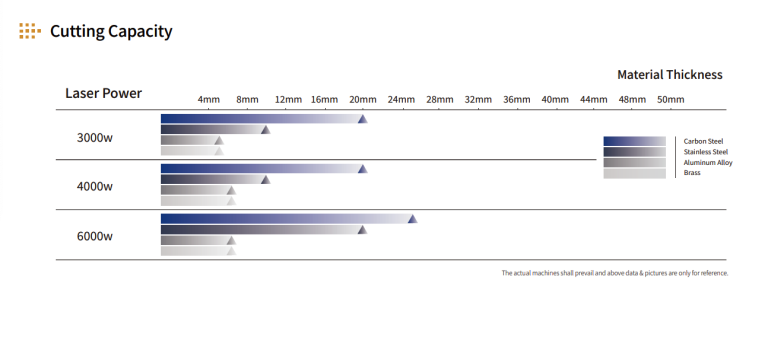
Laser wattage is directly tied to two things: how quickly you can cut through various materials and the cut quality you can reliably deliver. As wattage increases, cutting speed rises—especially in thin metals—while thicker materials reach diminishing returns past a certain power level due to limitations in gas flow and cut stability.
For a typical high-mix job shop, a 6 to 10 kW fiber laser comfortably processes steel, stainless, and aluminum in thicknesses from 24 gauge up to 1 inch, keeping both speed and quality in balance. Running above 12 kW is rarely necessary unless you’re focused on heavy plate production all day, every day.
When comparing machines, ask for real throughput numbers per shift—not just inches per minute, but also including typical downtime for cleaning, lens changes, or nozzle replacement. Many shops find a slightly lower wattage machine running at high utilization outpaces a high-power, high-maintenance beast that sits idle during changeovers or troubleshooting.
A trusted sales partner will guide you with data from actual customer environments—ask for reference sites and run sample jobs with your preferred material mix.
Balancing Investment, Efficiency, and Operational Flexibility
It’s tempting to chase the “biggest and fastest” machine, but a high-wattage unit is a large capital investment and may grow operational costs if underutilized in day-to-day high-mix work. Calculate the payback period based on your typical job mix, not just your dream order.
Lower-wattage or modular laser systems allow you to scale up later as new customer demands arise. Evaluate features like dual shuttle tables, robotic part pickers, or tower storage integration—they help keep your laser fed and parts moving to welding or bending without bottlenecks.
Integrate material handling solutions that are right for your throughput targets. For instance, auto-unload and sorting solutions paired with nesting software can cut labor requirements and reduce scratches or rework, boosting overall margin.
Involve your operators and floor leads in finalized machine selection. They’ll spot potential interruptions or handling inefficiencies in your assembly process that may not be obvious at the spec sheet level.
Integrating Automation and Software for Maximum Throughput
Automation and smart nesting software unlock the true throughput of your chosen laser wattage. In a high-mix shop, it’s not about how fast a single part is made, but how fast you can get the next job on the table and out the door.
Look for machines with native integration to offline programming and real-time queue management, allowing jobs to be staged and grouped by material type and thickness. Cell controllers can optimize tool changes and batch jobs to minimize downtime.
Invest in systems that automate not only sheet loading and unloading but also scrap skeleton separation and finished part sorting. This reduces material handling steps, freeing up your skilled staff for more value-added tasks like welding and assembly.
Ask your supplier for a complete workflow simulation based on your part catalog and staffing levels. The right mix of laser power, software, and automation ensures you’re not only cutting faster, but delivering more finished product per shift, with less manual intervention.
FAQ
How does laser wattage impact cutting speed and quality?
Higher wattage increases cutting speed, particularly for thin and medium materials. For thick plates, benefits taper off. Too much power can affect cut edges negatively if not properly tuned.
Will a high-wattage laser really pay off for my high-mix shop?
Not always. Most high-mix shops benefit from balanced wattage, since they run a range of materials and thicknesses. Bigger isn’t always better if utilization and job mix don’t match.
What automation options boost my throughput the most?
Automated sheet loaders, shuttle tables, and nesting software that batch similar jobs can dramatically reduce manual handling and increase shift output.
Is there a risk in under- or over-sizing my machine?
Yes. Too small and you face delays on big jobs; too large and your costs rise, with idle capacity. Evaluate actual production logs and consult directly with suppliers using your data.
How do I minimize material scratches and damage?
Invest in automation that gently handles sheets and integrates scrap separation. Less manual movement leads to fewer defects and reduces rework or downstream headaches.
What should I ask my laser supplier?
Ask for real-shift throughput data, maintenance requirements, reference shops, and specific software or handling integration solutions for mixed-material operations.
By taking a data-driven approach to machine selection, focusing on your real workload and progressive assembly needs, you’ll find the right wattage and solution for your high-mix metal shop—not just for today, but scalable for future growth. Lean on vendors for demos and workflow mapping, and keep your team involved in optimizing setups and layouts. The result? A fabrication floor that’s productive, agile, and ready to tackle whatever jobs come through the door.
Selecting Optimal Laser Wattage for High-Mix Metal Fabrication Throughput