Ermaksan Tandem Press Brakes Enhance Hull and Frame Forming for Shipbuilding Operations
A strong production operation in today’s shipbuilding industry means keeping up with demanding schedules, complex geometries, and the sheer size of modern vessels. Precision, efficiency, and safety are non-negotiable, and delivering these results requires tools designed for heavy fabrication. Ermaksan Tandem Press Brakes have become essential for fabrication teams looking to streamline hull and frame forming while maintaining strict quality standards. These machines combine advanced controls and robust construction with practical solutions for real-world shop-floor challenges, earning trust from shipbuilders who need consistent results. With careful planning, the right tooling, and process-oriented thinking, shops can achieve more with less wasted motion, less rework, and fewer bottlenecks on the floor.
Leveraging Tandem Press Brakes for Complex Ship Hull and Frame Forming
In shipbuilding, forming large hull plates and frames isn’t just about brute strength; it’s about finesse with heavy material. Single press brakes are often outmatched by the sheer size and complexity of the components. By using tandem press brakes—two synchronized machines operating in coordination—shops gain the ability to handle long steel plates required in hulls and superstructures.
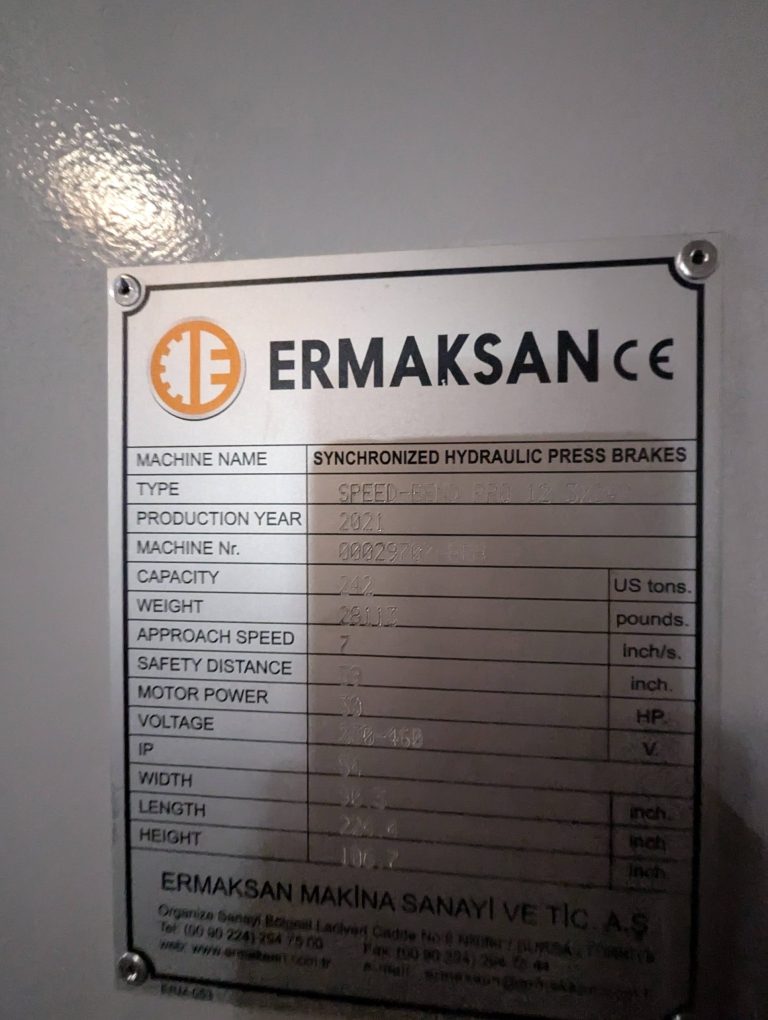
Tandem configurations, like Ermaksan’s tandem models, are designed with shipbuilders in mind. They enable the bending of components that far exceed the bed length of a single machine, reducing the need for piecing together smaller parts. This translates to stronger, more consistent assemblies and easier downstream weld-up. For operations managers, this means more streamlined production, fewer fit-up headaches, and improved hull integrity. Ermaksan recommends their Optima and Power-Bend Pro series in tandem setups, tailored for marine-grade material thicknesses and long-run accuracy.
Advanced Synchronization Improves Forming Accuracy for Large Steel Components
Precision is a top priority when forming deep-sea vessel frames and hulls—mistakes quickly multiply across the length of a structure. Ermaksan’s tandem brake systems employ state-of-the-art CNC synchronization, which ensures both press brakes operate in perfect harmony. This not only limits variance along long bends but also enables compensation for material springback and inconsistencies common in thick or high-strength plates.
This level of control allows operators to tackle bulb flats, T-profiles, and stiffeners with confidence, knowing the machines work as a unified system. Ermaksan’s integration of real-time parallelism monitoring and automatic crowning eliminates manual adjustments, saving time and reducing opportunity for error. For high-throughput operations, this means tight schedules can be met with the first-pass quality every time, even on highly contoured pieces.
Boosting Productivity Through Increased Bending Capacity
Shipyard schedules are famously tight, making productivity increases a prime concern. The major breakthrough offered by Ermaksan tandem systems is their ability to decrease setup times and multiply bending capacity. Two press brakes can be used separately for smaller jobs and then quickly coupled for oversized components without costly changeovers.
The added length and force capacity means fewer lifts, fewer material handlings, and less reliance on subassemblies—key wins for heavy plate teams. A modular approach lets you scale with your workload: for example, pairing two 6-meter, 1000-ton Power-Bend Pro units for a formidable 12-meter, 2000-ton setup. Such flexibility allows the fabrication process to closely match real-world ship section sizes and layouts, cutting down on internal logistics and wasted crane movements.
Custom Tooling and Automation for Shipyard-Specific Applications
Every shipyard is different, and so are its component profiles. Ermaksan addresses this with fully custom tooling packages and optional automation features that fit specialized hull, frame, and deck structures. Tool changers, material supports, and safety devices integrate seamlessly, making it much easier to accommodate large-part staging and complex geometry without slowing down production.
Ermaksan’s technical specialists help design dies and punches to suit specific vessel classes and operational constraints, keeping fabrication teams competitive and responsive. For facilities planning progressive assembly lines, options like robotic handling systems and IoT-enabled monitoring give deeper oversight, reduce manual handling steps, and make retrofitting easier as production needs evolve.
Enhancing Safety and Operator Efficiency in Heavy Plate Fabrication
Heavy steel forming carries inherent risks, but modern press brake systems offer significant improvements. Ermaksan’s safety solutions include advanced light curtains, two-hand controls, and synchronized backup stops that protect against pinch points and misalignment—even on the largest plates.
For operators, ergonomic controls and clear feedback from CNC controllers mean less fatigue and easier troubleshooting. Efficient machine communication reduces the guesswork and manual intervention that can slow down a shift or lead to injury. Fewer set-up cycles and automatic sequencing allow teams to focus on throughput without cutting corners. For best results, Ermaksan suggests integrating these safety and support features into both new-build and upgrade projects within a shipyard’s press brake bay.
FAQ
How does a tandem press brake setup improve my throughput compared to a single unit?
By synchronizing two brakes, you can form longer and thicker pieces in a single handling, minimizing part transfers and assembly steps.
Are there specific Ermaksan models recommended for shipbuilding?
Yes, the Power-Bend Pro and Optima series are often configured for tandem operation and marine fabrication needs, available in customizable tonnages and lengths.
Is custom tooling expensive or slow to obtain?
While custom shipyard tools require upfront planning, Ermaksan provides rapid engineering and delivery, factoring in vessel-specific requirements for best fit.
Can my team use tandem brakes separately for other work?
Absolutely. Each unit functions as an independent press brake when not in tandem mode, so you’re maximizing machine utilization throughout the build cycle.
How do tandem brakes address safety concerns in handling heavy plate?
Integrated light curtains, mechanical locks, and advanced controllers minimize risk, while automation and material supports reduce heavy manual lifting.
Is automation difficult to integrate with existing fabrication lines?
Ermaksan designs its automation modules to retrofit and interface with established workflows, whether you’re upgrading incrementally or planning a new line.
For shipyards seeking greater agility and efficiency in hull and frame forming, Ermaksan tandem press brakes provide a practical, proven path to better throughput, accuracy, and safety. With tailored tooling, automation, and support, even complex marine projects can move forward with less hassle and more confidence. Contact your local Ermaksan representative for an assessment of your current operations and see how sync-powered bending can transform your fabrication floor.
Ready to discuss how Ermaksan Tandem Press Brakes can fit your shipyard’s needs? Reach out for a consultation, machine demonstration, or to request a custom ROI analysis. Put your teams on the path to fewer bottlenecks, safer processes, and stronger vessel builds.
Ermaksan Tandem Press Brakes Enhance Hull and Frame Forming for Shipbuilding Operations