Enhancing Repeatability and Operator Safety in Metal Fabrication with Erbend Folders
Producing high-quality, consistent metal parts isn’t just about superior craftsmanship—it’s about smart investments in technology and the people who run the shop floor. As a production or operations manager, your goals include getting the most out of your team, meeting tight tolerances, and ensuring everyone goes home safe at the end of the day. The latest Erbend folding machines offer real, measurable gains in both repeatability and operator safety, helping you tackle stubborn production bottlenecks and achieve dependable throughput, shift after shift.
Optimizing Consistency in Metal Bending Processes
Every fabricator knows that uneven or inconsistent bends can ruin a production run, cause costly rework, and waste valuable material. Erbend folders address this exact challenge with precision control systems, motorized backgauges, and intelligent folding technologies. The machines are engineered for repeatable, high-accuracy results across all common metals—whether you’re working with thin aluminum or heavy-duty steel.
By deploying Erbend’s servo-controlled folding technology, your shop can ensure every part meets the same specification, regardless of operator skill level. These systems integrate digital angle settings and automatic thickness compensation, reducing manual intervention and the errors that can creep in with traditional press brakes. Not only does this cut down on scrap, but it also shortens the learning curve for new operators. If you’re moving toward high-mix, low-volume jobs or batch production, Erbend folders such as the PowerBend series are particularly recommended for their fast setup, user-friendly controls, and durable construction.
Integrating Automated Features for Operator Protection
Accidents in the bending area often occur when operators need to manually adjust parts or reset machinery during cycles. Erbend folders counter this risk by using light curtains, interlocked safety doors, and automatic folding beams that minimize human-machine interaction. These safety devices are standard on models like the Erbend ER 2 Plus, catching mishandling or foreign object intrusion before any injury occurs.
The built-in automation extends to material handling. For larger or heavier panels, CNC-controlled sheet supports and automated part ejection drastically reduce the need for manual lifting. This directly addresses a major source of workplace accidents and repetitive strain injuries. With the Erbend folders, your team works smarter, not harder, and you can demonstrate full compliance with increasingly strict shop safety regulations.
Leveraging Ergonomic Design to Minimize Workplace Injuries
Fast-paced production lines put pressure on operators—not just to work quickly, but to move and lift heavy material repeatedly. Erbend’s ergonomic design philosophy puts operator welfare at the forefront, with features like height-adjustable control panels, low-force pressing mechanisms, and accessible emergency stops.
Machines such as the Erbend Multiflex series allow operators to load and unload sheets at comfortable waist height, reducing awkward reaches and twists. Sheet handling extensions and ball tables support larger workpieces to prevent them from dropping or tilting unexpectedly. This ergonomic approach translates into less downtime from workplace injuries and supports higher staff morale—a key factor in retaining skilled operators.
Streamlining Workflow with Customizable Tooling Options
Not every job fits a standard die or punch, and frequent tooling changeovers can eat up valuable time. Erbend folders stand out with their quick-change upper and lower tool clamping systems, letting your team switch from one geometry to another in minutes rather than hours. The machines are compatible with a wide range of custom tool profiles, so you can run unique jobs without sacrificing cycle times.
Smart software integration means part recipes and bend sequences are stored and recalled directly from the touchscreen, eliminating setup errors. For high-volume runs, Erbend’s modular tool stations provide additional flexibility, letting you pre-set bending tools for the next job and keep material flowing through the cell with minimal interruptions. Choose models with hydraulic or pneumatic tool change options for the greatest efficiency gains, especially if you’re shifting jobs multiple times per shift.
Maximizing Productivity through Advanced Control Systems
Achieving both speed and quality requires sophisticated, operator-friendly controls. Erbend folders are outfitted with intuitive CNC interfaces—often based on Windows or proprietary platforms—so your team can program new parts directly at the console, or upload jobs from the office network. Visual simulation reduces first-piece errors, and the “teach-in” feature lets less-experienced staff run complex sequences with the press of a button.
Network connectivity allows remote diagnostics and preventive maintenance, keeping your investment online and minimizing downtime. Models like the Erbend PowerBend Universal integrate with shop management software, supporting real-time tracking of job progress and material usage. These systems dramatically cut miscommunication, missed orders, and rework cycles, unlocking higher throughput and smoother production scheduling.
FAQ: Enhancing Repeatability and Safety with Erbend Folders
How do Erbend folders improve part consistency?
Through precise CNC control, programmable backgauges, and automatic thickness compensation—ensuring each bend matches the specification every time.
What makes Erbend machines safer for operators?
Standard features like interlocked doors, light guards, and automatic sheet supports protect against mechanical hazards and manual lifting injuries.
Is it easy to retrain staff for Erbend folders?
Yes, intuitive touchscreen controls and digital job recall make training quicker and reduce skill barriers.
Can these machines handle custom bends and frequent job changes?
Absolutely—quick-change tooling and programmable sequences mean fewer delays between diverse production runs.
Are Erbend folders cost-effective for small batch or varied production?
Yes, their fast changeover and smart automation reduce per-piece costs even in flexible manufacturing environments.
What support is available for maintenance and troubleshooting?
Remote diagnostics and comprehensive training mean uptime stays high and issues are resolved fast.
By investing in Erbend folding technology, your shop stands to gain more than consistent parts: you get a safer work environment, more satisfied operators, and a more reliable production rhythm with less wasted time and effort. For tailored advice on specifying the right model or tooling configuration for your operation, reach out to an authorized Erbend distributor—they can walk you through site-specific requirements, ROI estimates, and real-world testimonials from shops like yours. Your team’s safety and productivity are worth the investment every time.
Erbend-style metal folding machines are used in metal fabrication to create precise, repeatable bends while improving operator safety through controlled motion, guarded work zones, and programmable folding sequences that reduce manual handling and setup variability.
Overview
Erbend folders are industrial metal folding machines designed to bend sheet and plate with high repeatability and reduced operator risk compared with manual or less automated bending methods. They are commonly used for panels, boxes, architectural profiles, and repetitive production parts where consistency and safety are priorities. By combining programmable backgauges, controlled clamping and folding beams, and safety interlocks, they help standardize bending processes and limit the operator’s exposure to pinch points and heavy part manipulation.
What It Typically Costs
Typical investment for Erbend-type folders ranges from about $120,000 to $600,000 USD, depending on size, options, and level of automation.
- Entry-level or smaller-capacity folders with basic CNC control tend to sit at the lower end of the range.
- Mid-range machines with longer folding lengths, higher capacity, and more advanced controls occupy the middle of the range.
- Highly automated systems with extended backgauges, special tooling, or integration into production lines trend toward the upper end.
- Total cost of ownership should also consider installation, training, tooling, and any necessary safety integration into the existing shop layout.
Performance / Spec Considerations
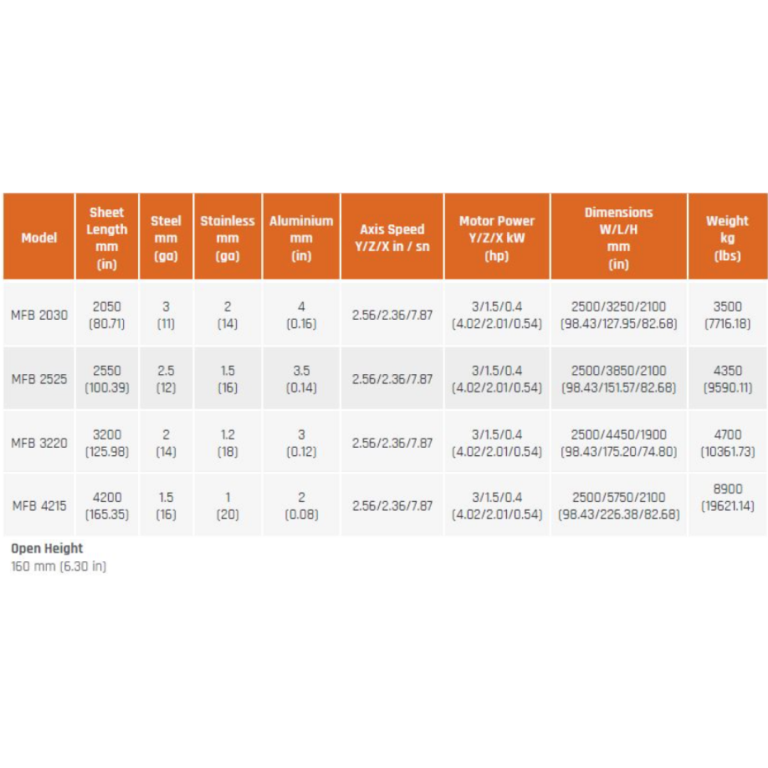
- Folding length and material capacity – Confirm the maximum folding length and the thickness/material types the machine is designed to handle so they match your common parts and any future work you anticipate.
- Repeatability and positioning accuracy – Look at specified backgauge accuracy, beam positioning tolerance, and the control’s ability to store and recall bend programs to support consistent, repeatable production.
- Control system and programmability – Evaluate the CNC or control interface for ease of use, program storage capacity, and support for bend sequences, angle correction, and part libraries to minimize setup time and operator error.
- Automation level and handling aids – Consider options such as automated backgauges, sheet supports, and part flipping aids, which can reduce manual lifting, improve safety, and help maintain quality on larger or heavier workpieces.
- Safety features and guarding – Verify the presence of interlocked guards, light curtains, emergency stops, and safe motion functions that protect the operator while still allowing efficient workflow.
- Tooling flexibility – Check what clamping and folding tools are supported, how quickly they can be changed, and whether they accommodate the range of profiles and bend radii you need.
- Integration with existing processes – Assess how the folder will fit into your current material flow, including loading/unloading, downstream operations, and any digital integration with design or ERP systems.
What to Inspect Before You Buy
- Confirm the machine’s maximum folding length and material thickness ratings against your actual and forecasted job mix.
- Inspect the backgauge system and moving axes for smooth travel, clear position feedback, and the absence of excessive play or backlash.
- Review the control interface in person: create, edit, and run a sample program to gauge usability and programming speed.
- Check safety devices (guards, interlocks, light curtains, emergency stops) for proper placement, function, and compliance with your local regulations.
- Examine the clamping and folding beams, hinges, and structural components for signs of wear, misalignment, or damage, especially on used machines.
- Verify the condition and compatibility of any supplied tooling with your required profiles and materials.
- Ask for demonstration of repeatability by running several identical parts and measuring critical bend angles and dimensions.
- Confirm available training, documentation, and support resources for operators, maintenance staff, and programmers.
- Review power, footprint, and foundation requirements to ensure the machine can be installed safely in your facility.
- Evaluate warranty terms, spare parts availability, and typical response times for service and technical assistance.
Common Questions
How do Erbend-style folders improve repeatability in metal fabrication? They use controlled motion, programmable backgauges, and stored bend programs so the same bend sequence can be repeated with consistent angles and dimensions across multiple parts.
What aspects of these folders enhance operator safety? Safety is improved through guarded work zones, interlocked covers, emergency stops, and automation that reduces manual handling of sheets near pinch points and moving beams.
What is the typical price range for an Erbend-type folder? They commonly range from about $120,000 to $600,000 USD, depending on size, capacity, and automation level.
Are these machines suitable for both small batches and production runs? Yes, they can be used for small batches where quick setup and programmability help, as well as for longer production runs where stored programs and automated gauging maximize throughput.
How important is the control system on a modern metal folder? The control system is critical because it manages bend sequences, backgauge positions, and angle corrections, directly affecting repeatability, setup time, and ease of use.
Can one folder handle different materials and thicknesses? Within its rated capacity, a single folder can handle various materials and thicknesses, but you must stay within the specified limits and use appropriate tooling and settings.
What should I focus on when comparing different models? Focus on folding length, thickness capacity, repeatability specs, safety features, tooling flexibility, and how intuitive the control is for your operators.
Do these machines reduce the need for highly skilled operators? They can reduce dependence on manual bending skill by embedding knowledge in programs and backgauge setups, though trained operators are still needed for safe, efficient use.
How does a folder differ from a press brake in terms of handling? A folder typically holds the sheet and moves a folding beam to create the bend, which can reduce manual part repositioning and improve ergonomics compared with many press brake setups.
What ongoing maintenance is typically required? Routine maintenance usually involves cleaning, lubrication of moving components, inspection of safety devices, and periodic checks of alignment and positioning accuracy according to the manufacturer’s schedule.
Source: Enhancing Repeatability and Operator Safety in Metal Fabrication with Erbend Folders
Enhancing Repeatability and Operator Safety in Metal Fabrication with Erbend Folders