Coil to Laser Continuous Feed Integration for Efficient Metal Fabrication Production
When leading a metal fabrication shop, meeting customer deadlines, ensuring consistent quality, and cutting costs are non-negotiables. In today’s competitive landscape, adopting advanced technologies isn’t just a nice-to-have—it’s a necessity for staying ahead. Coil to laser continuous feed integration is transforming the way production managers handle metal, merging top-grade efficiency with practical shop-floor solutions. This approach minimizes manual material handling and seamlessly connects each step of the process for faster, more reliable fabrication.
Optimizing Material Handling with Coil to Laser Continuous Feed Systems
If your shop is still loading metal sheet by sheet, you’re familiar with the downtime, forklift traffic, and space constraints that come with it. Coil to laser continuous feed systems tackle those pain points head-on. Instead of staging pallets of sheets, a master coil is loaded at the head of the line, and the system unspools material directly to the laser cutter. No more lifting or transferring individual blanks—just steady, uninterrupted feed.
This method not only saves floor space but also keeps your workflow moving. With fewer manual moves and less material waiting around, operators can spend more time focusing on optimizing production rather than managing logistics. Integrated straighteners and feeders ensure the coil unwinds flat and consistent, prepping material perfectly for precision laser work.
For shops aiming to eliminate bottlenecks, solutions like the KLH Coil System or Automatic Coil Feeders compatible with Bystronic or Trumpf lasers are leading the way. Keep in mind: you’ll need a robust decoiler-straightener, a well-aligned feed line, and a laser system capable of syncing with the continuous pace.
Key Features Enhancing Production Efficiency
Continuous feed integration isn’t just about moving metal quicker—it’s a full overhaul to how efficiently you can run jobs, big or small. These systems offer automatic thickness checks, real-time feedback, and minimal setup time between material types. Many are engineered with quick-change features to switch from mild steel to stainless or other alloys without a full teardown.
Advanced integration means less time adjusting and more time cutting. Speed-matching between feeder and laser ensures you get the maximum productivity from your investment. Built-in loop control keeps the material taut and aligned, avoiding jams or misfeeds. For more tailored needs, custom coil handling solutions from Dimeco, Coe Press Equipment, or Rowe Machinery can be configured for sheet widths, thicknesses, and coil weights that fit your shop floor.
Less time wasted on manual tasks means operators can oversee multiple machines or processes, increasing staff efficiency and productivity. In the high-stakes world of fabrication, those saved minutes add up quickly.
Integration Strategies for Seamless Workflow
Moving from sheet-fed to coil-fed lasers requires thoughtful integration to avoid unnecessary disruption. Start by reviewing your core product mix—if most of your jobs are repetitive cuts from the same gauge and grade, you’ll see the greatest benefit. Next, assess where your material arrives and how it’s currently staged. Integrating the coil feed line close to your lasers cuts travel time and reduces risks of mix-ups.
Plan for automation not just at the laser, but downstream—consider integrating automated part removal, stacking, or conveyor systems. A continuous flow, with minimal human intervention, means higher throughput and improved job tracking. Machine manufacturers like Salvagnini and Coiltech offer modular coil handling cells that bolt onto existing fiber lasers for incremental upgrades. Consult with vendors to match line speed, coil specifications, and loading capacities for your daily volumes.
Don’t forget about operator training. With new automated machinery, your team needs to be well-versed in machine function, diagnostics, and swift coil changeovers to minimize downtime.
Quality Control and Process Monitoring in Continuous Feed Environments
Shop managers may worry that higher speeds and automation could lead to errors slipping through. Modern coil to laser systems are actually designed with quality in mind. Integrated sensors continuously monitor flatness, feed accuracy, and alignment—catching potential defects before the material ever hits the laser head. Integrated vision systems spot surface flaws and can pause the line for inspection or removal.
Automatic scrap removal can be programmed by nesting software, ensuring edge trim or skeletons never interfere with downstream operations. Data capture features document every coil’s progress, supporting robust traceability—vital for ISO or automotive standards.
Recommended: Lantek or SigmaNEST software suites couple well with coil-fed laser lines, managing jobs, scrap, and real-time production metrics seamlessly. A best practice is to schedule daily or weekly QC checks at key points in the line, using smart sensors and photoelectric measurement to verify every batch.
Reducing Waste and Lowering Operational Costs in Metal Fabrication
Switching to coil-based feeding can lower scrap rates and material costs drastically. Whereas sheets often lead to awkward leftovers, coil-fed production allows for continuous nesting across the entire length, making far better use of raw stock. Fewer leftovers means reduced scrap bins and better material yield per job, improving profitability per ton.
Manpower is also optimized. Fewer forklifts and less manual material movement mean lower labor hours and reduced injury risks. Automated coil-to-laser systems burn less energy per part produced, and maintenance costs are generally more predictable, thanks to less frequent machine stoppage.
Look for systems with predictive maintenance features or optional remote diagnostics, like those offered by Intek or Dreistern, to further reduce unplanned downtime and extend machine life.
FAQ
How quickly can a coil to laser system be integrated into my existing shop?
Most systems can be added within 2–4 months, depending on layout and machine compatibility. Partial integration is possible for faster deployment.
Does coil to laser feeding make sense for low-volume or highly custom jobs?
It’s best suited for mid to high volume, repetitive part runs, but job shops can benefit if they group similar orders or standardize material gauges.
What about coil storage and handling safety?
Proper coil racks, unloading areas, and coil car systems must be in place. OEMs offer robust safety packages to minimize hazards.
Will I need a new laser cutting machine?
Not always. Many existing fiber lasers can be upgraded with coil feed attachments—consult your OEM for details.
How much can I expect to save on material costs?
Shops report 5–15 percent material savings on average due to improved nesting and less scrap.
Being a successful operations manager means continuously seeking new ways to boost productivity while maintaining quality and safety. Coil to laser continuous feed integration brings shop floors into the future, offering transformative advantages for throughput, labor savings, and profitability. Whether you’re upgrading one line or planning a full facility revamp, well-chosen coil-to-laser solutions offer a real-world answer to modern fabrication demands. For the next step, reach out to your trusted machinery supplier or automation integrator to discuss customized solutions tailored to your shop’s product mix and production goals.
Stay informed, stay competitive, and always be ready to raise the bar in metal fabrication efficiency.
Integrating a coil-to-laser continuous feed system in metal fabrication allows flat sheet parts to be cut directly from coil stock, reducing handling, scrap, and changeover time while enabling highly automated, high-throughput production.
In Brief
- Coil-to-laser systems feed metal strip directly from a coil into a laser cutting cell for continuous processing.
- They are aimed at high-volume, repeatable parts where reduced loading/unloading and nesting losses provide major savings.
- Continuous feed minimizes idle time between sheets, improving overall equipment effectiveness (OEE).
- Best suited for coil-friendly materials (common steels, stainless, aluminum) within defined thickness and width limits.
- Integration typically includes decoiling, straightening/flattening, feeding, laser cutting, and downstream part handling.
- Smart controls coordinate line speed, coil feed, and laser cutting programs to maintain cut quality while maximizing throughput.
What It Typically Costs
Pricing estimate (USD): $900,000 – $2,000,000 USD for a fully integrated coil-to-laser continuous feed line, depending on configuration and capabilities.
- Lower end of the range generally corresponds to narrower coil widths, moderate laser power, and simpler automation.
- Higher end reflects wider coil capability, higher power lasers (for thicker material or higher speed), and advanced automation/stacking.
- Total cost is influenced by required integration with upstream coil handling and downstream sorting, stacking, or robotic cells.
- Facility modifications (foundations, coil storage, material flow changes) can add significantly to project cost beyond the equipment price.
- Software, training, and commissioning services are typically a notable portion of the overall investment.
Performance / Spec Considerations
- Coil width and thickness range – Define the minimum/maximum coil width and gauge the line must handle; this drives decoiler, straightener, and laser table design.
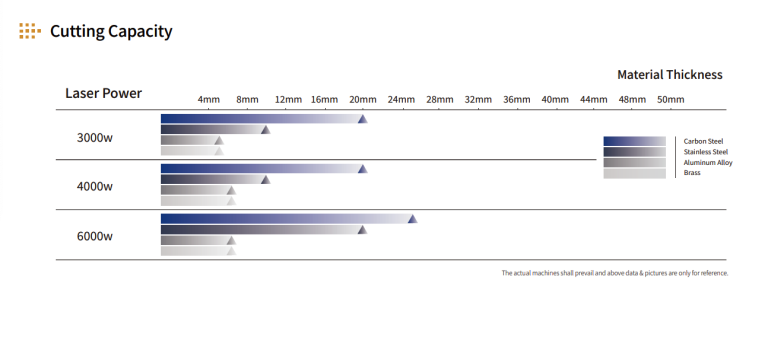
- Laser power and cutting speed – Required wattage is tied to target material type/thickness and desired line speed; higher power supports thicker materials and faster continuous cutting.
- Feed accuracy and strip tracking – Precision in advancing the coil and maintaining alignment is critical to cut part accuracy and reliable nesting along the strip.
- Straightening/flattening capability – The quality of strip flatness after the leveler affects cut quality, dimensional stability, and downstream forming or assembly.
- Automation and part handling – Options may include automatic scrap removal, part separation, stacking, or integration to conveyors and robots for fully automated flow.
- Changeover and setup flexibility – Consider how quickly the line can switch coil width, material grade, and part programs to support mixed production.
- Controls and software integration – Look for coordinated control between decoiler, feeder, and laser as well as nesting software optimized for coil-fed cutting.
What to Inspect Before You Buy
- Verify the specified coil width, thickness, and weight capacity match your typical and maximum material requirements.
- Inspect decoiler, straightener, and feed mechanisms for robustness, accessibility, and ease of threading and maintenance.
- Review laser source specifications and confirm they are aligned with your target materials, thicknesses, and productivity goals.
- Evaluate the straightening/leveling quality on representative coils to confirm flatness and absence of residual coil set.
- Check feed accuracy, line speed range, and how the system maintains strip alignment during acceleration and deceleration.
- Assess safety features, guarding, and coil-handling ergonomics around the decoiler and feed area.
- Confirm availability of diagnostics, spare parts support, and remote service options for both laser and mechanical components.
- Review the control interface and nesting/software workflow for usability and compatibility with your existing systems.
- Inspect scrap handling and part removal concepts to ensure they fit your floor layout and downstream processes.
- Request references or demonstration of similar installed systems running materials and parts close to your application.
Buyer Questions
What production volume justifies a coil-to-laser continuous feed system? These systems are generally justified in high-volume, repeatable production where reduced loading time, better material utilization, and continuous operation can offset the higher capital cost.
Can the same line handle multiple material grades and thicknesses? Yes, within the designed coil width and thickness range; confirm how the system handles changes in material grade, thickness, and required cutting parameters.
How does coil feeding improve efficiency compared to sheet-based laser cutting? Coil feeding reduces manual sheet loading/unloading, allows continuous cutting with fewer interruptions, and can improve nesting efficiency along the length of the strip.
What are the key limitations of coil-to-laser systems? They are constrained by coil width/thickness capacity, require suitable coil quality and flatness, and are best suited to part geometries and batch sizes that benefit from continuous strip processing.
How important is strip flatness for cut quality? Consistent flatness after straightening is critical for maintaining focus height, dimensional accuracy, and reliable cutting, especially at higher line speeds.
Can I retrofit a coil feed to an existing laser cutting machine? Retrofitting may be possible in some cases but requires careful evaluation of the existing machine layout, controls, and table design to ensure proper integration.
What facility changes might be required? You may need space for coil storage, adequate floor capacity for coil weight, material flow adjustments, and possibly power or fume extraction upgrades around the new line.
How do I estimate the return on investment (ROI)? ROI is typically based on savings in labor and handling, increased throughput, improved material yield, and reduced changeover time compared with sheet-based processing.
What level of operator skill is needed? Operators need training in coil handling, laser operation, and line controls; the integrated system is more complex than a standalone laser but can be highly automated once set up.
How should I plan for maintenance and downtime? Plan scheduled maintenance for both mechanical coil-handling components and the laser, and confirm that service intervals and spare parts availability align with your production requirements.
Source: Coil to Laser Continuous Feed Integration for Efficient Metal Fabrication Production
Coil to Laser Continuous Feed Integration for Efficient Metal Fabrication Production