Bescutter Laser Cutting Solutions for Efficient Metal Fabrication Operations
Successful shop managers know that keeping a competitive edge in metal fabrication takes more than hard work; it demands smart investments in technology that directly solve day-to-day production hurdles. Whether you’re handling high-volume orders or custom jobs, time, precision, safety, and the bottom line are always top priorities. Bescutter laser cutting solutions, available through Mac-Tech, provide robust and dependable technology to help production and operations managers achieve consistent quality and maximize shop throughput, all while lowering operating costs.
Overview of Bescutter Laser Cutting Technology
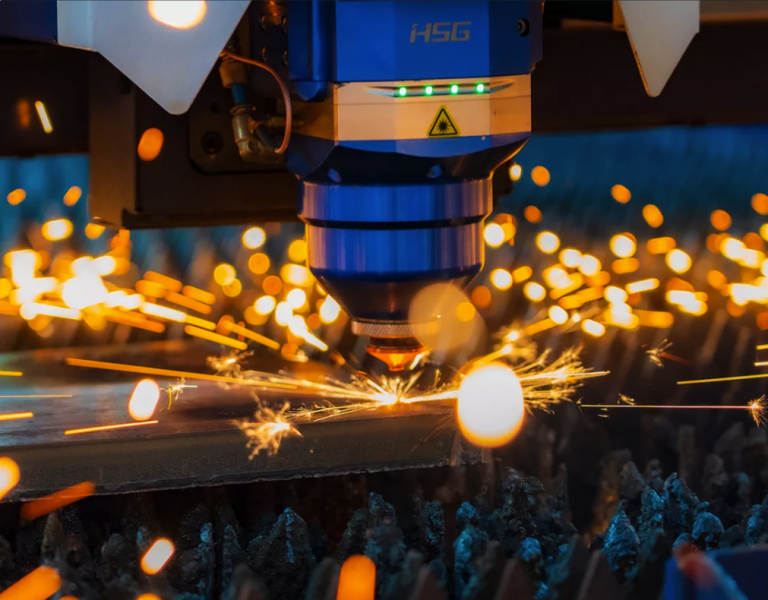
Bescutter has established itself as a leading name in laser cutting equipment designed specifically for metal fabrication shops of all sizes. Their laser systems use advanced fiber laser technology which is known for its speed, accuracy, and versatility in handling different metal types—from stainless and carbon steels to aluminum and brass. This technology excels in high-speed cutting, meaning your shop can process more sheets, tubes, or profiles in less time, compared to traditional cutting methods like plasma or waterjet.
For fabrication managers who want reliable, low-maintenance solutions, Bescutter machines have a reputation for durability and ease of use. The laser source is designed for thousands of hours of operation with minimal downtime, and the user interface is built for fast learning curves, so new staff can be trained quickly. Mac-Tech offers a range of Bescutter models, such as the Bescutter Fiber Laser Flatbed and BCL-1530, catering to both entry-level shops and those scaling up to lights-out, automated production.
Key Features Enhancing Precision and Productivity
Modern metal fabrication often means working to tight tolerances under fast turnarounds. Bescutter lasers deliver incredibly fine beam control, allowing precise cuts with clean edges and minimal burring. The laser’s CNC system enables complex nesting, reducing scrap material and letting you fit more parts per sheet. This makes the machines ideal for anything from brackets to intricate panels, plus the consistent cut quality reduces secondary finishing.
In terms of shop productivity, Bescutter equipment features rapid positioning, auto-focus heads, and fast pierce times. Operators can switch between materials with minimal setup thanks to automated parameter libraries. Real-time process monitoring ensures you catch issues before they affect output. For high-throughput environments, integrating a Bescutter Pro Series machine with dual loading tables enables you to start unloading while the next job is already underway, keeping your workflow non-stop and hands-free.
Integration with Modern Metal Fabrication Workflows
No two fabrication shops are exactly alike, and Bescutter systems are built to integrate seamlessly into existing shop environments. The machines connect easily with nesting software, ERP systems, and shop floor automation tools. You can import DXF or other common CAD files right into the control software, enabling plug-and-play with common design workflows.
For logistical efficiency, the compact footprint of most Bescutter models makes placement in busy shops straightforward, while their modular loading systems support progressive assembly, less material handling, and logical flow from raw sheet to finished part. Consider recommending a Bescutter tube laser model if your shop also handles pipe and structural profiles; these specialty units streamline both flat and round stock cutting, reducing the need for multiple workstations and manual handoffs.
Benefits for Operational Efficiency and Cost Reduction
The operational savings from fiber laser technology are significant. Bescutter lasers consume less power compared to CO₂ or plasma systems and cut materials much faster, which translates into more output with less energy paying the bills. Greater reliability and fewer moving parts also cut down on maintenance costs and unplanned downtime, helping you hit deadlines and keep customers satisfied.
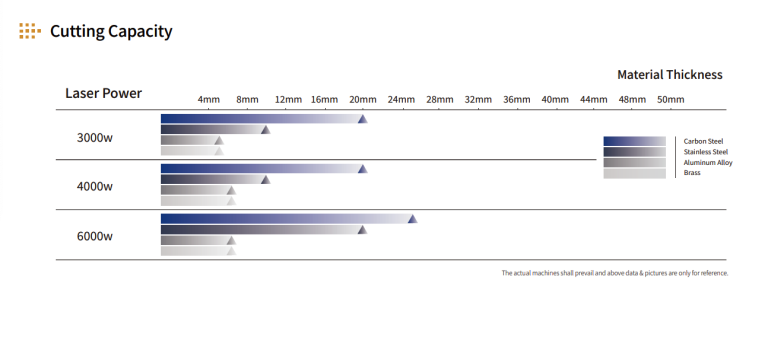
Waste reduction is another big benefit. With improved nesting and precise beam width, you use more of each sheet and order less raw material. Shops often see measurable improvements to both material utilization and labor allocation because operators can oversee multiple machines or switch to other high-value tasks while the laser works autonomously. Machine recommendations from Mac-Tech’s lineup can be tailored to your shop’s average part thickness, throughput targets, and automation roadmap, so you’re not overspending on capacity you don’t need.
Supporting Automation and Smart Manufacturing Initiatives
If your production goals include future-proofing with smart manufacturing or Industry 4.0, Bescutter machines are a good fit. Many models offer options for full or semi-automated loading, unloading, and sorting. This supports lights-out operation, letting you run after hours or on weekends without constant supervision. Data-enabled controls and cloud connectivity allow tracking production metrics, remote diagnostics, and seamless integration with MES or ERP platforms to boost schedule accuracy and traceability.
Automation can be scaled: start with basic auto-focus and automatic nozzle cleaning, then add robotic loading systems or sorting solutions as your business grows. Mac-Tech and Bescutter can help design workflow layouts that minimize material transport, keep work in progress moving, and free up labor for more value-added tasks—making your operation leaner and more competitive.
Frequently Asked Questions
Why should I choose Bescutter over other laser brands?
Bescutter combines high-quality components, ease of integration, and competitive pricing, giving you reliable performance and lower long-term costs.
How quickly can my team learn to operate a Bescutter laser?
Training is typically short—most shop techs can run jobs confidently after just a few sessions thanks to user-friendly controls.
What materials can Bescutter lasers cut?
They handle a wide range: mild and stainless steel, aluminum, brass, copper, and even some specialty alloys.
Can I add automation features later on?
Yes, many Bescutter models are modular and can be upgraded with automated loading, unloading, or conveyor options as your production needs grow.
How does Bescutter improve material handling?
Auto-loading tables and modular layouts let you move raw sheets and finished parts directly between stations with less manual lifting and transfer.
Is service or spare parts support available?
Yes, Mac-Tech provides service, support, and spares within the U.S., helping reduce any downtime if issues arise.
For shop managers determined to drive productivity, cut operating costs, and take the risk out of scaling production, Bescutter laser cutting solutions from Mac-Tech are a trustworthy, future-ready choice. If you’d like a tailored shop assessment or want to explore specific machine recommendations, Mac-Tech’s technical team is always ready to help you start your journey to leaner, smarter metal fabrication.
Visit Mac-Tech’s Bescutter lineup here for more details or a personalized quote.
Bescutter laser cutting systems are designed to deliver precise, automated cutting performance for metal fabrication operations, supporting higher throughput, consistent edge quality, and integration into modern industrial workflows.
At a Glance
- Application focus: Metal fabrication for industrial components, enclosures, structural parts, and production runs.
- Core capability: High-accuracy laser cutting of metal sheet and plate, with smart controls to enhance consistency and reduce rework.
- Operational goal: Improve efficiency by reducing manual handling, increasing cutting speed, and stabilizing cut quality over long shifts.
- Automation potential: Suitable for integration with material handling, nesting software, and shop-floor data systems to streamline production.
- Precision benefits: Tight tolerances and clean kerfs that reduce or eliminate secondary operations like grinding or extensive deburring.
- Scalability: Configurable to support diverse industrial applications, from job-shop work to higher-volume production environments.
Typical Cost Ranges
Pricing estimate (USD): $900,000 – $2,000,000 USD
- Systems at the lower end of this range typically align with more basic automation and moderate power/output configurations suitable for general fabrication work.
- Higher-priced systems are more likely to include advanced automation options, larger working envelopes, and higher cutting capacities for demanding industrial applications.
- Budgeting should account not only for the base machine, but also for installation, operator training, and integration with existing material handling or software systems.
- Operating costs (consumables, maintenance, utilities) should be evaluated alongside the purchase price to understand true cost per part over time.
- Potential savings often come from reduced scrap, shorter cycle times, and lower labor requirements for part handling and rework.
Specs That Matter
- Laser power and material thickness capability – Match output power to the maximum thickness and type of metals you plan to cut, balancing speed versus capital cost.
- Work area size – Ensure the table or bed dimensions fit your standard sheet/plate sizes and any future upsizing you anticipate in your product mix.
- Positioning accuracy and repeatability – Look for specifications that support the tolerances required by your parts, especially where tight fit-up or minimal post-processing is critical.
- CNC control and “smart” features – Evaluate nesting, pierce optimization, cut path control, and monitoring capabilities that help reduce cycle time and operator intervention.
- Automation and loading/unloading – Consider whether automated pallet changers, towers, or material handling systems are needed to keep the laser cutting continuously and reduce idle time.
- Cut quality and edge finish – Verify that the system can deliver edge conditions that meet your downstream requirements (welding, coating, or assembly) without excessive secondary work.
- Integration with existing workflow – Confirm compatibility with your CAD/CAM environment, production planning tools, and any traceability or quality systems you use.
What to Inspect Before You Buy
- Confirm that the quoted configuration (power, work area, automation options) aligns with your current and projected part mix and thickness range.
- Review sample parts cut on the same or equivalent machine, focusing on dimensional accuracy, edge quality, and consistency across multiple parts.
- Evaluate the user interface, programming workflow, and nesting capabilities for ease of use and compatibility with your existing CAD/CAM files.
- Inspect the machine’s frame, drive systems, and motion components for build quality, rigidity, and accessibility for maintenance.
- Ask for detailed operating cost estimates, including consumables, utilities, and recommended preventive maintenance intervals.
- Verify safety features, including guarding, interlocks, and fume or particulate extraction provisions appropriate for your shop environment.
- Clarify installation requirements such as floor space, foundation, power supply, and environmental conditions (temperature, cleanliness).
- Understand available training resources, documentation, and the level of application support offered during ramp-up.
- Request clarity on warranty coverage, typical response times for technical support, and availability of critical spare parts.
- Assess how easily the system can be integrated with your existing material handling, ERP/MRP, and quality tracking systems.
FAQ
What types of operations are Bescutter laser cutting systems best suited for? They are aimed at metal fabrication environments that need precise, repeatable cutting for industrial components, structural parts, and production runs.
How much should I budget for a Bescutter laser cutting solution? Based on the provided estimate, plan for approximately $900,000 to $2,000,000 USD, depending on configuration and automation level.
Can these systems help reduce secondary operations like grinding or deburring? Yes, one of the main advantages is improved edge quality and consistency, which can significantly reduce the need for secondary finishing on many parts.
What role do “smart” features play in daily operation? Smart controls and software can optimize nesting, pierce timing, and cut paths, helping to shorten cycle times, reduce scrap, and minimize operator intervention.
How important is table size when selecting a configuration? Table size determines what sheet or plate formats you can process; it should at minimum match your standard stock sizes and allow some flexibility for future changes.
Do I need automation like pallet changers or towers? If you run extended shifts, high volumes, or many repeat parts, automation can keep the laser cutting continuously and reduce idle time between loads.
What should I look for in terms of accuracy specifications? Focus on positioning accuracy and repeatability that meet or exceed the tightest tolerances required by your parts, especially for assemblies and precision components.
How do these systems integrate with existing CAD/CAM software? You should verify that the control and nesting software can import your current file formats and fit into your established programming workflow.
What hidden costs should I consider beyond the purchase price? Factor in installation, training, consumables, utilities, preventive maintenance, and any upgrades needed for material handling or shop infrastructure.
Is this type of system suitable for both job-shop and production environments? Yes, with the right configuration, it can support flexible job-shop work and higher-volume production, provided the specs match your throughput and part requirements.
Source: Bescutter Laser Cutting Solutions for Efficient Metal Fabrication Operations
Bescutter Laser Cutting Solutions for Efficient Metal Fabrication Operations