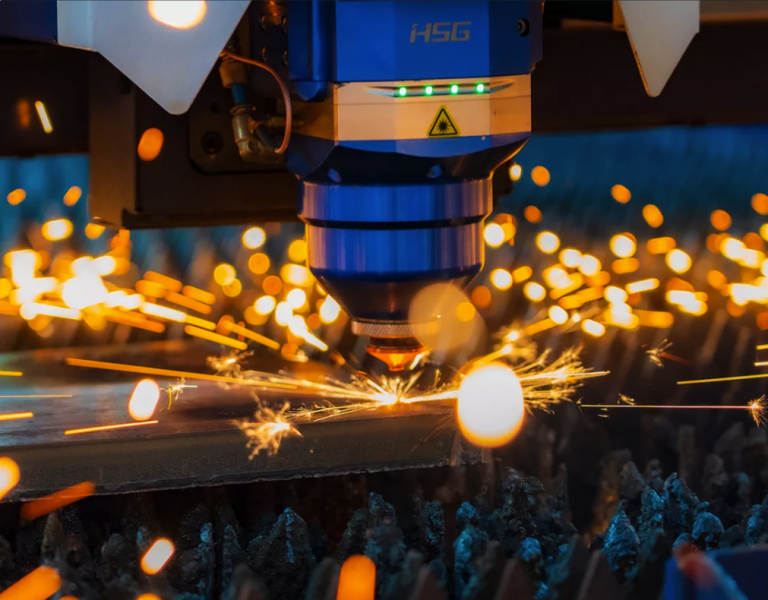
LightWELD X Handheld Laser Welding & Cleaning Combo – Welding
- Lightweld
- LightWELD X Handheld Laser Welding & Cleaning Combo
- Laser Welding
- Welding
- Cutting
The LightWELD X Handheld Laser Welding & Cleaning Combo is a fiber-based laser system for welding and cleaning light-gauge metals, suited to aerospace, automotive, OEM and fabrication job shops producing sheet components, frames and panels from mild steel, stainless, aluminum and copper.
Quick Look
- Machine type: Handheld fiber laser welding and laser cleaning combo system
- Core function: Precision laser welding with integrated laser cleaning capability
- Typical applications: Thin sheet metal, light-gauge fabrication, frames, panels, prototypes, sheet components
- Common sectors: Aerospace, automotive, OEMs, fabrication plants, fabrication shops, job shops
- Supported materials: Mild steel, stainless steel, aluminum, copper
- Process capabilities: Laser welding, laser cleaning, and cutting of metal plate within standard industrial ranges
- Use cases: Fabricated assemblies, structural and cosmetic welds on thin sections, pre-/post-weld surface cleaning
Typical Cost Ranges
Pricing estimate (USD): $900,000 – $2,000,000 USD
- Cost variation is typically driven by laser power level, cleaning capability options, and automation or integration scope.
- Higher-end configurations generally support thicker plate cutting/welding and larger working envelopes within standard industrial ranges.
- Systems tailored for aerospace and automotive production environments often include upgraded safety, monitoring and quality-control provisions that increase total price.
- Budgeting should consider not only the machine but also installation, operator training, and facility adjustments for laser safety.
- Ongoing operating costs are influenced by electrical consumption, consumable optics, and periodic service of fiber delivery components.
Key Selection Factors
- Material and thickness range – Confirm the system’s laser power and optics are appropriate for your typical mild steel, stainless, aluminum and copper thicknesses in light-gauge fabrication and sheet components.
- Weld quality on thin sheet – Evaluate stability of the weld pool, control of heat input, and suitability for cosmetic welds on panels and frames without excessive distortion or burn-through.
- Laser cleaning performance – Check that the cleaning mode can reliably remove oxides, coatings, or contaminants on your specific alloys and geometries before and after welding.
- Handheld ergonomics and reach – Assess torch/handpiece weight, cable/fiber management, and ease of accessing joints on frames, panels and fabricated assemblies.
- Cutting capability envelope – For metal plate cutting, verify maximum thickness, cut quality and edge finish achievable in the standard industrial range relevant to your jobs.
- Process flexibility for job shops – Consider how quickly the system can switch between welding and cleaning tasks across varied part sizes, prototypes and small-batch production.
- Integration with existing workflow – Ensure compatibility with your part fixturing, inspection routines, and any upstream/downstream automation in fabrication plants and OEM environments.
Pre-Purchase Checklist
- Confirm that the rated material and thickness capabilities align with your most common mild steel, stainless, aluminum and copper jobs (especially thin sheet and light-gauge work).
- Inspect sample welds and cleaning results on your own parts or representative materials, including frames, panels and sheet components.
- Review the ergonomics of the handheld head and fiber cable management for typical weld positions and reach requirements in your shop.
- Verify the system’s cutting performance on the plate thicknesses you expect to process within standard industrial ranges.
- Check that power requirements, cooling needs and laser safety zoning are compatible with your facility infrastructure.
- Evaluate user interface simplicity, preset process libraries (if available), and the learning curve for welding and cleaning operators.
- Ask about recommended maintenance intervals, typical consumable items (optics, nozzles, protective windows) and expected downtime for service.
- Clarify what is included in the quoted price (installation, commissioning, training, safety equipment, and any integration work).
- Assess availability of technical support, spare parts and remote diagnostics for high-uptime environments like fabrication plants and OEM lines.
- Plan for fixturing and part handling to take full advantage of the system’s welding and cleaning capabilities on your product mix.
FAQ
What types of work is this system best suited for? It is aimed at light-gauge fabrication and thin sheet metal work, including sheet components, frames, panels and prototypes in sectors such as aerospace, automotive, OEMs and general fabrication shops.
Which materials can it weld and clean? The system is designed for mild steel, stainless steel, aluminum and copper, covering many common industrial alloys used in fabrication plants and job shops.
Does it only weld, or can it also clean and cut? Its core is laser welding, but it also provides laser cleaning capability and can cut metal plate within a standard industrial range.
Is it suitable for very thin sheet metal? Yes, it is intended for light-gauge and thin sheet applications where controlled heat input and precision welding are important.
What is the typical investment required? The indicative price range is approximately $900,000 to $2,000,000 USD, depending on configuration and options.
Can it handle production environments like OEM or automotive plants? It is targeted at industrial use, including OEMs, automotive and aerospace applications, where repeatable welding and cleaning of sheet components and assemblies are required.
How does handheld operation affect usability? The handheld configuration is intended to provide flexibility and access to complex assemblies, but you should verify ergonomics and reach for your specific parts.
Can it be used in small job shops as well as larger plants? Yes, it is applicable in job shops, fabrication shops and larger fabrication plants, particularly where a mix of prototypes, small batches and production work exists.
What should I check before buying? Focus on material/thickness fit, weld and cleaning quality on your parts, handheld ergonomics, facility compatibility, maintenance expectations and support provisions.
Is it limited to flat panels? No, while it is well suited to panels and sheet components, the handheld nature also allows work on frames and fabricated assemblies, subject to access and fixturing.
Source: LightWELD X Handheld Laser Welding & Cleaning Combo – Welding
LightWELD X Handheld Laser Welding & Cleaning Combo – Welding