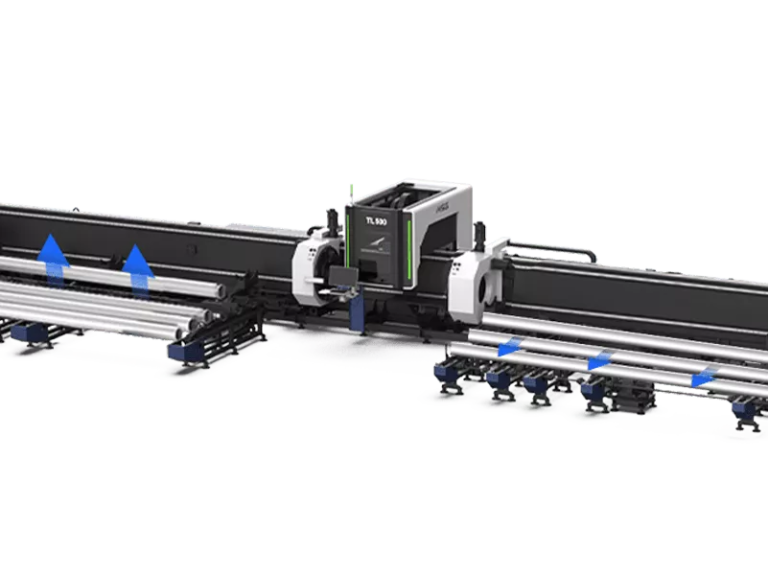
Stefa Coil-to-Laser CompactLine CLC-30
The Stefa Coil-to-Laser CompactLine CLC-30 is a coil-fed tube/shape laser system used for precision tube cutting and thin sheet/light-gauge fabrication, typically in contract manufacturing environments where prototypes and short-to-medium runs of light material are common.
Overview
- Designed around a coil-to-laser workflow for continuous processing of light-gauge material, minimizing handling and setup time.
- Used for precision tube cutting as well as general fabrication in thin sheet metal and other light sections.
- Well-suited to contract manufacturing and job-shop environments needing flexible, repeatable cutting of a variety of light-gauge profiles.
- Supports prototypes and small-batch runs where fast changeover and high cutting accuracy are critical.
- Targets applications involving thin-wall tube, light structural profiles, and light-gauge sheet components.
What It Typically Costs
- Pricing estimate (USD): $900,000 – $2,000,000 USD, depending on configuration, automation level, and options.
- Lower end of the range generally aligns with more basic configurations and fewer integrated options.
- Higher end typically reflects enhanced automation, advanced controls, and expanded material handling capability.
- Installation, training, and facility preparation (power, extraction, safety) can add significantly to the total project cost.
- Operating costs are influenced by laser power level, duty cycle, maintenance strategy, and consumables management.
Specs That Matter
- Laser cutting capability for precision tube cutting, with an emphasis on dimensional accuracy and clean edge quality in thin-wall sections.
- Optimized for light gauge fabrication and thin sheet metal, where material thickness is relatively low and heat input must be controlled.
- Coil-to-laser arrangement means coil handling capacity (width, thickness, and weight) is a key performance parameter.
- Material compatibility and cut quality on typical contract manufacturing materials (e.g., mild steel, stainless, aluminum in light gauges) are central selection criteria.
- Part tolerance capability and repeatability across prototype and small-batch runs are important for users focused on precision work.
- Changeover and setup time between different tube sizes, gauges, or profiles is a critical productivity consideration.
- Integration options for downstream operations (such as part sorting or basic handling) can affect throughput and labor requirements.
What to Inspect Before You Buy
- Confirm the machine’s practical material range (tube sizes, wall thicknesses, and sheet gauges) matches your typical and maximum job requirements.
- Inspect the coil handling and feeding system for smooth operation, alignment control, and any signs of wear that could affect strip tracking or tube forming quality.
- Evaluate cut quality on representative light-gauge materials and tube profiles, including edge condition, dimensional accuracy, and hole/slot consistency.
- Review the control interface and nesting/programming workflow for suitability to prototype and contract manufacturing work (frequent program changes, small batches).
- Check cycle times and realistic throughput on your part types, considering loading, cutting, and any intermediate handling steps.
- Assess accessibility for maintenance (optics area, guides, feeders, scrap handling) and the clarity of maintenance documentation.
- Verify available service support, spare parts lead times, and typical response times for troubleshooting and repairs.
- Confirm facility requirements (power, ventilation, safety guarding, floor space for coil handling) and any needed modifications.
- Review training options for operators and programmers, especially if your team is new to coil-fed tube laser systems.
- Determine integration options with your existing workflow (material storage, QA, downstream forming or welding) to avoid bottlenecks.
Buyer Questions
What type of work is the CLC-30 best suited for? It is aimed at precision tube cutting and light-gauge fabrication in thin sheet metal, particularly for contract manufacturing and prototype work.
How does a coil-to-laser setup benefit light-gauge fabrication? Feeding from coil allows continuous processing of light material with reduced handling and fewer interruptions compared to sheet-by-sheet or cut-length loading.
Is this machine appropriate for heavy-wall tube or thick plate? It is described for light gauge fabrication and thin sheet metal, so it is better aligned with lighter sections rather than heavy-wall or thick plate applications.
Can it handle both tube and flat thin sheet work? It is characterized as a tube laser used in precision tube cutting and general fabrication for thin sheet metal, so it is intended to cover both tube and light sheet applications within its capability range.
What drives the wide price range from $900,000 to $2,000,000? Configuration choices, automation level, options, and integration complexity can significantly change the overall system cost.
Is this machine a good fit for prototype production? Yes, prototypes and contract manufacturing for light-gauge parts are specifically noted as target uses.
What should I look for during a cutting demo? Focus on edge quality, dimensional accuracy, repeatability on thin-gauge parts, and how quickly the machine can switch between different jobs or profiles.
How important is operator training for this system? Training is important because coil-fed tube and thin-sheet laser systems involve coordinated material handling, programming, and process control.
Can it support small-batch and high-mix production? Its use in contract manufacturing and prototypes suggests it is intended to handle frequent changeovers and varied part numbers in light-gauge materials.
What facility considerations should be addressed before installation? Plan for adequate space for coil handling, appropriate power and ventilation, and safety measures around laser operation and moving material.
Source: Stefa Coil-to-Laser CompactLine CLC-30
Stefa Coil-to-Laser CompactLine CLC-30