Hydmech Automation Advancements and the ROI Case for Semi Autonomous Sawing Cells
Executive Context: Labor Pressure and Capital Discipline in 2026 U.S. Fabrication
Across Indiana and the broader U.S. market, I continue to see the same pattern. Order books are uneven, wage rates remain elevated, and experienced operators are difficult to hire and harder to retain. Trade coverage from Manufacturing.net and Fabricating & Metalworking has consistently highlighted ongoing labor tightness and the push toward automation as a structural response, not a short term reaction.
For owners and CFOs, that reality changes how we evaluate capital. The conversation is no longer about whether we can afford automation at the saw. It is about whether we can afford variability, overtime exposure, and production risk without it.
What Hydmech Automation Actually Includes
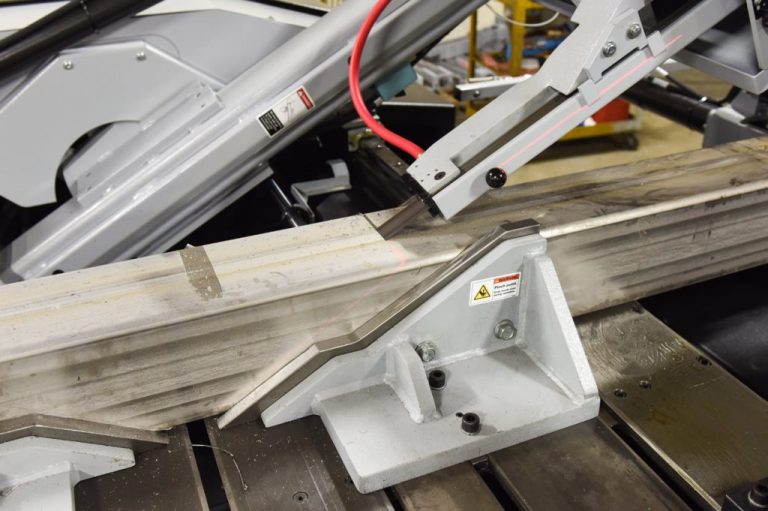
Hydmech’s automatic band saw category centers on programmable controls, automatic feeding, and indexing systems designed to execute repeat cut cycles with minimal manual intervention. The manufacturer outlines capabilities such as programmable cut lengths, multiple indexing, automatic material advancement, and integration with infeed and outfeed handling systems.
At a practical level, this means the saw can be programmed for part length and quantity, advance material automatically, and repeat the cycle with consistent feed control. Many configurations support conveyor integration and extended material handling, which reduces the need for manual repositioning between cuts.
Semi automatic platforms retain operator oversight but automate key elements of clamping, cutting, and head movement. Fully automatic configurations extend that to unattended cycle repetition within defined parameters.
From Standalone Saw to Semi Autonomous Sawing Cell
When I use the term semi autonomous sawing cell, I am not describing a lights out factory. I am describing a practical cell built around four elements.
First, an automatic or semi automatic Hydmech band saw with programmable cycle control and indexing. Second, structured infeed support such as roller tables or powered conveyors to stage raw stock. Third, controlled outfeed to move cut parts away from the cutting zone. Fourth, an operator who supervises, stages bundles, verifies quality, and manages exceptions rather than manually cycling every cut.
In structural steel shops, machine shops, and general fabrication environments in Indianapolis, Fort Wayne, Elkhart, and South Bend, this shift converts the saw from a labor intensive station into a managed production asset. The operator becomes a cell supervisor instead of a repetitive motion resource.
ROI Drivers That Matter to Presidents and CFOs
I encourage executive teams to focus on measurable business drivers rather than marketing claims.
Reduced operator touch time. Automatic indexing and programmable cycles reduce the number of manual interventions per part. That frees skilled labor to handle setup, quality checks, or downstream operations. The goal is not labor elimination. It is labor optimization.
Improved repeatability and scrap control. Consistent feed and clamping reduce variation in cut length and squareness. Over long production runs, that stability lowers the risk of rework and downstream fit up issues, particularly in automotive supply and structural components.
Safer material handling. Integrating infeed and outfeed systems limits repetitive lifting and repositioning of heavy bar, tube, or structural members. OSHA guidance consistently underscores the risk associated with manual material handling in industrial settings. Reducing those touchpoints lowers exposure.
More predictable cycle times. Automated feed and cutting cycles stabilize throughput. That predictability supports better scheduling, more accurate job costing, and fewer last minute firefights on the floor.
None of these factors alone justifies capital. Together, they form a disciplined ROI case grounded in labor cost, quality stability, and risk reduction.
Risk Mitigation: Safety, Throughput Stability, and Workforce Volatility
In many Indiana fabrication businesses, a single skilled saw operator can become a constraint. Absenteeism, turnover, or injury at that station can ripple through welding, machining, and assembly.
Semi autonomous sawing cells reduce single point dependency. Because the cutting cycle is programmable and repeatable, cross training becomes more practical. A broader pool of employees can oversee the cell with consistent results.
During demand spikes, automation helps absorb volume without proportional increases in overtime. During slowdowns, it protects margins by lowering variable labor intensity per part. That flexibility is a resilience strategy, not just a productivity play.
Capital Planning Framework: When Semi Automation Outperforms Status Quo
From a capital allocation perspective, I frame the decision in four comparisons.
CapEx versus cumulative labor cost. Compare the fully burdened cost of saw operators, overtime premiums, and recruiting expense against the depreciation and financing of an automatic system.
CapEx versus injury exposure. Factor in workers compensation risk and lost time associated with repetitive handling of heavy stock.
CapEx versus variability. Evaluate how inconsistent cut quality or unstable cycle times affect downstream rework, missed ship dates, and customer confidence.
Phased adoption versus full overhaul. Hydmech platforms allow staged implementation. A shop can begin with a semi automatic configuration and add material handling integration as volume or labor pressure dictates. That reduces upfront risk compared to an all at once automation project.
The right answer depends on mix, volume, and labor availability. For high mix, low volume shops, a well configured semi automatic saw with smart material handling may be sufficient. For repetitive structural or production cutting, a fully automatic configuration integrated into a broader material flow often produces stronger long term economics.
Automation at the Front End of the Fabrication Value Stream
The saw is often the first value adding step in fabrication. Instability at this stage multiplies downstream. Stability here compounds positively across the operation.
Hydmech automatic and semi automatic band saw systems provide the building blocks for semi autonomous sawing cells that align with disciplined capital planning. In a labor constrained U.S. market, especially across Indiana industrial fabrication and automotive supply chains, that alignment is increasingly strategic.
For executive teams, the question is not whether automation is impressive. The question is whether your front end cutting process is a variable expense or a predictable asset. In 2026, that distinction is shaping competitive position more than many leaders realize.
Related Video
Automated Structural Sawing and Drilling Cell