Upgrading to Electric Press Brakes in the Upper Midwest: What Rytech Means for Throughput and Winter Reliability

Why 2026 Is a Real Upgrade Year for Forming in the Upper Midwest
Across Wisconsin, Minnesota, and North Dakota, I am seeing more production managers revisit forming equipment that has been in place for 15 to 25 years. The lasers have been upgraded. Automation is moving forward. But the press brake is often still hydraulic, still reliable, and still a daily variable when temperatures drop.
If you are running older hydraulic brakes, the conversation in 2026 is less about chasing features and more about stabilizing throughput. Electric and hybrid systems are changing how we think about energy use, repeatability, maintenance, and winter reliability.
Hydraulic Legacy Systems: Strengths and Winter Realities
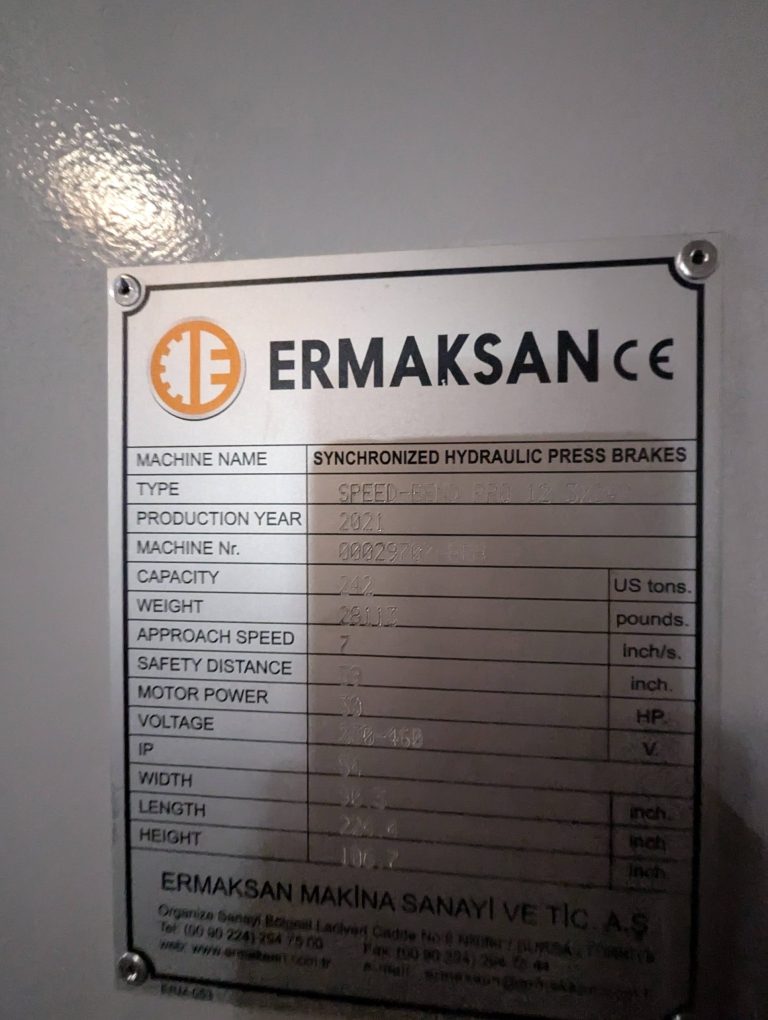
Traditional hydraulic press brakes use an electric motor to drive a hydraulic pump. That pump pressurizes oil, which moves cylinders that drive the ram up and down. The design is proven and strong, especially for heavy tonnage work.
But hydraulics bring ongoing maintenance. You have oil, filters, seals, hoses, and valves. You also have a pump that often runs continuously during operation, even when the ram is not moving. That means steady energy draw and heat generation.
In the Upper Midwest, we also deal with temperature swings. As oil temperature drops, viscosity increases. In simple terms, the oil thickens. That can mean longer warm up time before angles stabilize, and it can slightly change machine response early in the shift. I am not talking about guaranteed failures. Most hydraulic brakes run for decades. But winter does introduce another variable that managers have to manage.
What OEMs Document About Electric Press Brake Technology
Electric press brakes replace hydraulic cylinders with servo motors and ball screws or belt driven systems. According to Prima Power electric press brake documentation, servo electric systems deliver force through direct mechanical transmission controlled by high resolution encoders. That allows precise ram positioning through closed loop control.
Closed loop control means the machine constantly measures actual ram position and corrects in real time. The result is highly repeatable positioning from bend to bend.
Prima Power also documents that electric systems draw power on demand rather than running a hydraulic pump continuously. In practical terms, the motor consumes significant energy only during movement. When the ram is idle, energy consumption drops substantially compared to a constantly running hydraulic unit.
Amada, in its electric press brake overview, emphasizes repeatability from servo control and reduced hydraulic maintenance because there is no hydraulic oil, no filters, and no fluid changes. From an operations standpoint, that translates into fewer consumables and fewer leak related service calls.
For shops in cold climates, the absence of hydraulic oil removes viscosity from the equation entirely. There is no oil to warm up, no cold start behavior to stabilize. That simplifies morning startup during January in Fargo or northern Wisconsin.
Hybrid as a Bridge for Mixed Gauge Work
Not every Upper Midwest shop can move fully electric. If you are bending thicker plate or running higher tonnage structural components, full electric may not fit every application.
Hybrid systems combine electric servo control with a hydraulic assist. The servo system manages precision and efficiency, while hydraulics provide additional forming force when required. This approach can reduce overall energy use compared to conventional hydraulics while preserving higher tonnage capability.
For heavy equipment fabricators and structural steel operations, hybrid often becomes a practical middle ground. You gain improved control and potentially lower maintenance exposure, but you still have the muscle for heavier gauges.
Where Rytech AMP and FUSION Fit
Through Mac Tech, the Rytech platform gives Midwest shops two clear modernization paths.
The Rytech AMP line is electric. It aligns well with thinner gauge, high mix environments where speed, repeatability, and lower maintenance are priorities. For contract metalwork and commercial part producers, this can mean faster changeovers and more consistent first piece accuracy.
The Rytech FUSION line is hybrid. It is designed to blend electric efficiency with hydraulic forming strength. For shops in Wisconsin, Minnesota, and North Dakota handling structural prep, heavy fabrication, or mixed thickness work, FUSION offers a way to modernize without giving up tonnage flexibility.
From what I see on shop floors, the real benefit is not a single spec. It is how these platforms integrate into updated workflows. Modern controls, better backgauge accuracy, and compatibility with offline programming all support lean forming and reduced operator dependency.
Energy, Maintenance, and Winter Reliability in Practical Terms
When we evaluate ROI, I encourage managers to look beyond purchase price.
Energy profile. Electric systems draw power when moving, not continuously. Over a year of multi shift operation, that can meaningfully change total energy usage, especially as utilities remain volatile.
Maintenance profile. Hydraulics require fluid monitoring, filter changes, seal inspection, and leak management. Electric systems remove many of those tasks. That does not mean zero maintenance, but it does reduce fluid related service events.
Repeatability. Servo electric systems use encoder feedback to maintain precise ram positioning. That consistency reduces angle variation, which in turn reduces scrap and rework. In high mix environments, that stability supports less trial and error at setup.
Winter reliability. In our region, fewer variables at startup matter. Eliminating oil warm up and viscosity changes simplifies daily operation and helps protect early shift throughput.
Upgrade Checklist for Replacing an Aging Hydraulic Brake
When I walk into a shop to discuss replacing a 20 year old hydraulic brake, we work through a structured checklist.
Validate tonnage and length requirements based on your real part mix, not just the biggest part you have ever run.
Review material thickness range and confirm whether full electric can cover it or if hybrid makes more sense.
Check facility power capacity. Electric systems have different load characteristics than older hydraulic units.
Confirm tooling compatibility. In many cases, existing tooling can transfer, but it needs to be verified.
Evaluate floor space and material flow. Newer machines often have more compact footprints and better access for automation.
Plan operator training. Modern controls are intuitive, but structured onboarding shortens the ramp and protects production during transition.
Framing the Business Case in the Upper Midwest
For operations managers, the strongest justification I see is not a headline energy number. It is stability.
Stable startup in January. Stable angles across shifts. Stable energy draw that aligns with actual production. Stable maintenance planning without surprise leaks.
When you combine that with faster changeovers, lower scrap risk, and better integration with upgraded fiber lasers, the forming department stops being a bottleneck and starts matching the pace of modern cutting and automation.
If you are evaluating whether AMP electric or FUSION hybrid aligns with your mix of parts in Wisconsin, Minnesota, or North Dakota, the next step is to map your actual jobs and winter operating conditions to the right platform. That is where a focused application review makes the difference.
Related Video
Rytech Force One | Precision CNC Press Brake Power