What 2026 Trade Show Trends Mean for Stefa Coil-Fed Roll Forming Lines
What 2026 Trade Floors Are Signaling About Roll Forming Investment
Across mid-2026 trade coverage, one theme stands out to me. Automation in roll forming is no longer experimental. It is practical, integrated, and tied directly to throughput, material control, and labor utilization.
Recent reporting in Metal Construction News and broader coverage from Fabricating & Metalworking highlight continued investment in automated production systems, tighter cut-to-length accuracy, and digital controls that connect the front office to the line. At the same time, manufacturers like Roll Former LLC are emphasizing automation and line integration in their 2026 updates and event participation.
For roofing, architectural sheet metal, HVAC, and OEM teams running coil-fed lines, this matters because our margins are driven by setup time, scrap, and labor balance across shifts. The question is not whether to modernize. The question is how to do it without destabilizing shipments.
Automation Is Now Baseline in Roofing and Architectural Sheet Metal
Trade coverage this year reflects a mature phase of automation. Shops are not chasing novelty. They are upgrading for consistency, repeatability, and easier training across multiple operators.
That aligns closely with how I approach Stefa roll formers and panel lines. Stefa systems are built around integrated coil handling, forming stations, punching, and cut-off options within a coordinated control structure. The value is not just speed. It is synchronized movement from decoiler to exit table.
In roofing and panel production, we face:
- High mix of gauges, colors, and profile variations
- Shorter runs driven by custom orders
- Labor constraints across first and second shifts
- Margin pressure from material volatility
Automation in this environment means predictable changeovers, fewer manual measurements, and less stop-and-start material handling. It does not have to mean a full line replacement. In most cases, it starts with control and cut-off improvements.
Flying Shear and Cut-to-Length Accuracy Throughput Without Stop Start Penalties
One of the most consistent equipment themes in 2026 coverage is integrated cut-to-length accuracy. For coil-fed lines, that usually brings up the discussion of flying shear versus traditional stop-and-cut systems.
Stop-and-cut
- Lower initial cost
- Simpler maintenance in some configurations
- Reduced mechanical complexity
- Throughput limited by index and stop cycle
Flying shear
- Continuous material flow
- Higher usable throughput when matched to profile mix
- More demanding on synchronization and maintenance
- Greater benefit on longer runs and heavier gauges
The right answer depends on your production mix. If you are running longer panel lengths or structural profiles, eliminating repeated stop cycles reduces mechanical shock on the line and smooths flow. If your work is highly fragmented with very short parts, the ROI equation changes.
Stefa roll formers and panel lines are configured with different cut-off approaches depending on application. My guidance is to evaluate cut quality, edge condition, maintenance capability, and operator skill before deciding. Throughput on paper does not matter if the shear becomes your downtime driver.
Coil Handling and Feed Stability as the Hidden Multiplier
In almost every modernization conversation, the hidden variable is upstream feed accuracy. Trade publications this year have repeatedly emphasized material flow optimization, not just forming speed.
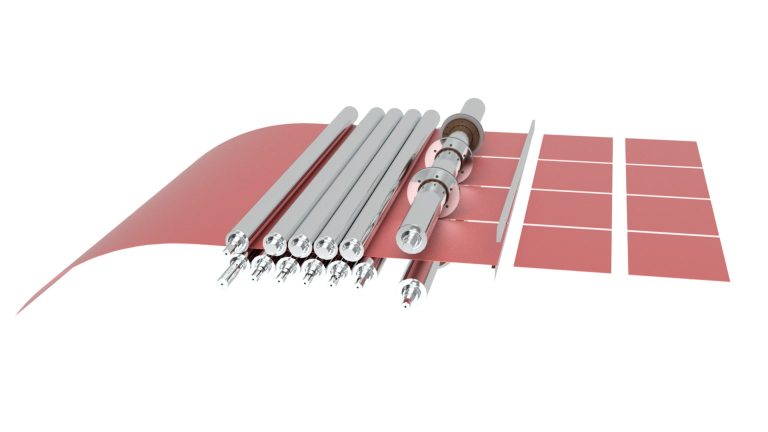
With systems like the Stefa Compact Feed Line CFL-30, coil handling, straightening, and feeding are engineered to deliver stable strip presentation to downstream equipment. That stability directly impacts:
- Hole position consistency
- Cut-to-length accuracy
- Profile symmetry
- Scrap rates during startup
If the strip is walking, bowing, or inconsistently tensioned, no amount of downstream automation will fix it. I often recommend stabilizing coil staging, feed alignment, and entry guidance before investing in advanced cut-off or digital overlays.
Practical focus areas
- Level, load-rated staging for coils near the decoiler
- Clear forklift and pedestrian paths to reduce rehandling
- Proper straightener setup and documented roll positions by gauge
- Routine inspection of feed rollers and guides
In my experience, these fundamentals multiply the benefit of every downstream upgrade.
Digital Controls and Recipe Storage for Setup Reduction
Another consistent theme in 2026 coverage is digital job management. Fabricating & Metalworking has highlighted connected controls and data-driven production as core drivers of consistency and uptime.
On a coil-fed roofing or HVAC line, recipe-based controls are often the fastest payback improvement available.
What recipe-based control changes
- Stored parameters for gauge, length, punch location, and speed
- Reduced manual dial-in between runs
- Cross-shift consistency
- Clearer version control between engineering and the floor
Instead of relying on tribal knowledge, you build a controlled library of validated jobs. That is critical when you are running mixed crews or onboarding new operators.
With Stefa coil-fed systems, synchronized controls across forming, punching, and cut-off stages allow that structured approach. The goal is not complexity. It is repeatability.
A Staged Upgrade Roadmap for Existing Stefa Lines
I rarely advise a full rip-and-replace unless the mechanical base is no longer viable. Most U.S. shops can modernize over 12 to 36 months with manageable risk.
Phase 1 Mechanical stabilization
- Inspect and realign roll tooling
- Address bearing wear and vibration
- Standardize straightener settings by material type
- Improve coil staging and ergonomic flow
Phase 2 Control upgrades
- Add or update digital length control
- Implement job recipe storage
- Connect basic production data to office systems
Phase 3 Servo or enhanced cut-to-length
- Evaluate servo-driven accuracy needs
- Assess flying shear integration based on run profile
- Validate maintenance capability before scaling
Phase 4 Material handling and automation
- Add powered exits or stacking where justified
- Reduce manual part flipping or carrying
- Align upstream feed systems such as compact feed lines with forming speed
This staged approach reflects what I see across 2026 trade reporting. Companies are investing deliberately, focusing on measurable bottlenecks rather than broad technology narratives.
Turning Trade Signals into Measurable Shop Floor Gains
The mid-2026 message is clear. Coil-fed roll forming in roofing and architectural sheet metal is evolving through integration, not hype. Automation maturity, accurate cut-to-length systems, stable coil handling, and digital job control are becoming baseline expectations.
For teams running Stefa roll formers and panel lines, the opportunity is to translate those signals into controlled, staged upgrades that protect uptime while improving consistency.
Start with mechanical stability. Lock down feed accuracy. Capture your best setups digitally. Then layer in servo-driven or flying shear capability where your production mix supports it.
Modernization does not have to be disruptive. When aligned with real production data and disciplined material flow, it becomes a practical path to stronger margins and more predictable delivery.
Related Video
Stefa Punching Coil Line by Mac Tech