Optimizing Material Flow Between Laser Cutters and Press Brakes in Metal Fabrication
A metal fabrication shop thrives when every cutter, brake, and operator works in unison, turning raw material into value-added products with precision and efficiency. Maximizing material flow between laser cutters and press brakes isn’t simply a technical challenge—it’s a competitive advantage. By focusing on smart workflow, ergonomic layout, and real-time shop-floor management, production managers can galvanize their team, streamline processes, and achieve consistent on-time delivery. The following best practices offer a practical blueprint for achieving continuous improvement and higher performance in your shop.
Integrating Digital Workflow Management for Seamless Job Tracking
Effective management in modern fabrication starts with robust digital workflow systems. Implementing Manufacturing Execution Systems (MES) or other production management software ensures each job is traceable from the moment a sheet is cut to its final form. These systems help managers, operators, and sales teams know exactly where a workpiece is within the production chain in real time.
For production operations, digital tracking minimizes lost jobs, reduces paperwork, and keeps communication clear. Some popular solutions, like ProShop ERP or JobBOSS², integrate directly with machine controls on brands such as AMADA, Trumpf, or Bystronic. These platforms log when a part moves off the laser and onto a queue for forming, providing instant visibility and automatic job prioritization.
Look for MES systems that can bridge scheduling, machine controls, and quality tracking, and that easily integrate with barcode readers, tablets, or mobile devices on the floor. This digital backbone leads to fewer costly errors, eliminates guesswork, and allows managers to focus more time on coaching teams and less on chasing job folders.
Designing Efficient Shop Floor Layouts to Minimize Transit Time
The physical path material takes from laser to brake directly affects productivity, worker fatigue, and lead time. An efficient layout minimizes excessive walking, double handling, and unnecessary forklift traffic. Ideally, situate laser cutters and press brakes within direct sight lines and as close together as part flow and safety permit.
Progressive layouts, where parts move in a logical, one-directional path from laser to brake to subsequent assembly stations, enable “lean” material handling and avoid crossed paths that create confusion or risk collisions. Consider using magnetic strip lines or floor marking to indicate the quickest, safest pathways. High-volume operations may benefit from dedicated transfer zones or buffer stations—simple racks or carts designed to hold laser-cut blanks in the order they were produced.
Opt for laser cutters and brakes with compatible sheet sizes. For instance, if using a Trumpf TruLaser 3030 with a 5-foot by 10-foot bed, match it with an Amada HG 1003 ATC that supports the same blank size, reducing resizing or unnecessary shearing.
Leveraging Conveyance Systems for Safe and Speedy Material Handling
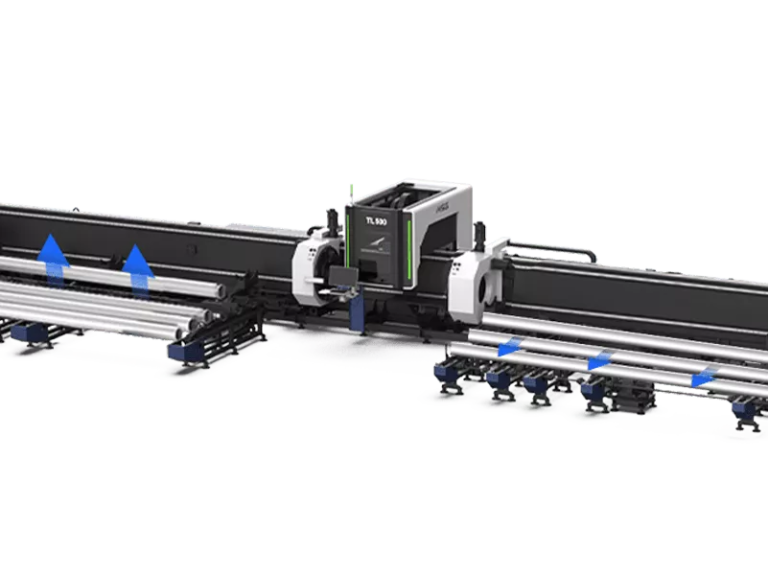
Transporting heavy metal sheets and parts by hand imposes obvious safety risks and slows productivity. Conveyance systems tailored to shop needs—such as gravity-feed roller tables, automated part sorters, and vacuum lifters—dramatically cut handling time and reduce ergonomic injuries.
For high-throughput shops, automated guided vehicles (AGVs) can ferry material racks between lasers and brakes following programmed routes. Even lower-volume shops gain efficiency from using robust custom carts, pallet jacks, or L-shaped transfer racks designed for your most typical part sizes.
Consider integrating stacker cranes or sheet lifters from vendors like KASTO or Schmalz if you frequently process large or heavy blanks. These systems speed up staging and retrieval, free up operators to focus on value-added forming, and prevent part scratching or warping due to rough handling. Investing in conveyance is often recouped quickly by reduced rework rates and higher throughput.
Implementing Real-Time Communication Between Laser Cutting and Forming Teams
Even the best hardware won’t make up for lack of communication between laser operators and brake teams. A digital dispatch system or even simple Andon lights can signal when a job is ready to move to the next stage. Shared digital dashboards or tablets at both stations let operators confirm priorities and flag issues immediately, preventing bottlenecks or confusion.
For shops running thin gauge, high-speed work, quick feedback is crucial. For example, if the brake operator sees a change needed in the flat pattern or notes a grain direction issue, a quick message through platforms like Slack, Microsoft Teams, or the MES itself can prompt the laser operator to adjust programs before more scrap is produced.
Cross-training employees so each understands the requirements and challenges at both laser and brake stations can also improve teamwork. Hold short “stand-up” meetings at shift start to align on potential trouble jobs and review daily goals.
Monitoring Production Metrics to Identify and Eliminate Process Bottlenecks
Finally, data-driven management is key to continuous improvement. Monitor metrics such as laser cut time, wait time at transfer stations, brake setup/changeover times, and work-in-progress (WIP) inventory at each stage. MES and shop-floor software can auto-capture these metrics and flag inefficiencies or unexpected slowdowns.
Machine manufacturers like Bystronic and Amada offer apps and dashboards that visualize OEE (Overall Equipment Effectiveness) and downtime reasons, helping production managers spot recurring delays—such as a consistent backup between laser offload and brake setup.
Regular reviews allow operations managers to adjust staffing, update queue rules, or re-engineer transfer systems as needed. Use lean manufacturing tools like value stream mapping to optimize future workflows, targeting the root cause, not just the symptoms, of any persistent holdups.
FAQ
How does optimizing material flow reduce costs?
Efficient flow decreases handling time, minimizes errors, and lowers labor costs by enabling staff to produce more with less wasted motion.
What’s the most effective way to track jobs without adding paperwork?
Implementing an MES or ERP system allows automatic tracking and digital records, reducing manual paperwork and job tickets.
Are conveyance systems worth the investment for smaller operations?
Even basic carts or roller tables pay off by saving time and reducing injuries, making them beneficial for most shop sizes.
What are the key considerations when choosing laser cutters and brakes for seamless flow?
Match material capacity, bed sizes, and automation features to limit unnecessary handling, resizing, and queuing.
Can digital workflow management systems work with existing machinery?
Yes, most modern MES software is designed to integrate with a variety of machine brands and older controls via adapters or manual entry.
How can communication between teams be improved besides technology?
Regular team huddles, clear signage, and posted schedules encourage proactive discussion and quick issue resolution.
Every fabrication operation is unique, but all share the challenge of moving parts efficiently from laser to brake. By embracing digital tools, reimagining shop layouts, upgrading conveyance methods, empowering communication, and mining production data, even the busiest plant can unlock new levels of throughput and safety. Invest in optimization at every link of the chain, and you’ll see productivity, morale, and customer satisfaction soar.
If you want more expert advice or tailored solutions for your shop, reach out to your equipment distributor or a specialized workflow consultant. Small, practical changes often yield the biggest rewards. Let your commitment to continuous improvement lead the way.
Optimizing Material Flow Between Laser Cutters and Press Brakes in Metal Fabrication