
Evaluating Ermaksan for Long-Term Fabrication Capacity and Capital Discipline
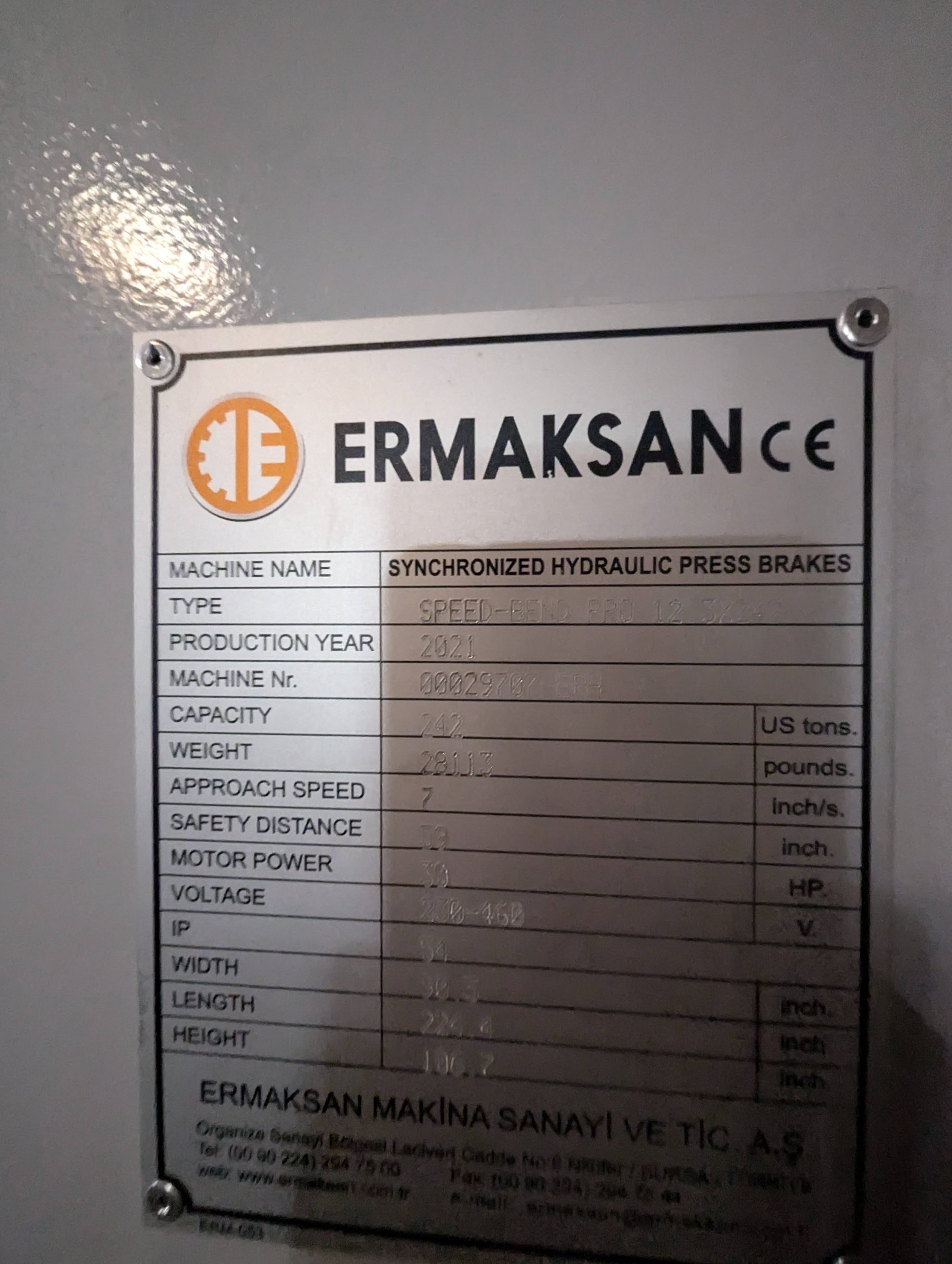
Capital Equipment Decisions in a Volatile Market
When I sit down with owners and financial leaders to evaluate new fabrication capacity, the conversation is rarely about horsepower alone. It is about risk, payback horizon, labor availability, and whether the platform we choose will still make sense five to ten years from now.
Ermaksan has remained active in the North American market with fiber laser cutting systems, hybrid and servo press brakes, and automation-ready platforms. Recent product updates highlighted by the manufacturer emphasize energy-efficient fiber sources, automation integration, and digitally connected controls. For executives evaluating capacity expansion in 2026, those themes align closely with what matters most: cost per part, labor leverage, and uptime stability.
Fiber Laser Strategy and Energy Economics
Ermaksan’s current fiber laser portfolio focuses on high-efficiency solid-state laser sources and automation compatibility, according to the company’s 2025 product communications. Fiber technology inherently reduces power consumption compared to legacy CO2 platforms and lowers maintenance exposure because there are fewer consumable optical components.
For CFOs, that translates into a more predictable operating expense profile. Power draw, assist gas use, and consumables drive real margin impact in high-volume shops. For industrial fabrication in Indiana markets such as Indianapolis, Fort Wayne, and South Bend, where contract metalwork and automotive supply chains are sensitive to cost pressure, reducing variable expense per cut can protect bid competitiveness.
The trade publication Fabricating and Metalworking has continued to emphasize that fiber adoption remains a primary driver of productivity gains in U.S. fabrication, particularly where automation such as load and unload systems reduces manual handling. That observation reinforces what I see on the ground: the laser table is no longer a standalone purchase. It is a workflow investment.
Press Brake Technology and Labor Risk
Ermaksan’s press brake lineup, including servo and hybrid hydraulic configurations, focuses on control precision and repeatability. The manufacturer highlights advanced CNC controls and automation interfaces designed to reduce setup time and improve angle consistency.
From a leadership standpoint, bending consistency is not simply a quality issue. It is a labor risk issue. In automotive supply and heavy equipment fabrication, repeatability across shifts protects delivery schedules and reduces rework. When experienced operators retire or move on, a control platform that shortens the learning curve becomes part of your succession planning strategy.
In Midwest industrial environments such as Gary, Elkhart, and Columbus, where skilled labor remains tight, I evaluate forming platforms based on three questions:
- How quickly can a new operator achieve consistent first-piece accuracy
- How easily does the control integrate with offline programming and CAD workflows
- How well does the machine maintain accuracy under sustained production loads
Those factors drive true cost per bend, not just purchase price.
Automation Readiness and Integration Discipline
Ermaksan has positioned many of its platforms to support automation modules such as sheet loaders, part sorters, and robotic bending interfaces. The strategic value of this approach is flexibility. You may not automate on day one, but you avoid locking yourself into a dead-end configuration.
For plant managers in structural steel and aluminum component production, the bigger risk is fragmented investment. A laser upgrade without coordinated material handling, or a press brake upgrade without programming alignment, can create new bottlenecks. Capital planning should start with throughput mapping, not brochures.
I advise leadership teams to model three scenarios before approving a major equipment purchase:
- Base case volume at current staffing levels
- Labor-constrained scenario with limited hiring success
- Growth scenario tied to new market expansion or OEM contracts
If the platform cannot flex across all three, the return profile weakens.
Financial Structuring and Payback Expectations
In the current U.S. lending environment, disciplined capital structure matters as much as equipment performance. Fiber laser and advanced press brake investments often sit in the mid six-figure to seven-figure range depending on power level and automation scope. That scale demands clarity around throughput assumptions and scrap reduction targets.
Based on manufacturer data and ongoing industry reporting, productivity gains from automation-ready fiber systems frequently come from reduced handling time, improved nesting efficiency, and fewer secondary operations. However, I caution teams against modeling best-case cycle times only. Conservative utilization assumptions protect against overextension.
A strong evaluation process includes:
- Three-year and five-year cash flow projections
- Sensitivity analysis on material pricing and order volume
- Service support mapping to minimize downtime exposure
- Operator training plans with measurable ramp benchmarks
That framework aligns equipment selection with enterprise risk management rather than short-term production pressure.
Service, Parts, and Long-Term Partnership
No capital investment performs without reliable service infrastructure. As leaders, we must evaluate not only the OEM platform but also domestic support capability, parts access, and technical training. A machine that performs well on paper but lacks responsive field support can undermine customer commitments.
For Indiana and broader U.S. operations, service depth and integration support should be evaluated early in the buying cycle. Commissioning timelines, preventive maintenance planning, and remote diagnostic capability all influence total cost of ownership.
Where Ermaksan Fits Strategically
Ermaksan can be a strong fit for industrial fabrication, contract metalwork, automotive component production, and commercial metal part manufacturers seeking a balance between automation capability and capital discipline. The brand’s continued focus on fiber laser efficiency and digitally controlled forming systems aligns with the structural shift toward lower labor dependency and higher process control.
For executive teams, the decision should not hinge on brand recognition alone. It should rest on whether the platform strengthens margin durability, supports workforce realities, and integrates cleanly into your broader manufacturing strategy.
When we evaluate equipment correctly, we are not buying a machine. We are shaping the next phase of the company’s operating model.
Related Video
EvoII HYBRID Press Brake, Complex Part Bending
