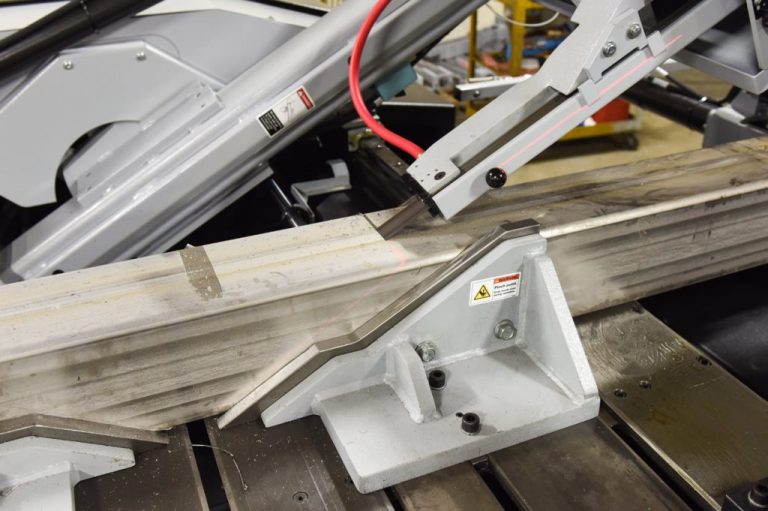
Used Equipment Ramp-Up Training Plan with Stage Gate Validation
Buying used equipment can cut capital cost, but it can also import hidden wear, bad habits, and undocumented settings into your process. The real risk is not the purchase price, it is an uncontrolled ramp that creates safety exposure, quality escapes, downtime, and operator frustration. A structured rollout with stage gates makes the condition visible, trains the right people at the right time, and proves readiness before volume hits.
Risk Assessment and Readiness Review for Used Equipment Ramp-Up
Start with a readiness review that treats used equipment like an unknown process until proven otherwise. Verify mechanical condition, electrical safety, guarding, and any software or control constraints, then compare capability needs to your current product mix. The goal is to prevent the common mistake of assuming it will run like the prior owner claimed.
Common failure points during adoption:
- Skipping incoming inspection and discovering wear only after production starts
- Training too many people too early, creating inconsistent methods and settings
- No baseline for cycle time, scrap, or uptime so problems look like opinions
- Using too many part numbers during early trials, masking root causes
- Letting production urgency override safety checks, interlocks, or guarding reviews
Narrow the early scope on purpose. Assign a small launch team of top operators, maintenance, and quality to run controlled trials on 1 to 3 validation parts, while the rest of the floor stays on the stable process.
Ramp-Up Plan and Stage Gate Criteria Definition
Define the ramp as staged expansion, not a single cutover. Stage 0 is incoming condition validation and baseline documentation, Stage 1 is limited production with a small trained crew, Stage 2 expands shifts or part families, and Stage 3 releases to normal scheduling once performance is stable. Each stage gate should have objective acceptance criteria that clearly define ready.
Validation parts and acceptance criteria:
- Parts: choose 1 best-case runner, 1 typical runner, and 1 worst-case tolerance or material condition
- Quality: first-pass yield at or above target, no critical defects, capability evidence where applicable
- Cycle time: within planned takt or routing standard, with documented settings and method
- Scrap and rework: at or below the existing process baseline for the same part family
- Uptime: meets target OEE availability or documented downtime limit for the stage
- Safety: all interlocks, e-stops, guarding, and LOTO points verified and signed off
Keep Stage 1 intentionally small. Run limited hours, limited parts, and limited operators so problems are found quickly and solved once, before the process is multiplied across shifts.
Operator and Maintenance Training Program Delivery
Training has to fit reality: your best operators and supervisors have the least time. Use short, focused sessions tied to the ramp schedule, then reinforce with on-machine coaching during Stage 1 production. Maintenance training should be split between daily care tasks for operators and deeper diagnostics for technicians, with clear boundaries to protect safety and reliability.
Training plan that works with a busy crew:
- Pre-work: 10 to 15 minute micro-lessons on safety, controls, and critical quality points
- On-machine training: 30 to 60 minute blocks aligned to changeovers or planned trials
- Train-the-trainer: certify 2 to 3 leads who can coach others without pulling supervisors off the floor
- Job aids: one-page setup sheet, start-up checklist, and common alarms guide at the machine
- Verification: short skills check tied to stage gate requirements, not attendance
If specialized support is needed for installation, commissioning, or troubleshooting, coordinate it to match the stage gates so external help accelerates learning rather than bypassing it. When applicable, Mac-Tech resources can support equipment onboarding and service planning, such as https://mac-tech.com/service/ and https://mac-tech.com/training/.
Stage Gate Validation and Go Live Authorization
Stage gate validation is the control point that prevents wishful thinking from becoming production risk. At each gate, review the evidence package: safety sign-off, baseline metrics, quality results, downtime log, and training completion for the approved operator list. Go live is a deliberate authorization, not the end of commissioning work.
Go-live cutover plan basics:
- Cutover window: schedule go live after a successful Stage 1 run, not before it
- Containment: temporary inspection plan and traceability for early production lots
- Support model: named maintenance and process owner on-call during the first week
- Escalation: clear criteria for stop and fix versus run and monitor
- Rollback plan: predefined ability to revert to the old process if critical criteria fail
Make the decision binary. Either the acceptance criteria are met and the scope expands, or the gap is assigned, owned, and re-tested before volume increases.
Standard Work, Checklists, and Templates for the Floor
Standard work is the stabilizer that prevents performance from drifting as more people touch the process. Document what matters first: setup sequence, critical settings ranges, tooling inspection points, and the quality checks that catch failures early. Keep documents lean and visual so they are used under production pressure.
Standard work and maintenance essentials:
- Start-up and shut-down checklist with safety and warm-up steps
- Setup sheet with settings, tooling orientation, and first-piece approval points
- In-process quality check frequency and reaction plan for out-of-spec results
- Daily operator care: clean, lubricate, inspect, and simple alignment checks
- Maintenance routine: weekly and monthly PM tasks, consumables list, and spare parts minimums
- Downtime tagging: top loss codes and what evidence to capture for troubleshooting
Treat templates as controlled documents. Update them only through the same stage gate discipline, using revision control and training confirmation when changes affect method or safety.
Keeping Performance Stable After Ramp-Up
After go live, stability comes from a closed-loop system, not from heroic troubleshooting. Run a stabilization loop that combines standard work adherence, a maintenance routine that matches actual wear, and fast issue escalation when performance slips. Weekly reviews should focus on trends in quality, cycle time, scrap, uptime, and safety observations, with actions assigned and verified.
Use leading indicators, not only end-of-month KPIs. Track first-pass yield by shift, top downtime reasons, and the frequency of small stops or alarms, since those often predict bigger failures. If metrics regress, tighten scope again for a short period by limiting parts or operators until the root cause is removed.
FAQ
How long does a used equipment ramp-up typically take?
Most ramps take 2 to 8 weeks depending on equipment complexity, part variety, and how much reconditioning is needed.
What changes the ramp-up timeline the most?
Hidden condition issues, missing tooling documentation, and adding too many part numbers early are the biggest schedule drivers.
How do we choose validation parts for stage gates?
Pick a best-case, a representative runner, and a worst-case tolerance or material condition part so capability is proven, not assumed.
What should we document first in standard work?
Start with safety, start-up, setup sequence, critical settings ranges, and the first-piece approval method before documenting every minor preference.
How do we train without stalling production?
Use micro-sessions, train-the-trainer, and on-machine coaching during planned trials so learning happens inside the ramp schedule, not beside it.
What metrics show the process is stable after go live?
Stable first-pass yield, cycle time within plan, scrap at or below baseline, predictable uptime, and fewer recurring alarms or small stops week over week.
How does maintenance scheduling change after go live?
PM becomes more structured with weekly and monthly routines based on actual wear data from the ramp, plus a defined spare parts list and downtime tagging.
Execution discipline is what turns a used purchase into a reliable asset, and stage gates give you the proof at each step. If you want help packaging training, checklists, and validation into a repeatable rollout, use VAYJO as your training resource at https://vayjo.com/.
Used Equipment Ramp-Up Training Plan with Stage Gate Validation