Optimizing Metal Fabrication Operations With World-Class Equipment Strategy
Every successful metal fabrication shop thrives on hard work, technical know-how, and an unyielding commitment to quality. In the day-to-day world of production and operations, real-world problems require actionable solutions—especially when it comes to equipment. Investing wisely in your shop’s machinery is not just about keeping up with competitors; it’s about working smarter, building better, and consistently delivering on tight deadlines. By connecting your operation with a world-class equipment strategy, you’ll future-proof your shop, cut waste, and maximize profits, all while empowering your team to perform at their best.
Aligning Equipment Selection With Production Goals
Before buying new machinery, it’s critical to ask: What are we trying to accomplish on the shop floor? Whether you need faster turnaround, greater precision, or increased capacity, the first step is to match your equipment purchases to clear, measurable production goals. For example, a shop focused on high-volume part runs will benefit more from automated turret punch presses and CNC lasers, while custom job shops may find more value in multi-purpose press brakes and modular workstations that adapt to varying product specs.
From a sales perspective, partnering with OEMs or trusted distributors ensures that you’re investing in machines that are the right fit—not just the latest model. Consider machines such as TRUMPF’s TruLaser series or Amada’s flexible turrets, which excel in both speed and accuracy. For progressive assembly and less material handling, look for equipment that allows for inline processing—like combination punch-laser systems and robotic weld cells that handle parts sequentially, minimizing excess movement and touch time.
Leveraging Automation and Digital Integration for Efficiency
Modern metal fabrication shops are leveraging Industry 4.0 solutions not just as buzzwords, but as practical pathways to efficiency. Automated equipment, from robotic arms to CNC-operated bending and cutting machines, can handle repetitive tasks faster and with more consistent accuracy than manual methods. Solutions like Mazak’s laser automation lines or Bystronic’s integrated bending cells can be game-changers, enabling near-continuous production, automatic loading/unloading, and optimized part flow.
Digital integration is equally important. Choosing machines compatible with your MES or ERP system enables real-time tracking of uptime, scheduling, and job status. This digital clarity translates into logistical knowledge: better planning, less downtime, and more efficient material usage. It also provides historical data for process tweaks, helping you make fact-based improvements over time.
Ensuring Equipment Reliability Through Proactive Maintenance
World-class machinery only performs at its peak if it’s well-maintained. Proactive maintenance strategies keep you in front of problems, not chasing after them when a critical asset fails. Schedule regular oil changes, filter replacements, and calibration checks as recommended by OEMs. Many top-tier machines—like Salvagnini’s panel benders or LVD’s automated punch presses—feature built-in diagnostics and predictive maintenance alerts that can help spot issues before they lead to downtime.
Sales solutions can often include customized maintenance agreements, remote support options, and access to OEM parts with quick delivery logistics. Ensure technicians are properly trained and that spare-part inventories are maintained in-house for crucial components. This investment pays dividends by maximizing uptime and keeping your assembly processes flowing smoothly, with less material handling interruption.
Enhancing Flexibility and Customization in Fabrication Processes
The ability to pivot quickly—whether to different materials, part geometries, or run sizes—is a hallmark of leading fabrication shops. When selecting equipment, look for features like quick-change tooling, automated fixture setups, and offline programming capabilities. Presses such as those from Accurpress or flexible laser welders from Lincoln Electric offer just that, letting you switch between jobs with minimal downtime.
Sales reps can offer modular equipment packages or upgrades that extend a machine’s capabilities as your needs change. From a technical standpoint, integrating flexible automation solutions—like collaborative robots (cobots) or multi-axis cutting heads—lets your team tackle complex assemblies with fewer clamping and repositioning steps. Streamlining your layout with moveable workstations and integrated part transfer systems will also contribute to a smoother, less labor-intensive flow.
Measuring ROI and Continuous Improvement in Equipment Investments
Every equipment purchase should be evaluated on its return on investment (ROI)—not just the sticker price, but the lifetime value in terms of increased throughput, labor savings, and reduced scrap. Use key performance indicators such as cycle time, maintenance cost per part, and on-time delivery rates to assess the true impact of your equipment strategy.
Sales professionals and factory consultants often provide ROI calculators tailored to your unique shop profile. Leveraging such data helps you justify expenditures, plan for upgrades, and spot opportunities for continuous improvement. Machine-wise, select options with energy-efficient drives, quick training requirements, and strong local support to ensure ongoing value.
FAQ
What are the key benefits of implementing a world-class equipment strategy?
Improved productivity, higher quality, reduced downtime, and the ability to adapt quickly to new projects or market shifts.
How can automation reduce material handling in my shop?
Automated systems can sequence workpieces through multiple operations with minimal manual transfer, freeing up staff for more value-added tasks.
Are modern machines difficult to integrate with existing shop setups?
Most leading equipment manufacturers offer integration support, and many machines are designed to work with standard digital systems or can be retrofitted.
Is the investment in high-end machinery justified for smaller shops?
Yes, if selected based on clear production goals and ROI analysis, as advanced equipment often pays for itself through labor savings and new capabilities.
How can I train my team to manage new technology effectively?
Request OEM-provided training at installation and leverage remote support and online resources for ongoing skill-building.
The right equipment strategy is a force multiplier for your operation. By aligning purchases with your production goals, embracing automation and digital tools, committing to proactive maintenance, and keeping flexibility in mind, you’ll ensure your shop not only meets today’s demands, but is ready for whatever tomorrow brings. Measure your investments carefully, focus on continuous improvement, and lean on trusted industry partners to build a future-proof fabrication process that maximizes every dollar, every minute, and every worker’s talent.
Need more help optimizing your fabrication operation? Reach out to reputable equipment specialists or a local sales engineering rep who understands the ins and outs of your business. Invest in knowledge, and your shop will stay ahead in every challenge ahead.
Optimizing metal fabrication operations with a world-class equipment strategy means aligning machine capabilities, workflows, and data-driven decisions so that every cut, bend, weld, and finish step supports higher throughput, better quality, and lower overall cost per part.
Quick Look
- Focus: Strategic selection and integration of metal fabrication equipment to improve efficiency and consistency.
- Scope: Cutting, forming, welding, finishing, and material handling systems across the full fabrication workflow.
- Goal: Reduce bottlenecks, rework, and manual handling by matching machine capabilities to production mix and volume.
- Approach: Standardize on “right-sized” machines, use modular automation where it adds clear value, and structure maintenance and training around uptime.
- Outcome: More predictable lead times, better quality control, and improved utilization of labor and capital equipment.
What It Typically Costs
Pricing estimate (USD): Varies by configuration.
- Overall investment depends heavily on the mix of processes (e.g., cutting-only vs. full cut–bend–weld–finish lines) and the level of automation.
- Higher-capacity or more automated systems generally trade higher upfront cost for reduced labor per part and more consistent quality.
- Operating costs (consumables, power, tooling, maintenance) can equal or exceed capital cost over the life of the equipment and must be factored into strategy.
- Integration costs for software, material handling, and data collection systems can be significant but often yield savings through better scheduling and less downtime.
- Total cost of ownership is driven by uptime, changeover time, scrap rates, and the ability to keep machines loaded with the right work.
Performance / Spec Considerations
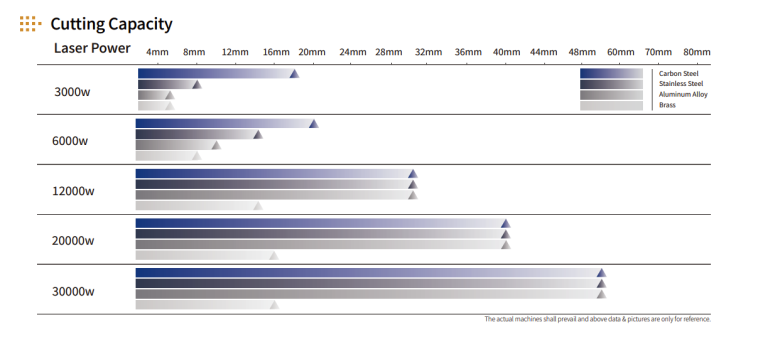
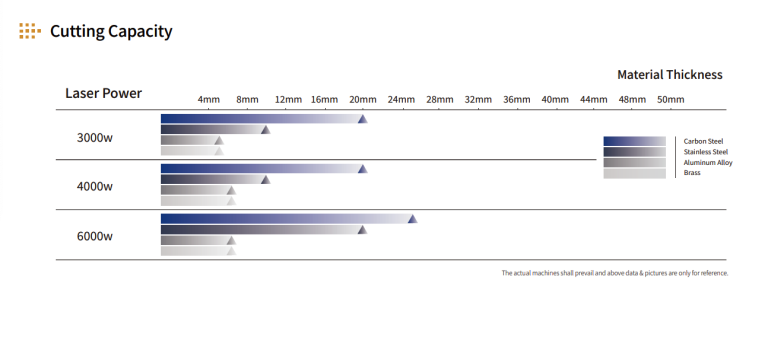
- Capacity vs. mix: Align cutting, forming, and welding capacities with your typical material thicknesses, part sizes, and batch sizes so that no single machine becomes a chronic bottleneck.
- Accuracy and repeatability: Prioritize machines with stable, repeatable positioning and process control to minimize rework and ease downstream assembly and welding.
- Changeover and setup: Evaluate how quickly machines can switch between jobs (tooling changes, program loading, fixturing) to support high-mix, low-volume work without excessive downtime.
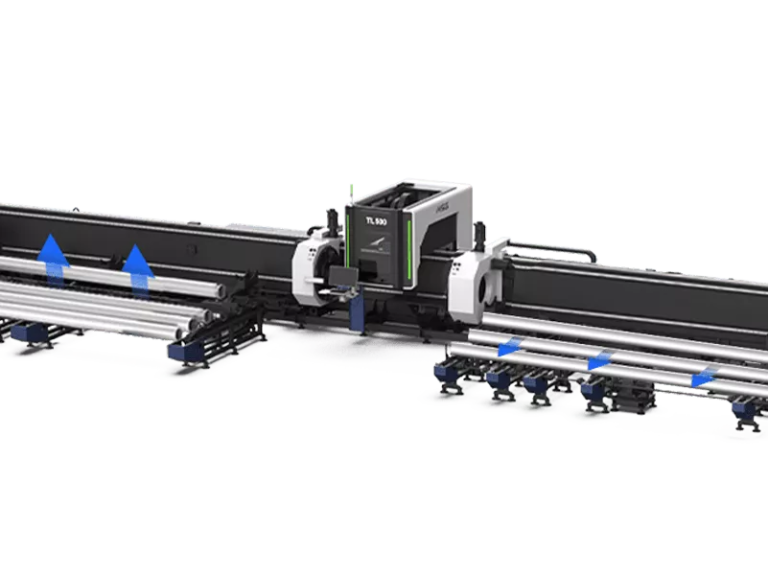
- Automation compatibility: Consider whether equipment can be integrated with loaders, unloaders, conveyors, or robotic handling to reduce manual material movement and ergonomic risk.
- Software and connectivity: Look for controls that can interface with nesting, CAD/CAM, and production planning systems to support optimized scheduling and real-time monitoring.
- Energy and consumable usage: Review expected power consumption, tooling wear, and consumable use, as these directly impact per-part cost and long-term profitability.
- Footprint and workflow: Match machine footprint and orientation to your plant layout so that raw material, WIP, and finished parts flow logically with minimal backtracking.
What to Inspect Before You Buy
- Confirm that the machine’s rated capacities (thickness, size, force, duty cycle) match or exceed your typical and peak production requirements.
- Inspect build quality and key wear points (guides, bearings, slides, tooling interfaces) for robustness and ease of adjustment or replacement.
- Review control system usability, including program creation, storage, and changeover steps, to ensure operators can run it efficiently with realistic training.
- Evaluate accessibility for maintenance: check how easily critical components, filters, and service points can be reached without major disassembly.
- Ask for documented performance data (tolerances, cycle times, uptime records) under conditions similar to your intended use.
- Verify compatibility with existing tooling, fixturing, software, and material handling systems to avoid hidden integration costs.
- Assess safety features, guarding, and compliance with relevant standards to protect operators and simplify safety training.
- Clarify availability of spare parts, technical support, and service response times to maintain high uptime once the machine is in production.
- Review total operating cost projections, including consumables, utilities, and recommended maintenance intervals.
- Request sample parts or trial runs using your own materials and drawings to validate real-world performance and quality.
FAQ
How should I prioritize which metal fabrication equipment to upgrade first? Focus on machines that are chronic bottlenecks, have high unplanned downtime, or generate disproportionate scrap and rework, as improving these will have the largest impact on throughput and cost.
What does a “world-class” equipment strategy mean in practical terms? It means deliberately matching equipment capabilities, automation level, and layout to your product mix and volumes, supported by strong maintenance, training, and data-driven planning instead of ad‑hoc machine purchases.
Is full automation always the best option for metal fabrication? No; automation adds value when volumes are stable and workflows are repeatable, but in very high-mix environments, flexible semi-automation and fast setups can be more effective than fully automated lines.
How do I account for operating costs when comparing equipment options? Estimate power, consumables, tooling, and maintenance over the expected life of the machine, and compare total cost per part rather than only the purchase price.
What role does software play in optimizing fabrication equipment? Software for nesting, scheduling, and data collection helps keep machines loaded with the right work, reduces material waste, and provides visibility into utilization and bottlenecks.
How important is machine footprint in equipment selection? Footprint is critical because poor layout can create material handling inefficiencies and safety issues; machines should fit into a workflow that minimizes travel distance and backtracking.
Can I standardize on one type of machine for all my fabrication needs? Most operations require a balanced mix of cutting, forming, and joining equipment; standardization is useful within each process type but usually cannot replace the need for complementary machines.
What training considerations should I include in my equipment strategy? Plan for initial and ongoing operator and maintenance training so that the equipment’s capabilities are fully utilized and routine issues can be resolved quickly.
How often should fabrication equipment be evaluated for replacement or upgrade? Regularly review performance, uptime, and quality metrics; many shops reassess key assets every few years or when product mix, volume, or quality requirements change significantly.
Does a world-class equipment strategy only apply to large manufacturers? No; smaller shops also benefit by choosing right-sized, flexible machines, aligning layout with flow, and using data to guide maintenance and investment decisions.
Source: Optimizing Metal Fabrication Operations With World-Class Equipment Strategy
Optimizing Metal Fabrication Operations With World-Class Equipment Strategy