Optimizing Material Flow in Metal Fabrication With CNC-Controlled Backgauges for Press Brakes
Every shop manager knows that on a busy production floor, every second counts and every move matters. Competing in today’s metal fabrication industry means combining hard-earned skill with smart investments in new technology. For press brake operators and production managers alike, optimizing material flow—how metal moves from raw stock to finished parts—directly impacts profitability, throughput, and quality. A key innovation making this possible is the CNC-controlled backgauge for press brakes. Understanding and applying the potential of CNC backgauges doesn’t just make bending jobs easier—it can revolutionize your entire fabrication workflow.
Streamlining Sheet Positioning with CNC-Controlled Backgauges
Accurate sheet positioning is critical for efficient press brake operations. Traditionally, operators manually position workpieces using physical stops, tape measures, and eye judgment—an approach that slows down production and introduces inconsistency. CNC-controlled backgauges automate this process by precisely and quickly moving to programmed positions, allowing operators to load sheets exactly where needed every time.
Switching to CNC backgauges, such as those from Amada, Bystronic, or Trumpf, means less time aligning parts and more time making bends. These backgauges can be programmed for multiple stops and complex part profiles, eliminating the need for physical adjustments between bends. This is especially important for fabricators handling lots of small batches or jobs involving multiple bend sequences, where rapid adaptability is key.
From a sales standpoint, investing in a CNC press brake equipped with advanced backgauges doesn’t just pay off in productivity. It reduces labor costs and minimizes operator fatigue, allowing you to take on more profitable work with your current team. For modern shops, a 6-axis backgauge system like the Amada HG Series or a multi-axis Trumpf TruBend gives optimal flexibility for streamlining material flow.
Enhancing Repeatability and Precision in Bending Operations
Consistency is the backbone of any successful fabrication process. In bending operations, repeatability—the ability to produce the same high-quality bend time after time—is the ultimate benchmark. Manual backgauges often result in minute differences from one part to the next, causing rework and scrap.
CNC-controlled backgauges, however, guarantee that every piece, from the first in the batch to the last, is positioned with micron-level accuracy. This is vital for operations producing components that must fit precisely with minimal tolerance. Machine lines from SafanDarley and Prima Power, for example, offer backgauge systems with servo-driven motors, ensuring that programmed dimensions are always met.
By digitizing the positioning process, CNC backgauges eliminate guesswork. This makes it easier for new operators to produce quality results and maximizes the talents of experienced staff. If your operation is focused on progressive assembly, such as multistep parts or kits, maintaining consistent bend positions reduces the need for secondary inspection and extra material handling in later stages.
Integrating Automated Material Handling for Improved Throughput
Material handling is often the silent bottleneck in fabrication. Too much manual movement of parts means more time lost, greater risk of damage, and more opportunities for error. Integrating automated material handling with CNC-controlled backgauges creates a smoother, more predictable workflow from raw stock through to finished bends.
The best CNC press brake systems now feature automatic loading and unloading, sheet followers, or integration with robotic arms. These come standard or as add-ons with high-end machines like the Bystronic Xpert or LVD ToolCell. By working in tandem with programmable backgauges, these machines can sequence folds, rotate and reposition parts, and handle heavy or awkward sheets efficiently. Not only does this mean fewer forklifts and less operator movement around the machine, but it also allows for true lights-out fabrication or reduced shift staffing.
Saleswise, automation capabilities are often the final push in upgrading; you unlock new contract opportunities that demand higher throughput with guaranteed consistency. Knowing how to specify such equipment—like ensuring you have the right weight capacity, gripper size, or sheet orientation capabilities—is critical for seamless integration of machine and workflow.
Leveraging Programmable Backgauge Features to Minimize Setup Time
One of the most frustrating inefficiencies in press brake operation is lengthy setup time. Manually adjusting stops, double-checking clearances, and swapping tooling eats up profitable hours. CNC-controlled backgauges can be programmed off-line, and setups can be called up from memory with a click or touch.
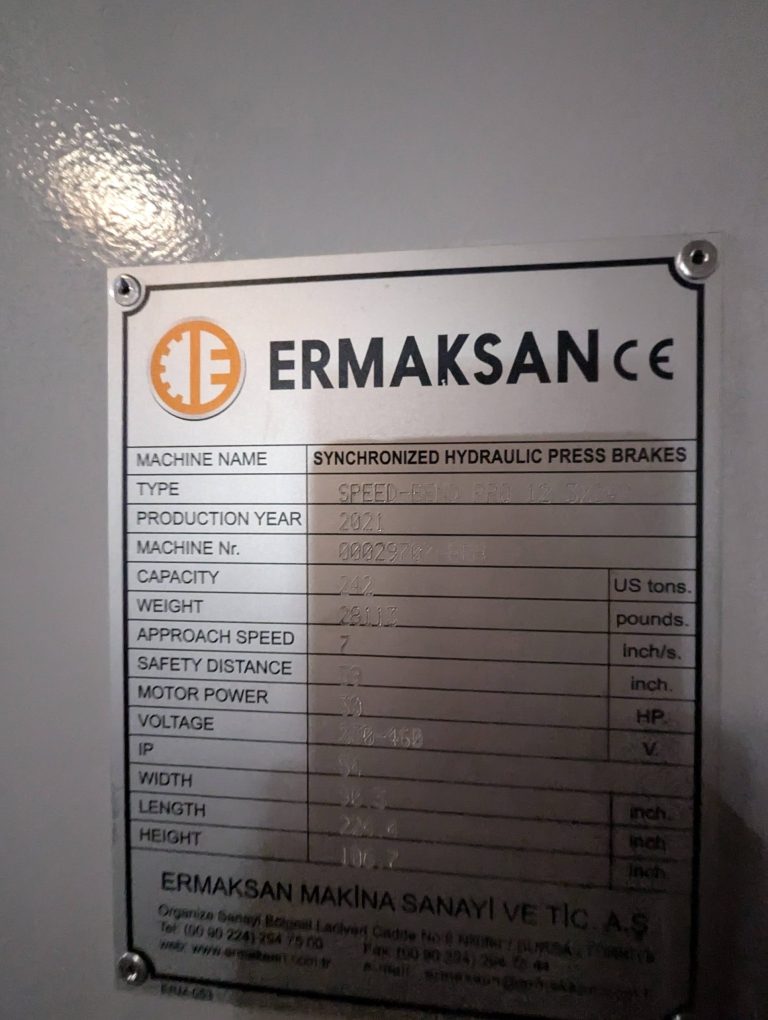
Advanced press brakes, such as the Ermaksan Speed-Bend Pro or Cincinnati Proform series, offer user-friendly interfaces for fast program changes. Operators simply select the job, and the backgauge moves automatically to each necessary position for the entire bend sequence. With support for job storage, common configurations, and digital job queueing, you can instantly switch between repeat jobs or rush orders with minimal downtime.
From a technical perspective, reducing setup time means your machines are available for actual production, not just preparation. This is especially valuable for job shops or OEMs running high mix, low volume orders. Logistically, less time spent on setups translates to more billable hours and quicker delivery for your customers.
Ensuring Quality Control and Reducing Scrap through Advanced Backgauge Systems
In today’s market, the cost of bad parts and high scrap rates can quickly eat into profits. Advanced CNC backgauge systems are a powerful tool in quality control, ensuring each bend is made to spec, every time.
CNC backgauges reduce human error by minimizing the need for manual measurement and adjustment, which is especially useful for newer staff or during high-volume production. Backgauges that utilize optical sensors, automatic thickness detection, or angle measurement (like those found on top-tier machines from LVD or Salvagnini) further improve accuracy and documentation for traceability.
Fewer scrap parts mean a leaner, more efficient operation, with savings on both material and labor. Moreover, precise bending means less post-process adjustment or wasted assembly time. For custom build shops or those serving demanding sectors like aerospace or medical, the data logging and verification features of advanced systems also support compliance and customer certification needs.
Frequently Asked Questions
How does a CNC-controlled backgauge improve productivity?
It automates and speeds up material positioning, reduces manual intervention, and enables faster, more consistent part production.
Are CNC press brakes with advanced backgauges more expensive?
Yes, but the increased throughput, reduced setup, and lower scrap rates quickly offset the initial investment.
Can CNC backgauges handle complex or multi-step bends?
Absolutely. Programmable systems can be set for any sequence, boosting flexibility for intricate parts.
What if we have varying skill levels among operators?
CNC backgauges are user-friendly, helping new operators produce good results and making experienced ones even faster.
Is it difficult to integrate automated handling with our current workflow?
Modern machines are designed for modular integration and can often be added to existing lines with relatively simple upgrades.
Do programmable backgauges really minimize setup time?
Yes, they allow settings to be recalled instantly, slashing the time lost between jobs or during retooling.
By embracing CNC-controlled backgauges and their advanced automation features, you’re not just optimizing material flow—you’re building a smarter, faster, and more competitive fabrication line. The key is matching your equipment to your production realities and being proactive about upgrades that deliver real-world results. If you’re exploring which press brake package or backgauge configuration is right for your needs, don’t hesitate to reach out to your equipment supplier or technical consultant for a tailored solution.
Good luck, work smart, and keep your shop moving forward.
CNC-controlled backgauges for press brakes are key to optimizing material flow in metal fabrication, enabling faster, more accurate positioning of sheet and plate for bending while reducing handling time, rework, and operator dependency.
1) At a Glance
- CNC backgauges automate material positioning on press brakes to improve throughput and consistency.
- They support repeatable bend locations, reducing scrap and setup time across batches and part families.
- Multi-axis capability allows for complex part geometries with fewer manual operations and repositioning.
- Integration with CNC controls enables program-driven bending sequences and material flow planning.
- Well-configured systems help balance operator workload, reduce handling, and streamline overall cell layout.
2) What It Typically Costs
Typical investment for a press brake equipped with a CNC-controlled backgauge system is approximately $250,000 – $900,000 USD, depending on tonnage, length, number of axes, and level of automation.
- Lower end of the range generally corresponds to smaller-capacity press brakes with simpler CNC backgauges and fewer axes.
- Higher end reflects larger machines, extended bed lengths, and multi-axis, high-speed backgauge systems tailored for complex work.
- Additional cost drivers include safety systems, tooling packages, and integration into automated cells or lines.
- Budgeting should consider not only the machine price, but also installation, training, and any required power or layout changes.
3) Performance / Spec Considerations
- Number of backgauge axes – More axes (e.g., X, R, Z1/Z2 and beyond) provide greater flexibility for complex parts and reduce manual repositioning, improving material flow between bends.
- Positioning speed and acceleration – Faster, responsive backgauges shorten cycle times between bends, especially important in high-mix, high-volume environments.
- Repeatability and accuracy – Tight positional tolerances help maintain consistent flange lengths and bend locations, directly impacting scrap rates and rework.
- Stroke and travel ranges – Adequate travel in depth and height ensures the backgauge can handle the full range of part sizes and bend sequences without awkward handling.
- CNC control capabilities – User-friendly programming, storage of bending programs, and support for bend sequences help standardize operations and streamline material flow.
- Integration with material handling – Compatibility with conveyors, stacking systems, or loaders/unloaders can further reduce manual handling and improve throughput.
- Rigidity and construction – A robust backgauge structure resists deflection under load, supporting consistent results on thicker materials or longer parts.
4) Buying Advice
- Confirm the backgauge axes and travel ranges match your current and anticipated part sizes and bend complexity.
- Evaluate positioning speed and repeatability against your quality requirements and throughput goals.
- Inspect the mechanical build of the backgauge (rails, fingers, supports) for rigidity and ease of adjustment.
- Review the CNC interface for intuitive programming, storage of part libraries, and bend sequence management.
- Check how easily the backgauge system can be integrated into your existing material flow and shop layout.
- Assess safety features and how they interact with operators and any surrounding automation.
- Verify availability of training and support to help operators and programmers fully utilize CNC backgauge capabilities.
- Consider energy, maintenance, and expected wear components when comparing long-term operating costs.
- Request sample parts or demonstrations using your drawings to validate cycle times and handling steps.
- Plan for future expansion, such as adding more axes or integrating additional automation, and confirm upgrade paths.
5) Common Questions
How does a CNC-controlled backgauge improve material flow? By automatically positioning the workpiece for each bend, it reduces manual handling, shortens setup and in-process adjustment time, and allows smoother, more predictable movement of parts through the bending cell.
Is a multi-axis backgauge always necessary? Not always; the required number of axes depends on part geometry and bend sequences, with more axes generally providing greater flexibility and fewer manual repositioning steps for complex parts.
What impact does backgauge speed have on productivity? Higher positioning speed and acceleration reduce the non-cutting time between bends, which can significantly increase throughput on repetitive or high-volume jobs.
How does accuracy of the backgauge affect quality? Backgauge positional accuracy directly influences flange length and bend location consistency, affecting fit-up, assembly, and the amount of rework or scrap generated.
Can CNC backgauges handle both small and large parts? They can, provided the travel ranges, finger designs, and overall configuration are matched to the smallest and largest parts in your product mix.
What role does the CNC control play in efficiency? The CNC control stores part programs and bend sequences, coordinates backgauge movements, and reduces operator decision-making, helping standardize production and improve flow.
How should I factor in cost when choosing a system? Consider the total investment of $250,000 – $900,000 USD in relation to expected gains in throughput, quality, and labor savings, rather than focusing solely on initial purchase price.
Can a CNC backgauge be integrated into automated lines? Yes, many systems are designed to interface with material handling and automation equipment, but integration details should be confirmed during specification and layout planning.
What maintenance does a backgauge typically require? Routine checks of mechanical components, alignment, and lubrication are important to maintain accuracy and reliability, though specific tasks depend on the design.
Is operator skill still important with CNC backgauges? Yes, while CNC control reduces manual positioning, skilled operators are still needed for setup, program verification, and ensuring overall material flow remains efficient.
Source: Optimizing Material Flow in Metal Fabrication With CNC-Controlled Backgauges for Press Brakes
Optimizing Material Flow in Metal Fabrication With CNC-Controlled Backgauges for Press Brakes