HSG Tube Laser Cutting vs Sawing and Drilling for Metal Fabrication Operations Managers
A commitment to efficiency, accuracy, and proactive problem-solving sets great fabrication operations managers apart from merely good ones. Whether you’re racing to meet tight deadlines, balancing overhead, or ensuring quality output, the equipment choices you make can redefine your entire workflow. Today, an important shift is gaining momentum: many production floors are moving from traditional sawing plus drilling to laser-based tube processing. The reasons behind this transition touch on productivity, material utilization, staffing, part complexity, and customer demands. Here’s what you need to know about the advantages—and real-life impacts—of swapping out old processes for HSG Tube Laser Cutting.
Understanding HSG Tube Laser Cutting Technology
HSG tube laser cutting uses a high-powered laser beam to cut metal tubes and profiles with extreme accuracy. Unlike manual or semi-automated saw-and-drill stations, a tube laser can automatically cut, pierce, and etch nearly any shape, angle, or hole pattern into a wide range of metals. HSG machines are known for their user-friendly software, fast setup times, and robust automation options.
From a sales perspective, investing in HSG tube lasers immediately expands your fabrication capabilities. Jobs that once required multiple setups or even outsourcing—for intricate slots, notches, and complex geometries—are now possible in a single, continuous sequence. The technical requirements are straightforward: accessible floor space for material infeed/outfeed, suitable power supply, and optional integrated loading/unloading automation. This all-in-one solution fits naturally into lean, progressive manufacturing lines—eliminating trips between multiple machines and reducing manual handling.
For operations managers, the leap in flexibility is huge. Whether you are fabricating handrails, furniture, chassis, racking, or architectural features, you stop relying on the skill gaps of saw and drill operators. Machine recommendations depend on your max tube diameter, wall thickness, and part length. HSG’s TS and TP series cover most light to medium-duty needs, while the HX series is aimed at heavy-duty, high-volume work. Every model is equipped for rapid changeovers, barcode-based program retrieval, and integration with your plant’s nesting and scheduling systems.
Evaluating Efficiency Gains in Production Workflows
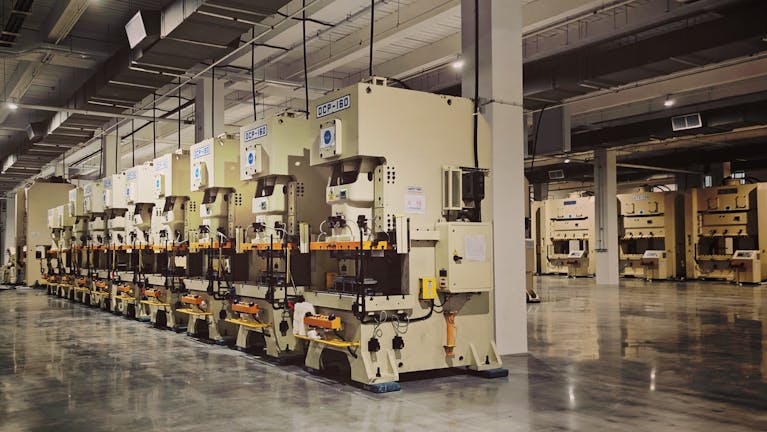
Traditional sawing and drilling require several steps—measuring, cutting to length, transferring to a drill or punching station, aligning for secondary operations, and finally, moving to deburring or assembly. Every handoff risks misalignment, material damage, or lost time. Even with best practices, a two- or three-stage process eats up valuable floor space and operator hours.
HSG tube lasers consolidate all those stages. A single operator can load raw tube stock, initiate a program, and watch the system cut, pierce, and etch features in one cycle. Automated handling options further streamline the pipeline, reducing non-value-added labor. The result is a dramatic increase in throughput and lower cycle time per part. For contract shops, this means reliably hitting tight turnaround times, even on short runs or complex one-offs.
Utilizing tube laser systems also simplifies job scheduling. Logistical headaches from job re-sequencing, bottlenecks at the saw, or operator availability become less pressing. Busy managers appreciate that one HSG tube laser can often replace two or more separate machines, freeing real estate on the shop floor. As a sales insight, these throughput and uptime gains are a compelling selling point when bidding on higher-value projects.
Enhancing Precision and Quality in Metal Fabrication
Quality and accuracy are key competitive differentiators for any fabricator. Sawing and drilling, even with jigs, inevitably involves some human error—cuts may be out of square, hole locations drift, and repeatability suffers over large batches. Plus, secondary deburring or touch-up work eats into your margins and can introduce further defects.
With HSG tube lasers, precision is measured in tenths of a millimeter, every cycle. Computer-controlled motion and high-resolution sensors ensure cuts and features line up perfectly, part after part. Intricate designs become routine; tight-tolerance assemblies can move straight to welding or finishing, with less need for rework. Managers can assure customers of consistent, repeatable quality—no matter who runs the shift. In technical terms, HSG machines offer advanced self-calibration, collision prevention, and automatic clamping adjustment for a wide range of tube geometries.
From a production perspective, minimizing the error stackup between cut and drilled features allows for higher-yield assemblies and smoother downstream automation. This supports progressive assembly models, where parts move quickly, with fewer checks or rework stations. It’s a compelling advantage in industries where client audits and certifications require samples from every lot to meet specification.
Comparing Cost and Resource Allocation Factors
When comparing investment, HSG tube lasers have a higher up-front cost than typical saw/drill setups. However, the real calculation is total cost of ownership (TCO). Consider labor savings: one operator now does the work of two or three. Inventory turns are faster with reduced work-in-process. Scrap from miscuts and alignment errors is minimized, and there’s less need for reworking or discarding bad parts.
Running costs also shift—less tooling consumption (no saw blades or spade bits to replace), and more parts per shift with unchanged headcount. Software-driven optimization and material nesting mean you’re using more of every tube, so drops and off-cuts are reduced. HSG machines are engineered for high uptime and remote diagnostics, so maintenance schedules are easier to predict and downtime is minimized.
As a resource allocation decision, tube lasers let you reassign veteran staff to higher-value processes, reducing the impact of labor shortages. Machine recommendations are guided by your planned capacity, mix of cutting jobs, and future flexibility—leasing or financing options are commonly available for these machines. Many fabricators find ROI comes faster than anticipated due to the sharp drop in labor costs and increase in bid winning from improved capabilities.
Streamlining Maintenance and Operator Training
Maintaining multiple saw and drill machines often means juggling spare parts, lubricants, tooling, and operator certifications. Each system introduces its own maintenance intervals and troubleshooting headaches. HSG tube lasers bundle those headaches under one roof; their maintenance routines are focused on optics, air filters, and guided rail cleaning.
Most operators can be trained to safely run and program these systems within days, rather than weeks, due to intuitive controls and clear user interfaces. Technical support, training libraries, and remote service are standard from brands like HSG, making onboarding a breeze. Management can feel more confident hiring less experienced operators and upskilling them quickly, reducing the strain on your most skilled machinists.
In terms of progressive assembly and lean manufacturing, streamlined maintenance translates to less unplanned downtime, smoother handoffs from process to process, and more predictable scheduling. Integrate your tube laser with digital work order systems for true end-to-end traceability and planning efficiency.
Frequently Asked Questions
How does laser tube cutting improve job turnaround times compared to traditional methods?
By consolidating cutting, drilling, and marking into a single automated process, tube lasers reduce material handling and cycle times, allowing for much faster part completion.
Are tube lasers suitable for both simple and complex part designs?
Yes—HSG tube lasers excel at everything from basic cuts to very intricate shapes, slots, and multi-axis features, all with high repeatability.
What are the main maintenance requirements?
Routine cleaning of optical components, changing air filters, and checking alignment. Fewer moving parts mean less wear compared to saw and drill systems.
How much space do tube lasers require compared to traditional methods?
Tube lasers often take up less total space because one machine replaces multiple stations and reduces material storage between steps.
Can my current operators learn to use a tube laser easily?
Generally yes—modern tube lasers offer simple interfaces and hands-on training, so staff are productive with minimal lead time.
Is the investment justified for low- to mid-volume shops?
Often yes—reduced labor, less scrap, and expanded capabilities can make the numbers work even for shops not running high volume.
Will switching to laser cut tubes affect downstream welding and assembly?
Positively—the increased precision and cleaner cuts lead to better fitting assemblies and less time spent on alignment or reworking parts.
Helpful Info
In summary, HSG tube laser cutting systems represent much more than a flashy new piece of equipment. For hardworking production managers tackling real-world issues like labor shortages, customer demand for precision, and tight delivery timelines, they deliver powerful operational advantages. Evaluating your current workflow and shop goals, the transition to tube laser technology could be the step that sets your business apart—by boosting productivity and quality, lowering costs, and opening up new business opportunities. If your goal is to outwork, outbid, and outperform your competition, now is the ideal time to investigate how HSG tube lasers fit into your shop’s future.
Want specific recommendations or need more info on machine fit, technical specs, or ROI calculations? Reach out to our team or your local HSG distributor—your next competitive edge starts here.
HSG tube laser cutting systems give metal fabrication operations managers a faster, more flexible alternative to traditional sawing and drilling, particularly where complex tube geometries, repeatability, and reduced manual handling are priorities.
Overview
- Designed for cutting metal tube and profile, replacing or reducing traditional sawing and drilling steps in many workflows.
- Best suited to operations that run medium-to-high volumes, recurring part families, or complex features that are costly to machine mechanically.
- Can consolidate multiple processes (cut-to-length, coping, slotting, hole patterns) into a single automated operation.
- Typically integrated with CAD/CAM and nesting software to optimize tube yield and reduce scrap compared with manual layout and sawing.
- Compared with sawing and drilling, tube laser cutting can reduce work-in-process, material handling, and fixture requirements.
- Most valuable where tight tolerances, repeatability, and clean edges reduce or eliminate secondary deburring and rework steps.
What It Typically Costs
- Pricing estimate (USD): $500,000 – $900,000 USD for a tube laser cutting system, depending on configuration and capabilities.
- Higher-end configurations (longer tube length handling, larger diameter capacity, higher laser power, more automation) generally sit toward the upper end of the range.
- When comparing against sawing and drilling, consider not only capital cost but also labor, floor space, material yield, tooling, and changeover time.
- Automation options such as bundle loaders, automatic unloading, and integrated sorting usually add to initial cost but can reduce per-part labor significantly.
- Budgeting should include installation, operator training, and any required electrical or material-handling infrastructure changes.
Performance / Spec Considerations
- Tube size capacity: Confirm the minimum and maximum tube diameter, wall thickness, and length the machine can handle for your current and projected work mix.
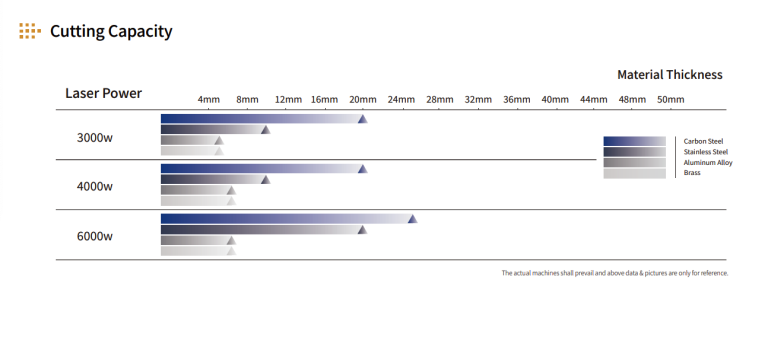
- Laser power vs. material thickness: Match laser wattage to the thickest and most reflective materials you routinely cut, balancing cut speed with edge quality requirements.
- Profile types: Check support for round, square, rectangular, and open profiles (e.g., angle, channel) if your product mix includes more than simple round tube.
- Cut accuracy and repeatability: Evaluate stated tolerances and positional repeatability relative to what you achieve today with sawing and drilling, especially for multi-hole patterns.
- Automation level: Assess loading/unloading options and part offloading strategies to see how completely you can replace manual handling steps from saws and drill stations.
- Programming workflow: Ensure compatibility with your CAD/CAM environment and nesting capabilities for tube to minimize scrap and programming time.
- Changeover and setup: Compare setup time for new tube sizes or part programs against your existing saw and drill setups, especially if you run many small batches.
Pre-Purchase Checklist
- Define your dominant and future tube sizes, materials, and wall thicknesses, and verify they fall within the machine’s rated capacity.
- List the current sawing and drilling operations (cut-to-length, coping, slotting, hole patterns) you want to consolidate and confirm the tube laser can perform all required features.
- Quantify current throughput, labor hours, and scrap on sawing/drilling to build a realistic payback model for the tube laser investment.
- Check facility requirements: available floor space, material flow paths, electrical capacity, and access for installation and future maintenance.
- Evaluate operator skill requirements and plan for training, including programming, setup, and basic troubleshooting.
- Review safety requirements and guarding compared with your existing saws and drills, including fume extraction needs for laser cutting.
- Confirm integration with your existing CAD/CAM, ERP, and nesting workflows to avoid manual data entry and programming bottlenecks.
- Assess spare parts availability, service response expectations, and long-term support, especially if this is your first tube laser installation.
- Request sample parts cut from your actual tube and compare edge quality, dimensional accuracy, and cycle time to your current methods.
- Plan a phased transition from sawing/drilling to tube laser cutting so you can validate throughput and reliability before decommissioning legacy equipment.
Buyer Questions
How does tube laser cutting compare to sawing and drilling on throughput? Throughput will depend on your part mix, but tube lasers can often process cut-to-length and hole features in a single automated cycle, reducing handling and setup time compared with separate sawing and drilling stations.
When does a tube laser make more sense than traditional saws and drills? It tends to make sense when you run recurring parts with multiple features, need tight positional accuracy, or want to reduce manual handling, fixture building, and secondary operations such as deburring.
Can a tube laser completely replace our saws and drills? It can replace many sawing and drilling operations, but you should map your full part mix; some very large sections, extremely thick walls, or specialty operations may still require conventional equipment.
What should operations managers focus on when justifying the cost? Focus on total cost per part, including labor, scrap, changeover time, floor space, and work-in-process reduction, not just the capital price compared to individual saws and drills.
How important is laser power selection? Laser power should be matched to your typical and maximum material thickness; too little power limits speed and cut quality on thicker sections, while excessive power can raise costs without meaningful benefit if you mostly cut thin walls.
Will a tube laser reduce our tooling and fixture costs? It can significantly reduce custom fixturing and mechanical tooling for drilling patterns, as the laser and positioning system handle both cutting and feature placement in one setup.
What impact does it have on downstream welding and assembly? More accurate, repeatable cuts and features can improve fit-up, reduce gap filling during welding, and help assemblies locate consistently without extensive manual adjustment.
How should we plan for operator training? Plan for initial training on programming, machine operation, basic maintenance, and safety, and consider designating key operators or programmers as internal champions for ongoing support.
Does a tube laser change our material handling needs? Yes, you may shift from handling many intermediate cut pieces to primarily handling raw tube bundles in and finished parts out, which can simplify flow but may require different racking or conveying solutions.
What are common pitfalls when transitioning from sawing and drilling? Common pitfalls include underestimating programming needs, not aligning machine capacity with the full part mix, and failing to plan material flow and staffing changes around the new, more centralized process.
Source: HSG Tube Laser Cutting vs Sawing and Drilling for Metal Fabrication Operations Managers
HSG Tube Laser Cutting vs Sawing and Drilling for Metal Fabrication Operations Managers