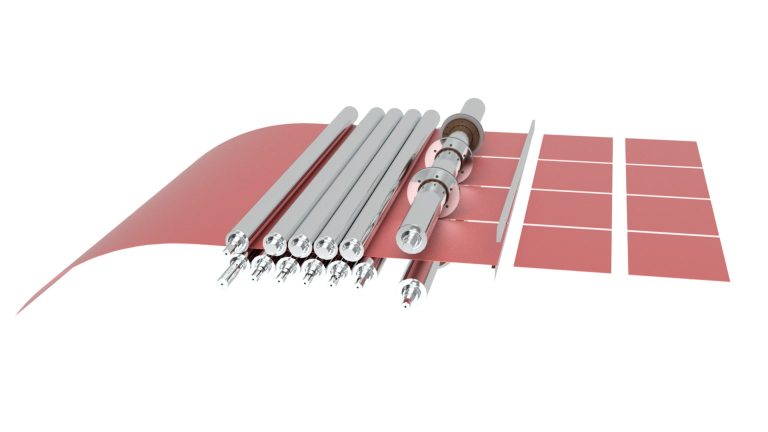
Stefa Decoiler DC-20 Hydraulic
The Stefa Decoiler DC-20 Hydraulic is a heavy-duty hydraulic decoiler designed for continuous-feed, high-volume metal coil processing in automated lines for roofing panels, building facades, and steel service center operations.
Overview
- Hydraulic decoiler configuration suited to continuous feed applications such as coil lines, roll forming, and automated cutting for roofing and façade systems.
- Intended for high-volume production environments including steel service centers and automated factories handling metal coil processing.
- Designed to work as part of integrated coil handling systems where consistent, controlled payout of coil stock is critical to downstream forming quality.
- Hydraulic actuation typically used for mandrel expansion and brake/tension control to maintain steady strip tension into continuous lines.
- Well-suited to metal roofing panels, cladding, and building façade profiles, where long, uninterrupted runs from coil are required.
- Optimized for continuous feed workflows, helping minimize changeover time and keep production lines running at higher utilization.
Typical Cost Ranges
Pricing estimate (USD): $250,000 – $2,000,000 USD
- Lower end of the range generally corresponds to simpler hydraulic decoiler configurations and more basic coil handling requirements.
- Higher-end pricing typically reflects greater coil capacity, more advanced automation, and integration into complex continuous-feed coil lines.
- Total project cost is influenced by line integration (entry equipment, straighteners, feeders, safety systems) in addition to the decoiler itself.
- Budgeting should account for installation, commissioning, operator training, and any required modifications to existing coil processing lines.
- Optional features such as enhanced automation interfaces or advanced tension control may increase the overall investment within the stated range.
Key Selection Factors
- Coil capacity and dimensions – Match maximum coil weight, width, and outer/inner diameter capabilities to your typical and largest coil specifications for roofing panels and façade materials.
- Hydraulic system performance – Consider the robustness of hydraulic actuation for mandrel expansion, braking, and tension control to support continuous, high-volume coil payout.
- Line speed compatibility – Ensure the decoiler can reliably support the feed speeds required by downstream forming and cutting equipment in continuous-feed production.
- Integration with existing coil lines – Verify mechanical and control compatibility with current straighteners, feeders, roll formers, and safety systems in your metal coil processing line.
- Material types and surface protection – Evaluate suitability for coated or painted coils used in building facades and roofing panels, including handling that minimizes surface damage.
- Automation and control interface – Look for control features that support synchronized operation with automated factories and steel service center systems.
- Duty cycle and reliability – Confirm that the decoiler is specified for continuous, high-volume operation typical of steel service centers and large coil processing facilities.
Pre-Purchase Checklist
- Verify the decoiler’s rated coil weight, width, and diameter range against all coils you intend to process for roofing, façade, and general coil work.
- Confirm hydraulic power unit capacity, control responsiveness, and available adjustments for tension and braking suitable for continuous feed lines.
- Check that the decoiler’s mechanical layout and mandrel design are compatible with your existing loading methods and safety procedures.
- Review line speed requirements and ensure the decoiler can supply material at the maximum speeds of your roll forming or panel production equipment.
- Assess control integration needs (signals, communication protocols, safety interlocks) with your current or planned automation systems.
- Inspect options for coil threading assistance, hold-downs, or peeler devices if your production requires frequent coil changeovers.
- Evaluate required floor space, foundation considerations, and coil loading/handling logistics in your facility layout.
- Clarify what is included in the quoted price: installation, commissioning, operator training, and any integration services.
- Request documentation on maintenance schedules, recommended spare parts, and expected consumables for long-term operation.
- Ensure that local service, technical support, and parts availability are adequate for your production uptime requirements.
Common Questions
What applications is the Stefa Decoiler DC-20 Hydraulic best suited for? It is intended for continuous-feed, high-volume metal coil processing in steel service centers and automated factories, especially for roofing panels and building façade products.
How does the hydraulic system benefit coil handling? Hydraulic actuation is typically used for mandrel expansion and tension/brake control, helping provide stable, controlled coil payout into continuous production lines.
Can this decoiler be integrated into an existing coil line? Yes, it is designed for use in coil handling systems; mechanical and control integration should be checked against your existing straighteners, feeders, and forming equipment.
What price range should I expect for a Stefa Decoiler DC-20 Hydraulic? The indicative investment range is approximately $250,000 – $2,000,000 USD, depending on configuration and integration scope.
Is it suitable for coated or painted façade and roofing materials? It is used in applications such as roofing panels and building facades; selection should ensure handling practices and options that protect sensitive coated surfaces.
Does it support continuous high-volume production? Yes, the decoiler is described as being used in continuous feed, high-volume production environments typical of automated factories and steel service centers.
What industries commonly use this type of decoiler? Industries include steel service centers, metal roofing and cladding manufacturers, and automated plants producing building façade and panel systems from coil.
What should I check regarding space and installation? You should confirm floor space, coil loading paths, and foundation or anchoring needs, as well as how the decoiler will physically align with existing line equipment.
How important is control integration with downstream equipment? It is critical in continuous-feed systems, as the decoiler must synchronize with straighteners, feeders, and forming machines to maintain tension and line speed.
What ongoing support considerations are there? Before purchase, clarify availability of technical support, spare parts, maintenance guidance, and training to sustain reliable long-term operation.
Source: Stefa Decoiler DC-20 Hydraulic
Stefa Decoiler DC-20 Hydraulic