RMT Metal Fabrication Solutions for Efficient Production Operations
Every production floor requires more than just talented hands and determination to stay efficient and ahead in today’s demanding market. Consistent quality, a relentless drive for improvement, and skillful use of the best available tools define successful operations. Shop and production managers understand that metal fabrication is a balancing act: meeting deadlines, reducing rework, controlling material costs, and motivating teams to turn out precision components time after time. With credibility earned through robust partnerships and workhorse equipment, RMT (Revolution Machine Tools) stands out as a key ally for fabrication shops looking to produce smarter, cut costs, and outpace their competition.
Leveraging Advanced Machinery for Precision Metal Fabrication
Precision is the core of any successful metal shop, impacting everything from weld fit-up to assembly flow. RMT offers a range of machinery—like their hydraulic press brakes and CNC plate rolls—designed to improve accuracy while keeping operation straightforward for shop-floor teams. Their press brakes, equipped with advanced backgauge systems, provide reliable repeatability, minimizing costly errors and manual adjustments. For shops tackling thick or complex parts, RMT’s plate and angle rolls bring programmable control, so even curved or multi-radius components come off the machine with minimal secondary handling.
From a technical standpoint, using machines such as the RMT BB Series CNC Press Brake means programming your bend sequence once and then running part after part with confidence. This reduces the need for manual measuring and speeds up throughput by eliminating guesswork. Shop managers can rely on consistent output, resulting in tighter assemblies and fewer scrapped materials—a real-world solution for boosting both quality and morale on the floor.
Integrating Automation to Streamline Workflow
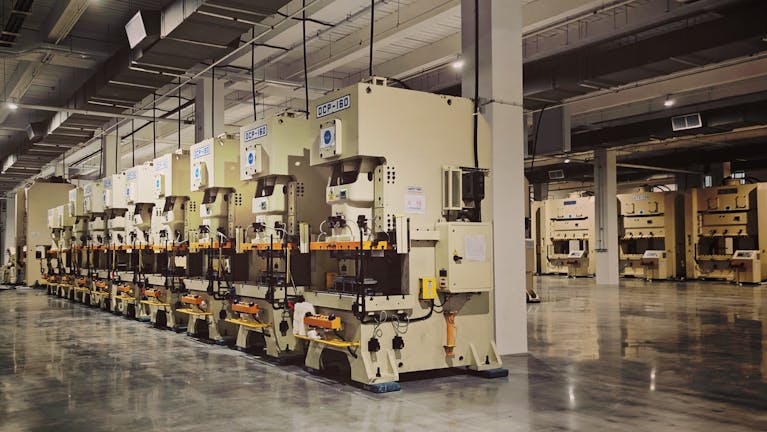
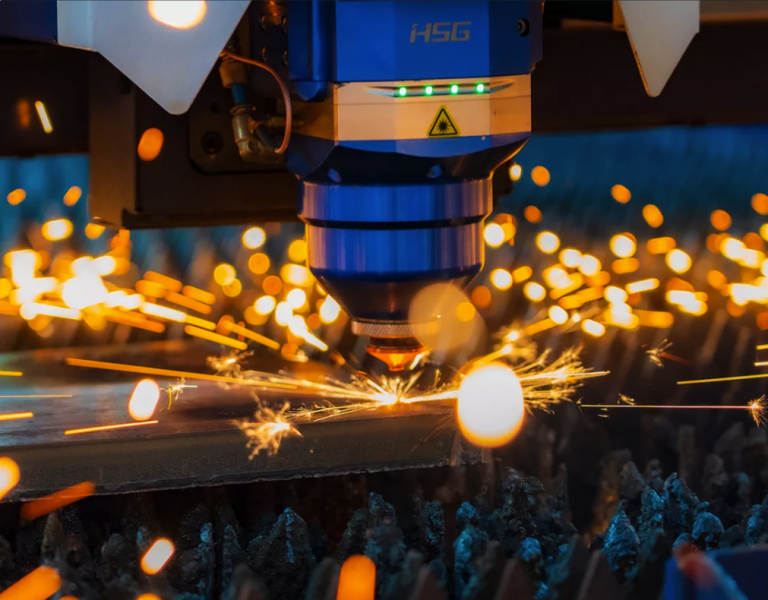
Automation has become essential in modern metalworking, bridging labor shortages and improving safety. RMT integrates automation into their machinery lineups—such as CNC controls, auto-feeding systems, and programmable tool changers. For operations needing high-volume output, automated CNC fiber lasers and turret presses minimize operator intervention, freeing up skilled staff for value-added tasks.
Selecting the right machine is key. For instance, RMT’s CNC plasma cutting tables allow operators to queue up jobs, reducing downtime between runs. Pairing machines like the RMT PRO Series Plate Roll with auto-loading capability means heavier plates are moved without manual lifting, cutting material handling to a minimum and reducing workplace injuries.
These solutions not only improve production throughput but also lead to a more progressive assembly process, where material flow is logical, bottlenecks are reduced, and parts arrive at subsequent workstations ready for finishing or assembly. This marks a significant improvement in both technical efficiency and logistical simplicity.
Enhancing Production Quality with Cutting-Edge Technology
Quality control and traceability are growing concerns for fabricators supplying to industries like aerospace, architectural, or automotive. RMT addresses this by outfitting equipment with the latest in operator interfaces, precision sensors, and error-checking programming. For example, their CNC press brakes and shear machines feature diagnostic feedback, ensuring operators catch material placement or tooling issues before they impact final product tolerances.
Upgrading to advanced machines like the RMT S-FAB Servo Electric Press Brake empowers your team to make micro-adjustments on the fly. This results in better bend accuracy and less manual inspection, translating directly to products that pass stringent QC checks with less rework and faster turnaround.
For production managers tasked with hitting tight specs, these machines serve as both a technical and commercial advantage. Reduced rework and consistent dimensional accuracy mean happier customers, fewer warranty returns, and a demonstrably better reputation in the marketplace.
Customization Capabilities to Meet Unique Operational Needs
Every fabrication shop deals with its own set of challenges: specialized materials, irregular parts, space limitations, or unique workflow demands. RMT recognizes this reality and offers machines configurable for diverse requirements. Whether you need a tandem press brake for extra-long parts or adjustable roll diameters for mixed-material runs, RMT works directly with managers to spec out the right solution.
One example is the RMT PBH Series Custom Forming Press, which offers modular tooling and expanded throat depth to handle oversized or nonstandard jobs. This level of customization ensures your machine investments remain viable as business needs change, rather than becoming obsolete or redundant as your customer base evolves.
Companies operating in varied markets—such as job shops or contract manufacturers—particularly benefit from RMT’s collaborative approach. The flexibility built into these machines supports batch-change overs and rapid adaptation for lean manufacturing principles, saving both time and floor space in the process.
Ensuring Sustainability and Cost Efficiency in Fabrication Processes
Sustainability is no longer optional in modern industry—it is a competitive differentiator. RMT’s technologically advanced equipment, from energy-efficient servo drives to recyclable hydraulic oils, reduces environmental footprint without sacrificing performance. Lower energy consumption and less scrap lead directly to lower operational costs and a more appealing profile for customers prioritizing green sourcing.
Machine recommendations for cost efficiency include the RMT S-FAB press brakes for minimal power draw, and their laser and plasma units, which are designed for optimal material nesting and minimal kerf loss. Maintenance and downtime are also reduced by using machines built for easy diagnostics and quick access to service points.
In real-world shop management, these advantages mean less money tied up in wasted material, less unplanned downtime, and the flexibility to respond quickly to new jobs or reorders. Over time, investing in durable, forward-thinking machinery from RMT lays the groundwork for sustainable, cost-competitive operations—putting your shop in a stronger position for the future.
FAQ: RMT for Efficient Production Operations
How do RMT machines improve production efficiency?
By automating repetitive tasks, improving accuracy, and reducing handling time, RMT machinery speeds up workflow and increases output.
What RMT solutions are best for high-mix, low-volume operations?
Customizable press brakes and flexible CNC plasma systems are ideal for frequently changing part types and material thicknesses.
Are RMT machines suitable for small shops?
Yes, many models are compact and modular, designed to fit different shop sizes while still providing industrial-level performance.
How does RMT support sustainability in fabrication?
RMT offers energy-efficient equipment with lower power consumption and less waste generation, supporting green manufacturing initiatives.
What is the typical ROI on RMT equipment?
Most shops see rapid payback thanks to reduced labor, material savings, and higher throughput, often within 1–2 years of installation.
Can RMT machines be integrated into existing production lines?
Absolutely. Their machines are designed with modern interfaces for easy integration with current workflow systems and ERP software.
If you’re ready to tackle today’s fabrication challenges with better tools, consider how RMT machinery can raise your shop’s standards for productivity, quality, and cost savings. For more information and a direct consultation, visit RMT at Mac-Tech and connect with experts who understand real-world production demands. Your path to a more efficient, future-ready fabrication operation starts with the right machines—and the right partner.
RMT metal fabrication solutions focus on efficient, high‑quality production by combining modern fabrication technologies with process‑oriented design, helping shops improve throughput, consistency, and overall equipment utilization.
Quick Look
- Application focus: General metal fabrication for production environments aiming to increase efficiency and quality.
- Technology profile: Advanced, smart technology–driven equipment and processes for cutting, forming, and related fabrication steps.
- Operational goal: Reduce cycle times, improve repeatability, and support consistent part quality across production runs.
- Process integration: Intended to fit into broader fabrication workflows, supporting coordinated operations rather than isolated stand‑alone tasks.
- Production scale: Suitable for operations that prioritize reliable, repeatable output over one‑off or purely manual fabrication methods.
- Quality emphasis: Designed to help maintain tight tolerances and surface quality while still supporting efficient throughput.
What It Typically Costs
Pricing estimate (USD): Varies by configuration.
- Overall investment depends heavily on the specific mix of metal fabrication capabilities required (for example, the balance between cutting, forming, and other processes).
- Costs are influenced by the degree of smart technology integration, such as automation, monitoring, and process‑control features.
- Larger, more capable production configurations generally require higher capital outlay but can support greater throughput and part complexity.
- Operating costs will vary with material type, labor structure, and how fully the advanced process capabilities are utilized.
- Service, training, and integration support should be treated as part of the total cost of ownership, not just the initial machine price.
Key Selection Factors
- Production volume and mix: Clarify whether you need primarily high‑volume, repeatable work or a flexible solution for mixed, smaller batches.
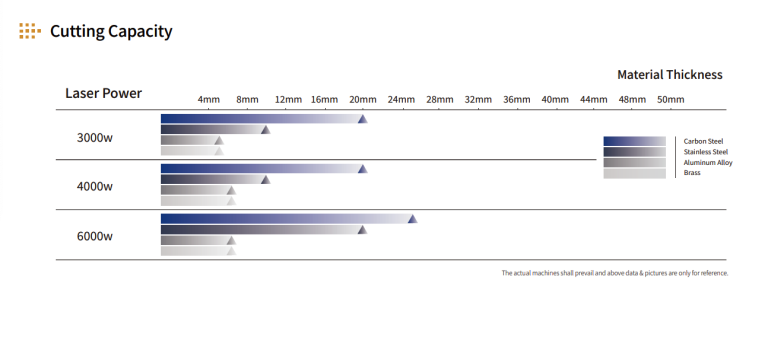
- Material and thickness range: Define the primary metals and thicknesses you must handle so the chosen configuration is neither under‑ nor over‑specified.
- Required precision and finish: Match the technology level to your tolerance and surface‑quality needs to avoid unnecessary complexity or capability gaps.
- Automation and smart features: Decide how much you want to rely on automated handling, monitoring, and process optimization to drive efficiency.
- Integration with existing processes: Ensure the solution can be incorporated into current workflows, from upstream material prep to downstream finishing or assembly.
- Scalability: Consider whether the system can be expanded or reconfigured as your production operations grow or change.
- Operator skill level: Align machine and software complexity with available workforce skills and planned training.
Buying Advice
- Confirm that the configuration matches your core part portfolio in terms of size, geometry, and required operations.
- Evaluate how the solution’s smart technology and process features will concretely improve your current bottlenecks.
- Review available training and documentation to ensure operators can effectively use advanced capabilities.
- Ask for clear information on installation, commissioning, and any needed site preparation.
- Clarify service response expectations, including typical lead times for support and spare parts.
- Assess software usability, including programming workflow and how easily parameters can be adjusted for new jobs.
- Request example process setups or sample parts that demonstrate achievable quality and throughput.
- Compare total cost of ownership, including utilities, consumables, and maintenance, not just headline purchase price.
- Verify that safety features and guarding align with your internal policies and applicable regulations.
- Plan for future needs so the selected configuration will still be suitable as your production mix evolves.
Common Questions
What types of operations can RMT metal fabrication solutions support? They are intended for general metal fabrication tasks in production environments, using advanced technology and processes to improve efficiency and quality.
How much do these systems typically cost? The pricing varies by configuration, with total cost driven by the specific capabilities, level of smart technology, and scale of the system you select.
Are these solutions suitable for high‑volume production? Yes, they are oriented toward efficient, repeatable production operations where throughput and consistency are important.
Can they handle different materials and part types? They are designed for metal fabrication in general, and the exact material and part range depends on how the system is configured.
What makes these solutions “advanced” compared with basic fabrication equipment? The focus on smart technology and innovative processes distinguishes them from simple, purely manual machines.
Do they help reduce labor requirements? They aim to improve efficiency and process control, which can reduce manual intervention, though the actual labor impact depends on your specific setup.
How important is operator training with this type of system? Training is important so operators can fully utilize the advanced features and maintain consistent quality and productivity.
Can the system integrate with my existing workflow? It is intended to support coordinated production operations, so integration into broader fabrication workflows is a key consideration when configuring a solution.
Is this a good fit for small, one‑off jobs? It can be used for various job sizes, but its strengths are most evident in environments that benefit from efficient, repeatable production.
How should I compare different configuration options? Focus on your material range, part mix, desired throughput, and quality targets, and then match those needs to the capabilities and smart features offered by each configuration.
Source: RMT Metal Fabrication Solutions for Efficient Production Operations
RMT Metal Fabrication Solutions for Efficient Production Operations