Exploring Structural Applications of HSG Tube Lasers in Metal Fabrication for Shipbuilding and Construction
A successful shop is built on a foundation of innovation, reliability, and the unwavering drive to deliver better productivity with every project. Whether you are fabricating complex frames for ocean-going ships or producing structural assemblies for city skylines, integrating advanced technologies is key to staying ahead. HSG tube laser systems are making a tangible impact in real-world production settings, reshaping how structural steel and pipe are cut, not just in terms of accuracy, but also in how it enhances efficiency, safety, and jobsite coordination. This practical article explores the transformative role of HSG tube lasers for metal fabrication across shipyards and high-rise construction sites—delivering actionable insights from the shop floor perspective.
Understanding HSG Tube Laser Technology in Metal Fabrication
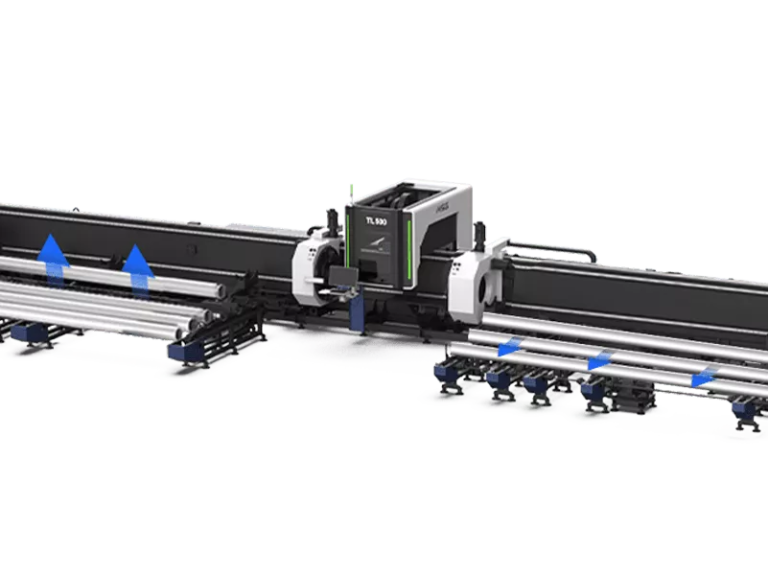
HSG tube lasers use fiber laser technology to cut metal tubes, pipes, and profiles with extraordinary speed and accuracy. These machines work by focusing a high-powered laser beam onto the metal’s surface, melting or vaporizing material along precise paths, and leaving clean, burr-free edges.
For the busy production manager, the main takeaway is that HSG tube lasers automate and speed up processes that traditionally required manual marking, sawing, drilling, or grinding. The laser system is CNC-controlled, meaning you can upload part designs directly from CAD software and let the machine handle even the most complex miters, slots, and cut-outs in one setup. Logistically, less material handling means fewer mistakes, fewer hazards, and a smoother path from raw material to finished part.
For most mid- to large-scale fabricators involved in ship and building structures, we recommend HSG’s popular models like the HSG T-Series (T6020, T9035, T12035). These provide a strong balance of tube diameter capacity (up to 350mm), rapid change-over, and powerful automation features.
Key Features of HSG Tube Lasers Relevant to Shipbuilding and Construction
HSG tube lasers come equipped with automatic loading and unloading, full nesting optimization, and angle cutting up to 45 degrees. For shipbuilding, where parts are often large and heavy, and construction, where assemblies must be consistent, these features offer a dramatic boost in throughput and repeatability.
The ability of these machines to cut round, square, and even special profiles (C, L, H beams) supports a huge range of structural applications—from hull frameworks and deck supports to curtain wall components and steel skeletons for towers. With auto-centering chucks and on-the-fly material measurement, tube lasers minimize set-up time even when switching between part sizes or designs.
Production managers can justify investing in an HSG tube laser by considering the sales solution: turning jobs around faster means taking on more contracts. Less manual handling and rework means tighter schedule control and smoother coordination with downstream welders or fitters. For projects demanding higher complexity or custom designs, tube lasers eliminate the wall between design and manufacture, opening new opportunities with every shift.
Enhancing Structural Design Flexibility with Precision Laser Cutting
Traditional fabrication restricts what’s possible in design due to slow, imprecise cutting and the limits of drill or saw methods. HSG tube lasers, by contrast, empower engineers to specify exact slotting, notching, and joining details that reduce weight and simplify assembly, all while maintaining or improving strength.
On the production floor, managers often face “rework creep” as hand tools introduce small errors that become major fit-up headaches. Tube lasers cut every component to spec with tolerances as tight as ±0.2 mm, no matter the batch size. This kind of accuracy not only ensures everything fits the first time, it also enables more complex three-dimensional joints and interlocking tabs that speed up welding and minimize the need for secondary fixtures.
If you’re bidding on projects where lightening the load or maximizing usable space is critical—such as modular ship sections or prefabricated building frames—consider HSG models with automatic angle adjustment, like the T8030 or T12035, which handle beveled cuts and tailored ends without changing chucks or tooling.
Improving Fabrication Efficiency and Quality Control
Tube laser cutting minimizes waste by nesting parts closely and utilizing the full length of each tube, which translates directly into material cost savings. Fast acceleration and deceleration on HSG’s linear-guide machines, plus automated clamping and part sorting, let operators run high-mix, low-volume or large batch jobs with the same consistent speed.
From a logistical perspective, less manual layout, tool changing, or repositioning is needed, freeing up shop resources. HSG’s remote diagnostics and preventive maintenance software reduce downtime and help plan service around your production, not the other way around.
For teams that must maintain accredited quality standards (DNV/GL, ABS for ships, or AISC for construction), the digital workflow of an HSG tube laser delivers traceable, repeatable quality. Reports, photos, and part tracking can be exported directly to QA documentation systems, closing the loop between design, shop, and site. If you’re looking to boost shop-floor efficiency, the HSG X3000 series combines cutting, inspection, and auto-sorting in a single, compact cell.
Addressing Safety Standards and Material Optimization with HSG Tube Lasers
A well-run fabrication shop is a safe one. HSG tube laser systems feature full enclosure options, fume extraction, and light curtain sensors to protect operators. This high level of automation removes the risks of slug ejection, manual grinding, or repetitive heavy lifting. Fewer touches per part mean fewer opportunities for injuries and less fatigue among your best team members.
Material optimization is another direct benefit. Tube lasers can nest small parts inside larger ones, cut just-in-time to reduce storage, and accept both new and recycled tubes—helping reduce environmental impact, lower costs, and cut scrap rates. For projects pushing toward green certifications or government contracts, this leads directly to bottom-line savings and bigger bids.
Shop managers aiming for industry-leading safety and efficiency should consider the HSG GC6020, featuring enclosed cutting zones, integrated smoke and dust collection, and modular unloading arms to reduce unassisted lifts.
Integrating HSG Tube Lasers into Modern Shipbuilding and Construction Workflows
Adding a tube laser to your production isn’t a disruption—it’s a leap forward. Modern HSG systems are designed for simple integration with shop management and ERP software, enabling seamless scheduling and real-time updating of cutting jobs.
The progressive assembly process starts with direct nesting and digital part labeling right from the laser, ensuring traceability through fit-up, welding, blasting, and painting. Parts can be kitted in job-lot carts for fast delivery dockside or to offsite assembly locations. This reduces bottlenecks, minimizes double handling, and ensures that teams always have the right parts when and where they need them.
To get the most from your investment, HSG provides comprehensive training and operator support, including remote troubleshooting and software upgrades. For larger facilities, the modular conveyor and storing systems on the T-LINE series enable 24/7 operation, keeping the laser running even during breaks or shift changes.
Recommended strategy: Pilot your most complex or repetitive parts through the laser first, build shop-floor feedback, and then scale up. Track your cut-to-weld time and watch as bottlenecks shrink and your project margins grow.
FAQ: Structural Applications of HSG Tube Lasers
How can HSG tube lasers reduce overall project lead times?
HSG tube lasers accelerate both cutting and handling, producing ready-to-assemble parts faster than manual and traditional CNC methods.
Can one laser system handle all my structural shapes and sizes?
Yes, HSG tube lasers are configurable for round, square, rectangular, and special profiles up to 350mm diameter, ideal for most shipbuilding and construction needs.
Are there significant material savings?
Absolutely, the precise nesting and close-tolerance cutting reduce scrap rates and allow fuller use of each tube or profile.
Is integration with CAD and shop management software complicated?
No, HSG systems accept direct CAD/CAM file imports and ERP integration for real-time job tracking and easy nesting optimization.
What are typical maintenance requirements?
HSG lasers are designed for easy upkeep, with predictive maintenance alerts and remote support that keep downtime to a minimum.
Does automation come at the cost of shop-floor jobs?
Automation reassigns skilled workers to quality control, programming, and higher-value tasks, allowing your team to do more complex work safely and efficiently.
A modern metal fabrication shop can’t afford to stand still. HSG tube lasers deliver the structural design freedom, speed, and reliability needed to compete in today’s shipbuilding and construction markets. By putting advanced laser cutting at the heart of your workflow, you’ll not only produce better parts faster, but also win more jobs and keep your team safer and more focused on what matters most—delivering quality and value with every build.
If you’re ready to step up your structural fabrication shop, connect with your HSG distributor for a facility assessment and see which laser platform fits your specific workload and growth goals. Give your team the tools to work smarter, safer, and more profitably, all the way from shipyard to skyscraper.
HSG tube lasers used in metal fabrication for shipbuilding and construction provide highly accurate, automated cutting of structural tubes and profiles, supporting complex, repeatable joints and connections that improve fit-up quality, reduce manual rework, and speed assembly of large steel structures.
Quick Look
- Application focus: Precision cutting of tubes and structural profiles for shipbuilding and construction projects.
- Key benefit: High repeatability and accuracy for complex structural joints, reducing fit-up time and manual grinding or rework.
- Typical materials: Structural steels and common construction alloys used in frames, trusses, supports, and ship structures.
- Process type: Automated tube laser cutting with programmable geometries for notches, slots, copes, and connection details.
- Production role: Suited to medium- and high-volume production of consistent structural components and assemblies.
- Shop impact: Integrates into digital workflows to support standardized parts, nesting strategies, and efficient material utilization.
Budgeting & Pricing
- Expected capital cost: $500,000 – $900,000 USD, depending on configuration, automation level, and capacity.
- Higher-end configurations typically add features for larger tube sizes, more complex cutting capabilities, and higher throughput.
- Budget planning should include not only purchase price but also installation, operator training, and facility modifications.
- Operating costs are influenced by power consumption, assist gas usage, consumables, and preventive maintenance requirements.
- Automation options such as loading/unloading and integrated material handling can increase the initial investment but may reduce labor cost per part.
- In shipbuilding and construction applications, cost justification is often based on reduced fit-up time, fewer fabrication errors, and more efficient assembly.
Specs That Matter
- Tube and profile size capacity: Confirm maximum and minimum outer diameter or side dimensions that match the structural members used in your projects.
- Cutting precision and repeatability: Evaluate positional accuracy and repeatability for tight-tolerance structural joints and connection details.
- Cut geometry capabilities: Ensure the system can cut copes, bevels, slots, and complex end preps required for welded ship and building structures.
- Material handling and support: Look at how the machine supports and indexes long tubes or profiles to maintain alignment and cut quality over full length.
- Automation level: Consider the availability of automatic loading, unloading, and part sorting for continuous production of structural components.
- Control and programming: Assess the software’s ability to handle 3D tube geometries, nesting, and integration with existing CAD models used in shipbuilding and construction design.
- Changeover flexibility: Review how quickly the system can switch between different tube sizes or profiles to support varied project requirements.
Pre-Purchase Checklist
- Verify that the tube size and profile capacity aligns with your typical and maximum structural member dimensions.
- Inspect sample parts or demonstrations that reflect your actual shipbuilding or construction geometries and joint types.
- Confirm the machine’s accuracy and repeatability specifications meet your fit-up and weld quality requirements.
- Evaluate the material handling system for stability, support of long tubes, and ease of loading and unloading.
- Review the control software interface, programming workflow, and compatibility with your existing design files and standards.
- Assess required floor space, layout constraints, and how material will flow in and out of the tube laser area.
- Clarify routine maintenance tasks, intervals, and the level of in-house skill needed to keep the machine in optimal condition.
- Discuss training provisions for operators, programmers, and maintenance personnel, including initial and follow-up sessions.
- Identify availability of local technical support, spare parts logistics, and typical response times for service needs.
- Estimate total cost of ownership by considering consumables, utilities, and potential productivity gains in your structural fabrication workflow.
Common Questions
How do tube lasers help in shipbuilding applications? They provide accurate, repeatable cuts and joint preparations on structural tubes and profiles, improving fit-up and reducing manual rework on complex ship structures.
What advantages do tube lasers offer for construction projects? They enable precise fabrication of structural members with standardized connection details, supporting faster assembly and more consistent quality on site.
What is the typical investment for an HSG tube laser used in these applications? Typical pricing ranges from $500,000 to $900,000 USD, depending on configuration, capacity, and automation features.
Can a tube laser handle different tube shapes and profiles? These systems are designed to process a variety of tube and profile shapes, provided they fall within the machine’s specified size and handling capacity.
Why is cutting precision important in structural fabrication? High precision reduces gaps and misalignment at joints, which supports better weld quality, structural integrity, and reduced on-site adjustments.
How does automation affect productivity in tube laser cutting? Automated loading, unloading, and material handling can increase throughput and reduce manual handling time, especially in high-volume structural part production.
What should I look for in tube laser control software? Look for strong support for 3D tube geometries, intuitive programming, nesting functions, and compatibility with your existing design data used for ship and building structures.
Is a tube laser suitable for both small batches and large projects? It can support both, but its strengths are most evident where consistent, repeatable parts are needed across multiple components or large structural projects.
How does a tube laser impact weld preparation? By cutting accurate bevels, copes, and end preps, it reduces manual grinding and fitting, leading to more efficient welding operations.
What facility considerations are important before installation? You should confirm adequate floor space, material flow paths, and utility availability to support the machine and its material handling systems.
Exploring Structural Applications of HSG Tube Lasers in Metal Fabrication for Shipbuilding and Construction